

Bad Vinous
Rhizoctonia Violacea
Pathogen:
Type:
Fungus
Risk:
HIGH
Remolacha de mesa
Micosis/Hongos

WHO CAUSES IT?
Rhizoctonia violacea is a pathogenic fungus that causes serious diseases in various plants, including beets. This fungus is characterized by the formation of resistance structures called sclerotia, which are compact masses of purple or violet mycelium, capable of surviving in the soil for several years in the absence of a host. When environmental conditions are favorable, especially moist soils and moderate temperatures, sclerotia germinate and produce infectious hyphae. These hyphae grow and penetrate the roots and the base of the stem of the plants, causing necrosis and deterioration of the plant tissue. As the fungus develops, a visible cottony mycelium forms around the infected areas, making it easier to identify.
.png)
SYMPTOMS
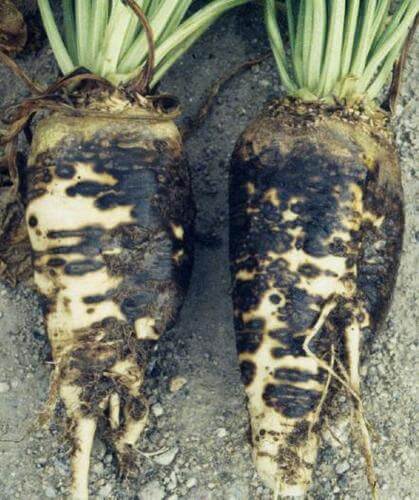
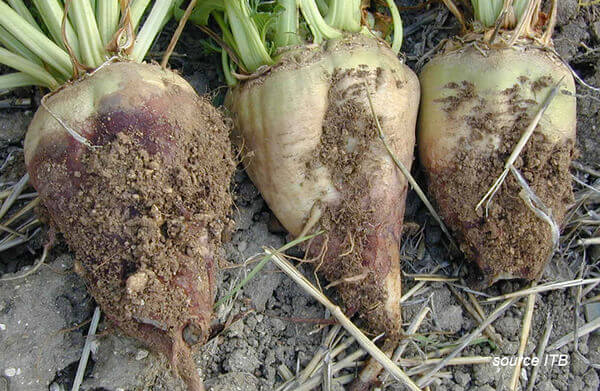
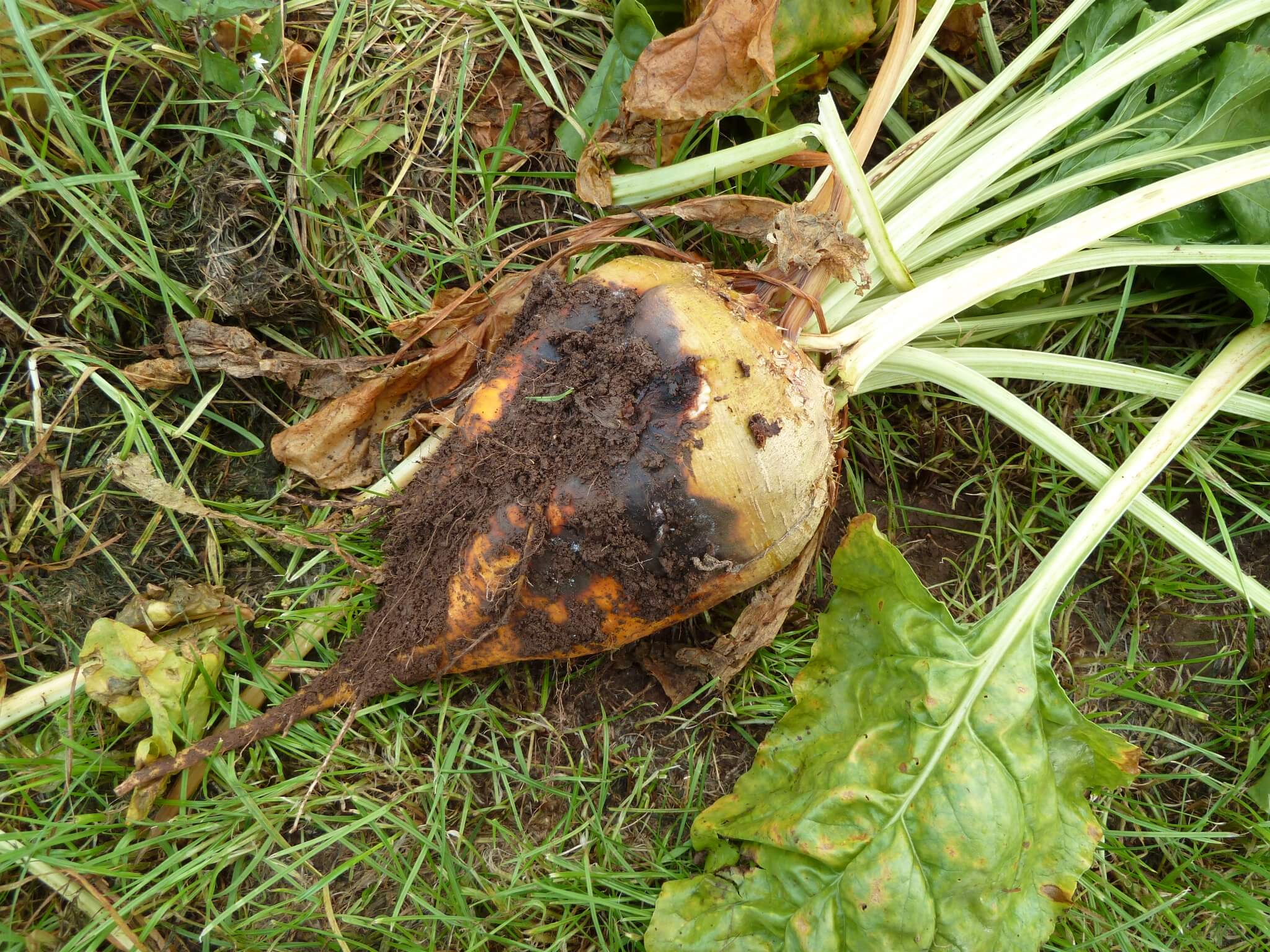
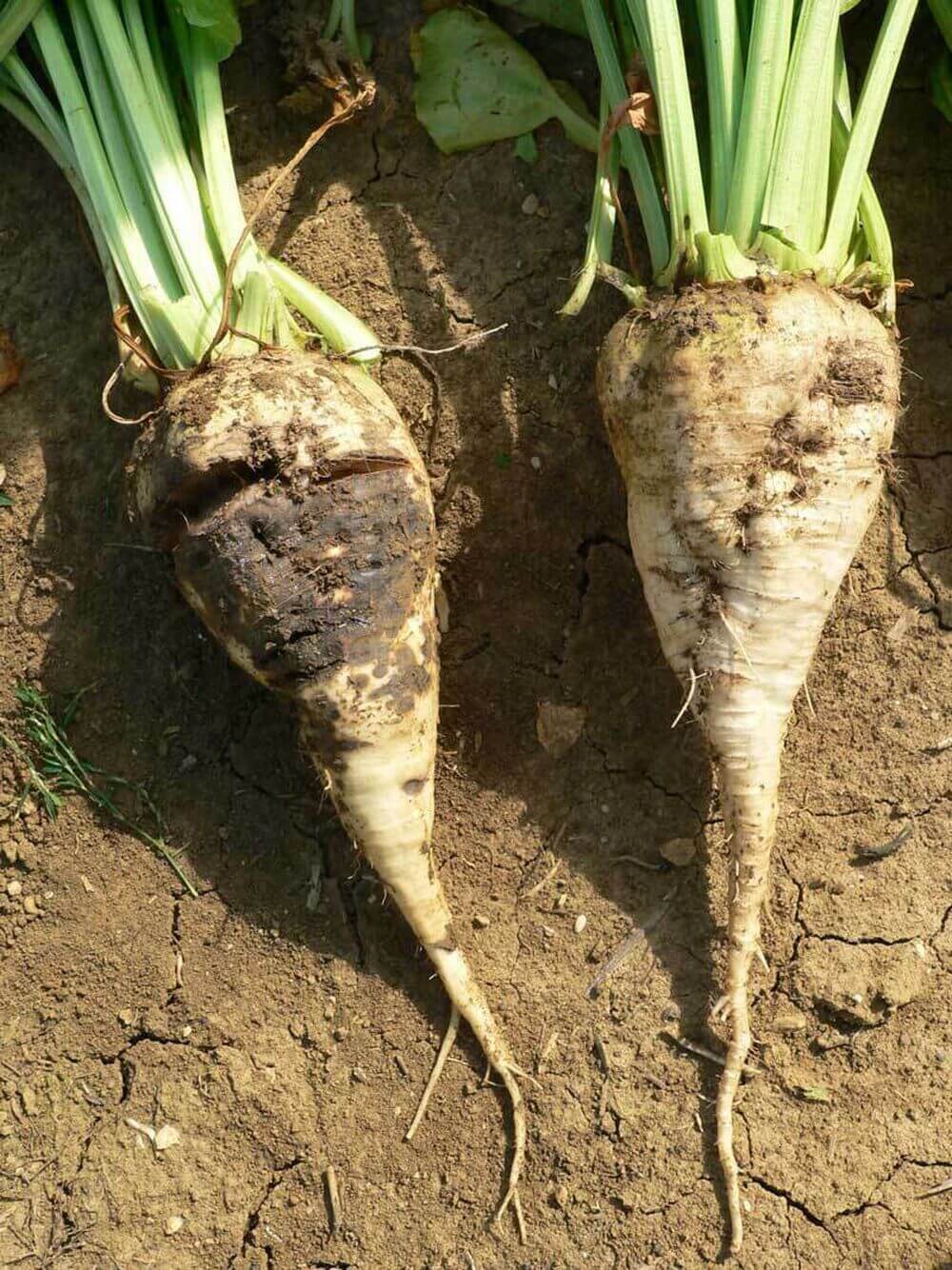
Wine disease, caused by Rhizoctonia violacea, severely affects beets, compromising both their development and productivity. The disease initially manifests itself as purple Taches on the roots and crown of the plant, which expand and darken over time. These Taches are the result of the breakdown of plant tissue, which turns brown and then black as the disease progresses. Affected plants show poor growth, wilting and, in severe cases, may die.
- Purple Taches on the roots and crown
- Decomposition of plant tissue
- Darkening of Taches to brown and black
- Poor plant growth
- Wilting
- Death of severely affected plants


TEMPERATURE AND HUMIDITY
15°C - 25°C
70% - 90%

TRANSMISSION ROUTES
Sclerotia in soil, contaminated tools, irrigation water, infected planting material, crop residues
Do you want to remove this disease? Choose how you want to treat it.

TREATMENTS
Chemical treatments
• AZOXISTROBIN 25% [SC] P/V
• PIRACLOSTROBIN 6.7% + BOSCALIDE 26.7% ( ) [WG] P/P
Authorized treatments in organic farming
-
Biological control
• TRICHODERMA ASPERELLUM (STRAIN T25) (1X10E8 CFU/G) 0.5% + TRICHODERMA ATROVIRIDE (STRAIN T11) (1X10E8 CFU/G) 0.5% [WG] P/P
• TRICHODERMA ATROVIRIDE (STRAIN I-1237) (1x10E8 cfu/g) 5% [WP] P/P
Recommendations
- Implement crop rotation with non-susceptible species to reduce the accumulation of sclerotia in the soil.
- Use resistant beet varieties when available on the market.
- Avoid planting in soils with a history of the disease and improve soil drainage.
- Apply specific fungicides according to technical recommendations and in accordance with current regulations.
- Carry out constant monitoring of the crop to detect early symptoms of the disease.
- Avoid excess irrigation and maintain good soil moisture management.
- Disinfect agricultural tools and equipment to prevent the spread of the fungus.
- Remove and destroy infected crop residues to reduce the presence of sclerotia in the soil.
Sponsored link
Sponsored link
Sponsored link


Sponsored link
Sponsored link
Sponsored link
Sponsored link


Sponsored link
Sponsored link
Effective against all types of fungi

Sponsored link
Sponsored link


Sponsored link
Sponsored link

Sponsored link
Sponsored link


Sponsored link
*Recommended treatments are still recommendations according to authority databases and in no way replace the guidelines established according to the legislation of each country.
*Products shown are recommendations and not our own products. As Amazon Associates, we earn revenue from purchases of recommended products.

TREATMENTS
Homemade remedies
There are no home treatments
Natural allies
Chemical treatments
There are no treatments for this disease. Treatments are directed at the insect vectors that transmit it. See insect treatments.

RECOMMENDATIONS

REPELLENT PLANTS
EFFECTIVE PRODUCTS TO ELIMINATE THIS DISEASE
Sponsored link
Sponsored link
Sponsored link
Sponsored link
Sponsored link
Sponsored link
Sponsored link
Sponsored link
Sponsored link
Effective against all types of fungi
Sponsored link
Sponsored link
Sponsored link
Sponsored link
Sponsored link
Sponsored link
Sponsored link
*Recommended treatments are still recommendations according to authority databases and in no way replace the guidelines established according to the legislation of each country.
*Products shown are recommendations and not our own products. As Amazon Associates, we earn revenue from purchases of recommended products.

Enjoy idMicrobe TOTALLY FREE, with no trial periods.


