


Excessive sun or sunburn on fruit: symptoms, causes and solutions
Excessive sun
-
Pathogen:
Type:
Environmental stress
Risk:
INTERMEDIATE
Frutos
Estrés ambiental

WHO CAUSES IT?
Sunburn, or excessive sun exposure, is a physiological disorder of fruit caused by overexposure of fruit tissues to solar radiation, especially when the surface temperature rises considerably above the air temperature. Direct solar radiation, particularly ultraviolet and infrared radiation, can cause a significant increase in the temperature of exposed tissues and damage to the cells of the epidermis and surface layers of the fruit. The risk increases when fruit that was normally protected by leaves is suddenly exposed due to pruning, leaf fall, defoliation, wind, water stress, or changes in fruit orientation. The exposed tissues can reach temperatures well above the ambient temperature, especially during the hottest hours of the day and under conditions of high radiation. When the surface temperature exceeds the tissue's tolerance capacity, alterations of cell membranes, protein denaturation, loss of cell function, and, in the most severe cases, localized tissue death occur. The damage can appear rapidly and does not require the presence of any infectious organism. Susceptibility depends on the species, variety, color and characteristics of the epidermis, stage of ripeness, water content, prior sun exposure, and the fruit's ability to dissipate heat. Green or immature fruits may exhibit different susceptibility than those nearing maturity, while certain varieties with darker skin may heat up more quickly. Water stress significantly increases the risk because it reduces the availability of water for transpiration and natural tissue cooling. Similarly, a sudden loss of leaf cover can expose unacclimated fruits to intense radiation. There is no infection, reproduction, or spread of a causal organism; therefore, the problem does not involve a biological transmission process and cannot spread between fruits like an infectious disease.
.png)
SYMPTOMS
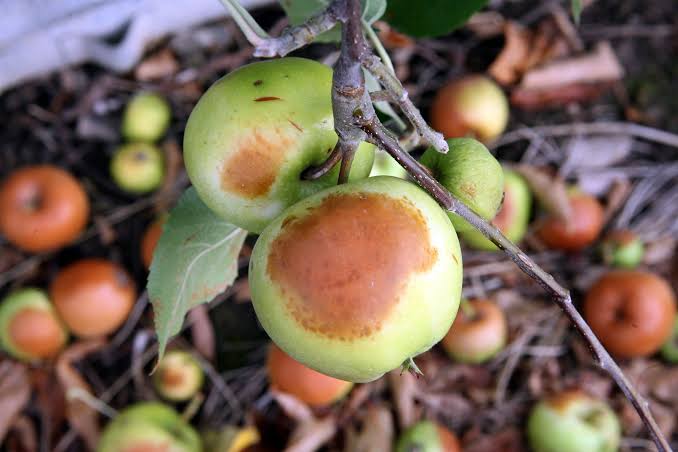
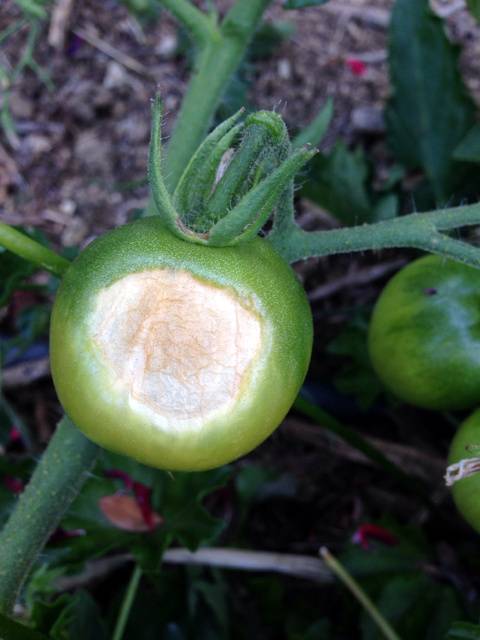
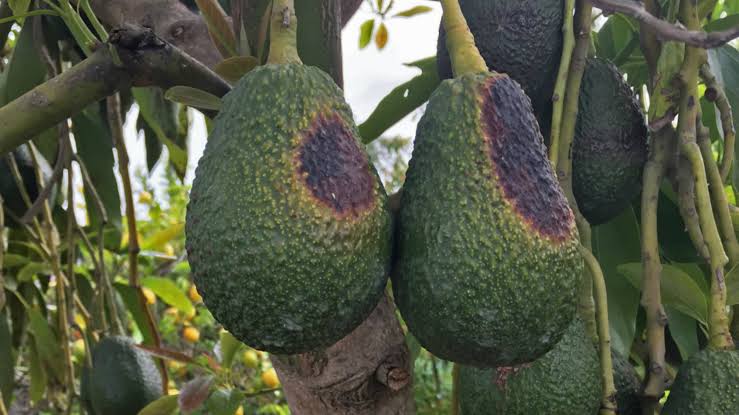
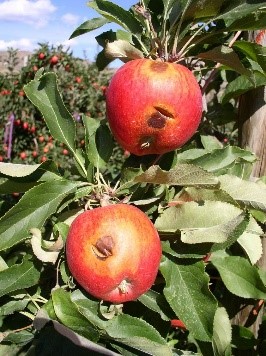
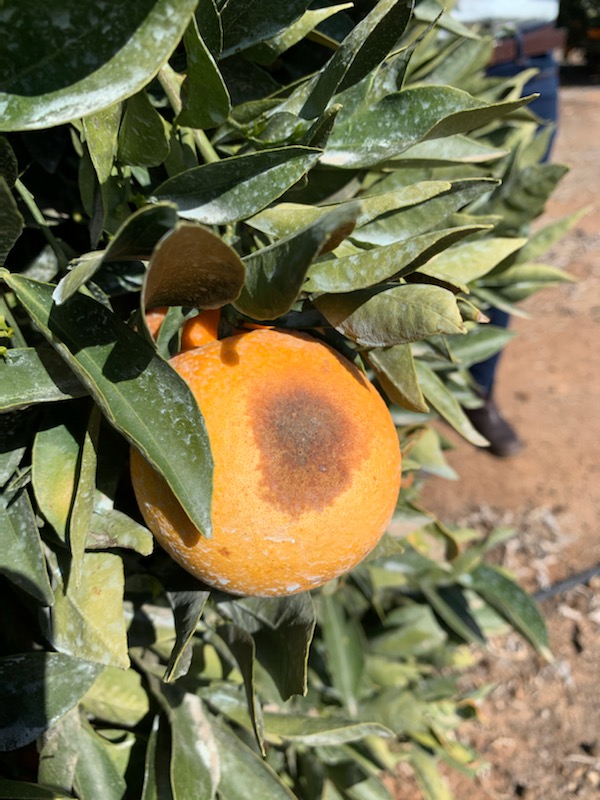
Excessive sun exposure causes localized damage to fruit in areas directly exposed to intense sunlight. Initially, discoloration or loss of the normal color of the epidermis may be observed, followed by a change to yellowish, whitish, reddish, or brownish tones, depending on the species and stage of ripeness. As the damage increases, the affected areas may become dry, hardened, or slightly sunken and clearly demarcated from healthy tissue. In cases of very intense exposure, surface cells may die and form necrotic areas that subsequently dehydrate and acquire a leathery texture. The damage is usually located primarily on the side of the fruit facing the sun and can be more severe in areas that have been suddenly exposed due to leaf loss. The lesions can reduce the commercial value of the fruit and, when extensive, affect its quality and shelf life. The damaged areas can also subsequently facilitate the entry of certain opportunistic microorganisms, although sunburn itself is not caused by fungi, bacteria, or other pathogens. In sensitive fruits, the combination of high radiation, high temperatures, and water deficit can intensify dehydration and promote the appearance of more serious surface damage. Browning / Spots / Sunken spots / Dehydration / Tissue drying / Surface necrosis / Loss of color / Skin hardening


TEMPERATURE AND HUMIDITY
-
-

TRANSMISSION ROUTES
-
Do you want to remove this disease? Choose how you want to treat it.

TREATMENTS
Chemical treatments
There are no phytosanitary treatments. Sun exposure should be adjusted and the plant protected from excessive radiation.
Authorized treatments in organic farming
There are no phytosanitary treatments. Sun exposure should be adjusted and the plant protected from excessive radiation.
Biological control
-
Recommendations
• Avoid excessive and sudden exposure of the fruit to direct sunlight, especially during periods of peak radiation intensity.
• Maintain sufficient leaf cover around the fruit to provide natural shade during the hottest hours of the day.
• Avoid excessively heavy pruning during periods of high radiation and high temperatures.
• Plan pruning to avoid the sudden exposure of large quantities of fruit that were previously protected by the leaves.
• Avoid unnecessarily removing leaves that provide direct shade to the fruit.
• Maintain adequate soil moisture to promote transpiration and the natural cooling capacity of the plant tissues.
• Avoid prolonged periods of water stress during the fruit growth and ripening stages.
• Maintain a consistent irrigation schedule during periods of high temperatures and high solar radiation.
• Pay close attention to crops after episodes of strong winds, hail, foliar diseases, or any other cause that results in significant leaf loss. • Reduce water stress before periods of extremely high temperatures are expected.
• Use shade netting when weather conditions or crop characteristics indicate a high risk of sunburn.
• Select varieties less susceptible to sunburn when the crop is grown in areas with high radiation and extreme temperatures.
• Maintain balanced nutrition to promote proper leaf development and good fruit coverage.
• Avoid nutritional imbalances that can lead to excessive leaf loss or reduce the crop's ability to adapt to environmental stress.
• Control diseases and pests that can cause defoliation and prevent fruit from being directly exposed to the sun.
• Avoid interventions that drastically reduce leaf area during periods of highest risk.
• Monitor fruit located in the most exposed parts of the plant, especially those facing south or west in sensitive crops. • Conduct regular inspections during heat waves to detect the first signs of discoloration or necrosis.
• Avoid unnecessary handling of fruit during periods of extreme heat, as mechanical damage can increase the sensitivity of exposed tissues.
• Maintain adequate soil moisture during periods of rapid fruit growth.
• Improve soil water retention capacity when necessary to reduce significant moisture fluctuations.
• Use appropriate mulches to decrease soil water evaporation and help maintain more stable moisture levels.
• Prevent excessive weed competition for available water.
• In particularly sensitive crops, use authorized protective products that can form a film or increase the reflectance of the fruit surface, always following the corresponding authorization and conditions of use.
• Apply protective measures before episodes of extreme radiation when their mode of action requires preventative coverage. • Remove severely damaged fruit once it has completely lost its commercial value and could hinder harvesting.
• Prioritize preventative measures, since once cell damage has occurred due to excessive radiation, there is no phytosanitary treatment capable of regenerating necrotic tissue.



*Recommended treatments are still recommendations according to authority databases and in no way replace the guidelines established according to the legislation of each country.
*Products shown are recommendations and not our own products. As Amazon Associates, we earn revenue from purchases of recommended products.

TREATMENTS
Homemade remedies
There are no home treatments
Natural allies
Chemical treatments
There are no treatments for this disease. Treatments are directed at the insect vectors that transmit it. See insect treatments.

RECOMMENDATIONS

REPELLENT PLANTS
EFFECTIVE PRODUCTS TO ELIMINATE THIS DISEASE
*Recommended treatments are still recommendations according to authority databases and in no way replace the guidelines established according to the legislation of each country.
*Products shown are recommendations and not our own products. As Amazon Associates, we earn revenue from purchases of recommended products.



Explore more tools
Services
Contact
Legal
©2023 por ZeriMar Laboratoire. Todos os direitos reservados.