

Vid
How to recognize and combat vine tinder
Tinder
Fungus
Type:
Risk to the plant:
HIGH
Phaeomoniella Chlamydospora / Phaeoacremonium Minimum / Diatrypaceae Sp. / Eutypa Sp.
Pathogen:
Seca de ramas y brotes


WHO CAUSES IT?
*Phaeomoniella chlamydospora*, *Phaeoacremonium minimum*, *Diatrypaceae sp.* and *Eutypa sp.* are the main pathogens involved in Tinder disease in grapevines. These species of fungi develop mainly in the vascular tissues of the plant, causing the degradation of the wood. *Phaeomoniella chlamydospora* and *Phaeoacremonium minimum* are responsible for the early stage of the disease, colonizing the plant vessels and releasing toxins that interrupt water flow. *Eutypa sp.* and *Diatrypaceae sp.* are more commonly associated with the advanced stages of the disease, where they produce fruiting bodies that release spores, favoring dispersal. These fungi infiltrate through pruning wounds or mechanical damage and can survive in wood for long periods. As environmental conditions become favorable, such as high humidity and adequate temperatures, pathogens increase their activity, spreading and affecting more plant tissues.
.png)
SYMPTOMS
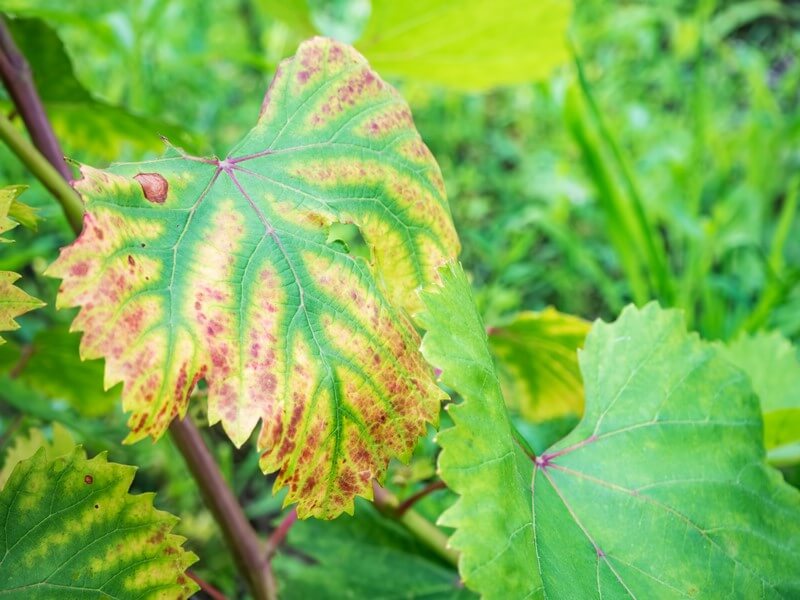
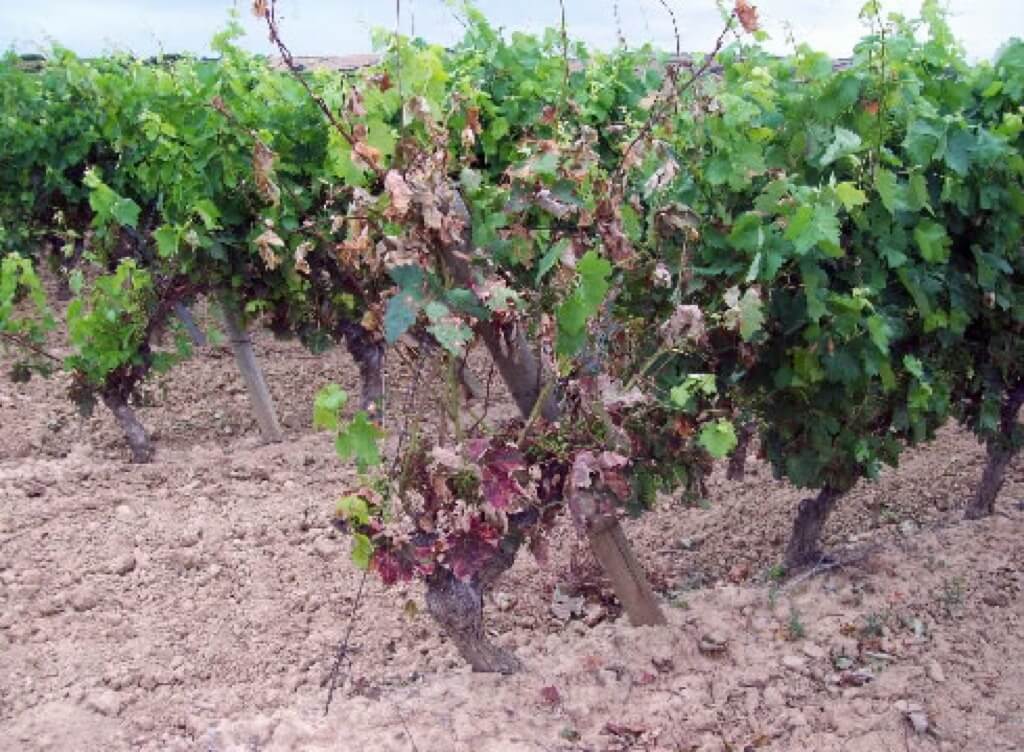
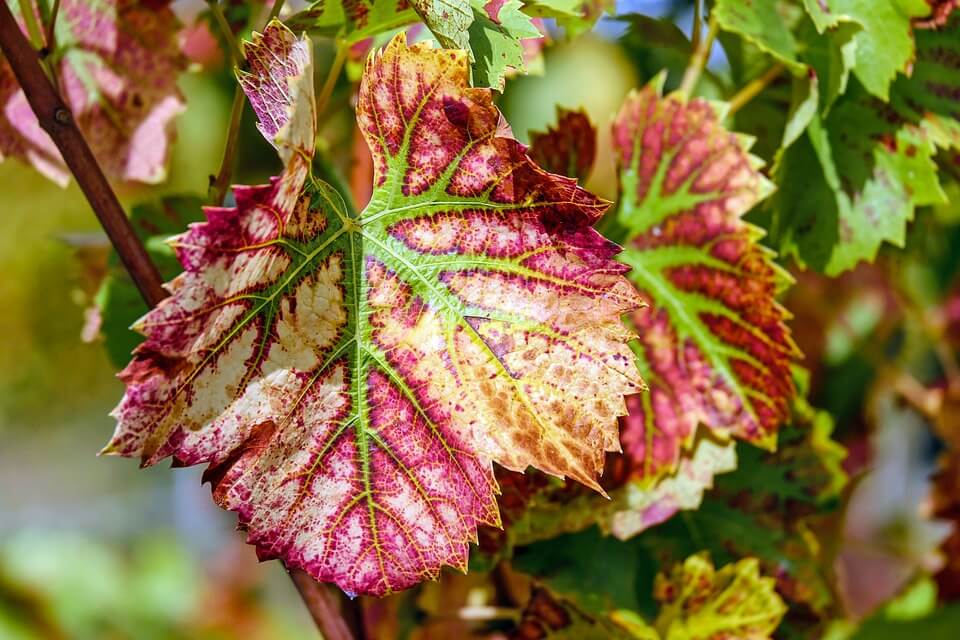
Yesca causes progressive deterioration in the vine, beginning with a weakening of the leaves and clusters, followed by necrosis in the wood and, in advanced cases, sudden death of the plant. Symptoms can appear at different stages of the vegetative cycle and vary depending on the age of the plant and environmental conditions. In general, affected plants show premature aging and a significant reduction in production.
- Chlorotic or yellowish Taches on the leaves, with necrotic edges.
- Clusters that dry before maturing.
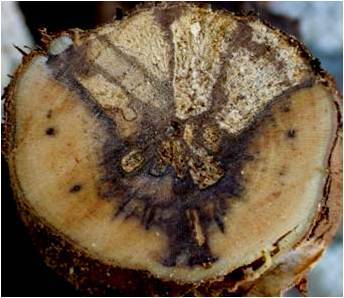
- Internal necrosis in the trunk and arms of the vine.
- Formation of blackish veins in the wood.
- Sudden death of the plant during the summer months.


DEVELOPMENT CONDITIONS
Temperature:
20-30°C
Humidity:
65-90%

HOW IS IT SPREAD?
Aerial spores, contaminated tools, pruning wounds, infected soil, irrigation water, insect vectors

HOW TO ELIMINATE IT?
Home treatments
There are no home treatments
Natural allies
Chemical treatments
There are no treatments for this disease. Treatments are directed at the insect vectors that transmit it. See insect treatments.
RECOMMENDED PRODUCTS TO ELIMINATE THE PEST
Sponsored link

Sponsored link
Sponsored link


Sponsored link
Sponsored link
Sponsored link
Sponsored link


Sponsored link
Sponsored link
Effective against all types of fungi

Sponsored link
Sponsored link


Sponsored link
Sponsored link

Sponsored link
Sponsored link


Sponsored link

REPELLENT PLANTS

RECOMMENDATIONS
OTHER PESTS THAT MAY INTEREST YOU


DID YOU LIKE IT?
Now you can always have it on your mobile, without ads and totally FREE. TRY idMicrobe NOW!


