


Symptoms, treatments and recommendations for treating cassida
Cassida
Cassida Vittata
Pathogen:
Type:
Insect
Risk:
HIGH
Remolacha de mesa
Escarabajos

WHO CAUSES IT?
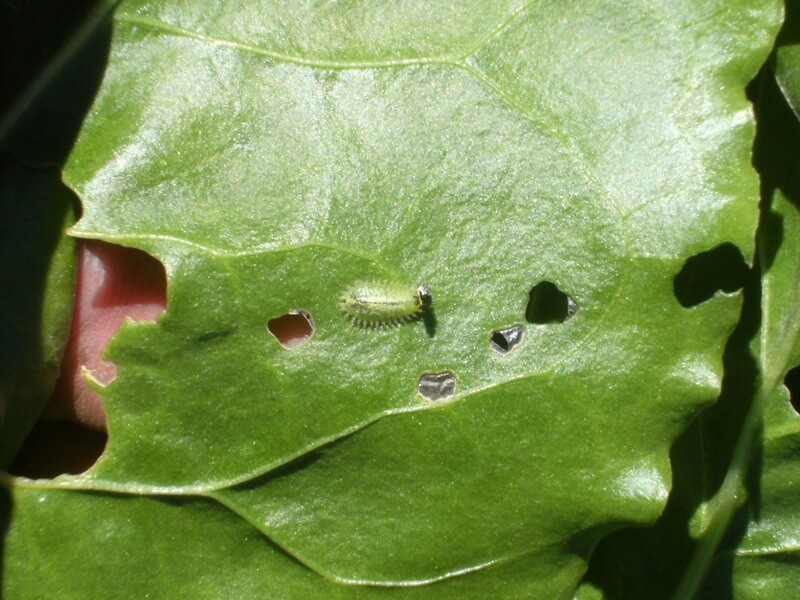
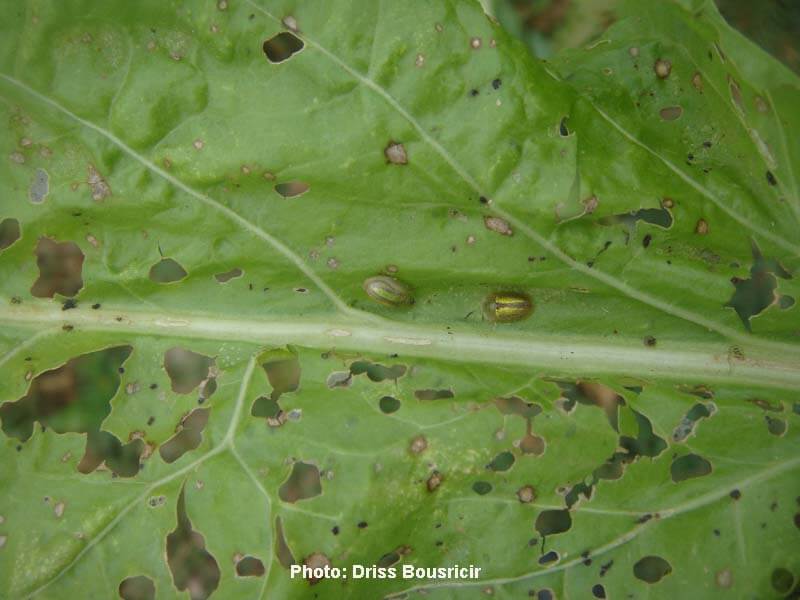
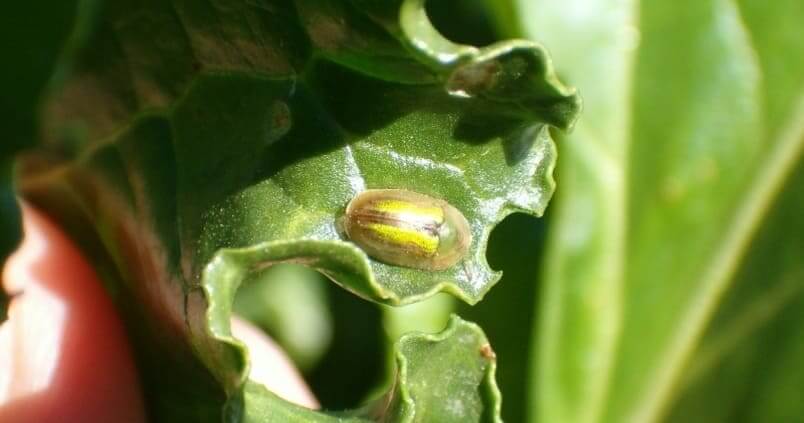
Cassida vittata is a beetle belonging to the family Chrysomelidae, commonly known as cassid. This insect has a flattened, oval-shaped body, with a length that varies between 5 and 7 millimeters. Adults are bright green and have a pronotal shield that covers much of the body, including the legs and head. During the warm months, females lay their eggs on the underside of table beet leaves. After an incubation period, the larvae emerge and begin to feed on leaf tissue. These larvae have a spiny, yellowish body, and go through several stages before pupating. Pupation occurs in the soil or on leaves, where the larvae transform into adults. Depending on environmental conditions, there may be several generations per year, especially in hot climates.

SYMPTOMS
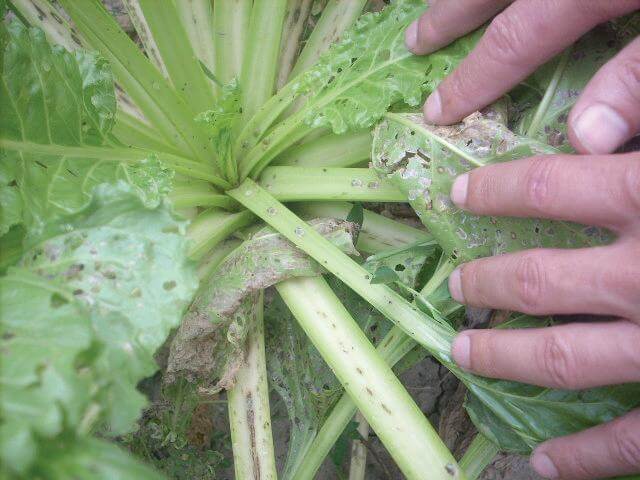
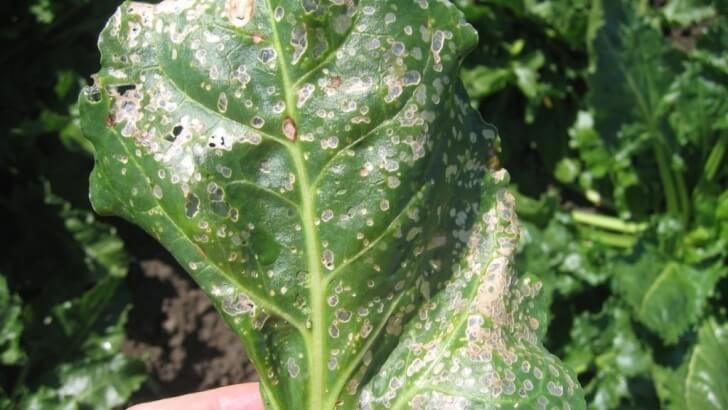
In table beets, infestation by Cassida vittata produces a disease known as cassid. Damage is caused by both adults and larvae, who feed on leaf tissue, creating necrotic areas that interfere with photosynthesis and normal plant growth.
- Presence of irregular holes in the leaves.
- Transparent areas on the leaves due to the removal of the parenchyma.
- Withered and discolored leaves.
- Reduction in the effective leaf surface for photosynthesis.
- Weakened plants and lower root yield.
- Visible presence of adults and larvae on the underside of the leaves.


TEMPERATURE AND HUMIDITY
20-30°C
50-70%

TRANSMISSION PATHS
Wind, Soil movement, Cultivation tools, Infested plants, Plant transport, Direct contact
Do you want to remove this disease? Choose how you want to treat it.

TREATMENTS
Chemical treatment
• CYPERMETHRIN 10% [EC] P/V
• CYPERMETHRIN 5% [EC] P/V
• CYPERMETHRIN 50% [EC] P/V
• LAMBDA CYHALOTHRIN 10% [CS] P/V
Authorized treatments in organic farming
• LAMBDA CYHALOTHRIN 10% [CS] P/V
Biological control
-
Recommendations
- Regularly monitor crops to detect the early presence of adults and larvae.
- Implement crop rotation to interrupt the pathogen cycle.
- Promote the presence of natural predators such as parasitoid wasps and birds.
- Maintain field hygiene by eliminating residue from previous crops that may harbor pupae.
- Apply specific insecticide treatments when economic damage thresholds are exceeded.
- Use colored sticky traps to monitor and reduce the adult population.
- Implement physical barriers such as mesh to prevent adults from entering crops.
- Avoid excessive use of nitrogen fertilizers that may favor the development of the pest.





*The recommended treatments are still recommendations according to the databases of the authorities and at no time do they replace the guidelines established according to the legislation of each country
*The products shown are recommendations and are not our own products. As Amazon Associates, we earn revenue from purchases of recommended products.

TREATMENTS
Homemade treatments
There are no home treatments
Natural allies
Chemical treatments
There are no treatments for this disease. Treatments are directed at the insect vectors that transmit it. See insect treatments.

RECOMMENDATIONS

REPELLENT PLANTS
RECOMMENDED PRODUCTS TO ELIMINATE THIS PEST
*The recommended treatments are still recommendations according to the databases of the authorities and at no time do they replace the guidelines established according to the legislation of each country
*The products shown are recommendations and are not our own products. As Amazon Associates, we earn revenue from purchases of recommended products.



Explore more tools
Services
Contact
Legal
©2023 by ZeriMar Laboratoire. All rights reserved.