


Weevils in fruit: symptoms, prevention and treatment
Weevils
Different species
Pathogen:
Type:
Insect
Risk:
HIGH
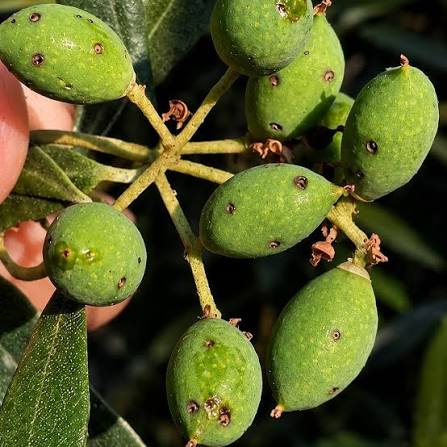
Frutos
Gorgojos
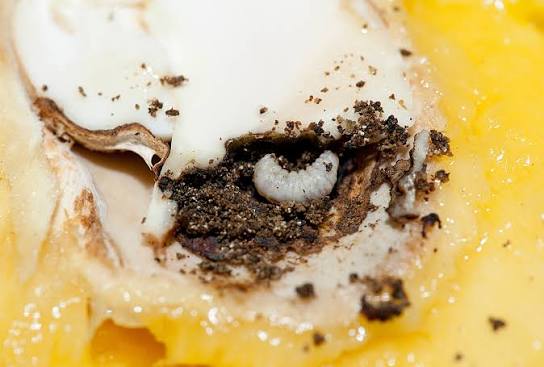

WHO CAUSES IT?
Weevils are insects belonging primarily to the family Curculionidae, although the term can encompass various species that attack different types of fruit. They are insects with chewing mouthparts and, in many species, a characteristic rostrum or extension of the head. Adults typically feed on plant tissues, leaves, shoots, flowers, or fruits, while the immature stages of many species develop inside plant tissues or the fruits themselves. The female lays her eggs near the fruit or directly on it, depending on the species. After hatching, the larvae begin feeding on the tissues and can penetrate the fruit, where they remain protected from many external treatments. During this stage, the larvae progressively consume the pulp and, in certain species, can reach the seeds or the interior of the reproductive organs. Upon completing their development, the larva may leave the fruit to pupate in the soil, in plant debris, or in other suitable shelters, although some species complete part or all of their transformation within the fruit itself. The adult then emerges and can move to new fruits and plants to feed and reproduce. The duration of the different stages depends considerably on the species and environmental conditions, especially temperature, food availability, and humidity. Under warm and favorable conditions, development can accelerate, and some species can complete more than one generation during a growing season. Adults can survive between seasons by taking refuge in the soil, plant debris, bark, crevices, and other sheltered places, from where they recolonize crops when conditions are favorable. The presence of damaged fruit, plant debris, and refuge areas can promote the persistence of populations. Adult dispersal between plants occurs mainly through direct movement, while the transport of infested fruit can contribute to the introduction of certain species into new growing areas.
.png)
SYMPTOMS
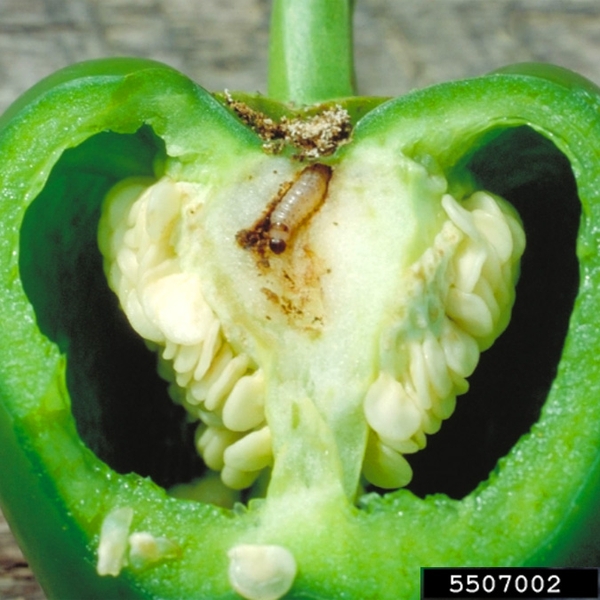
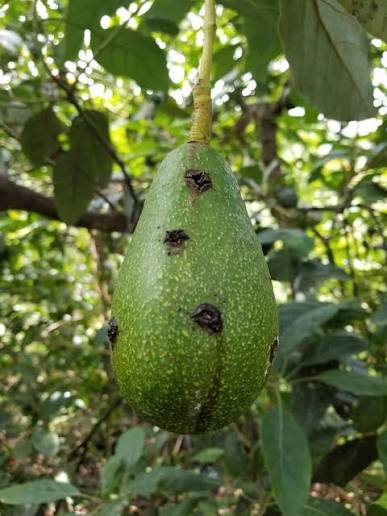
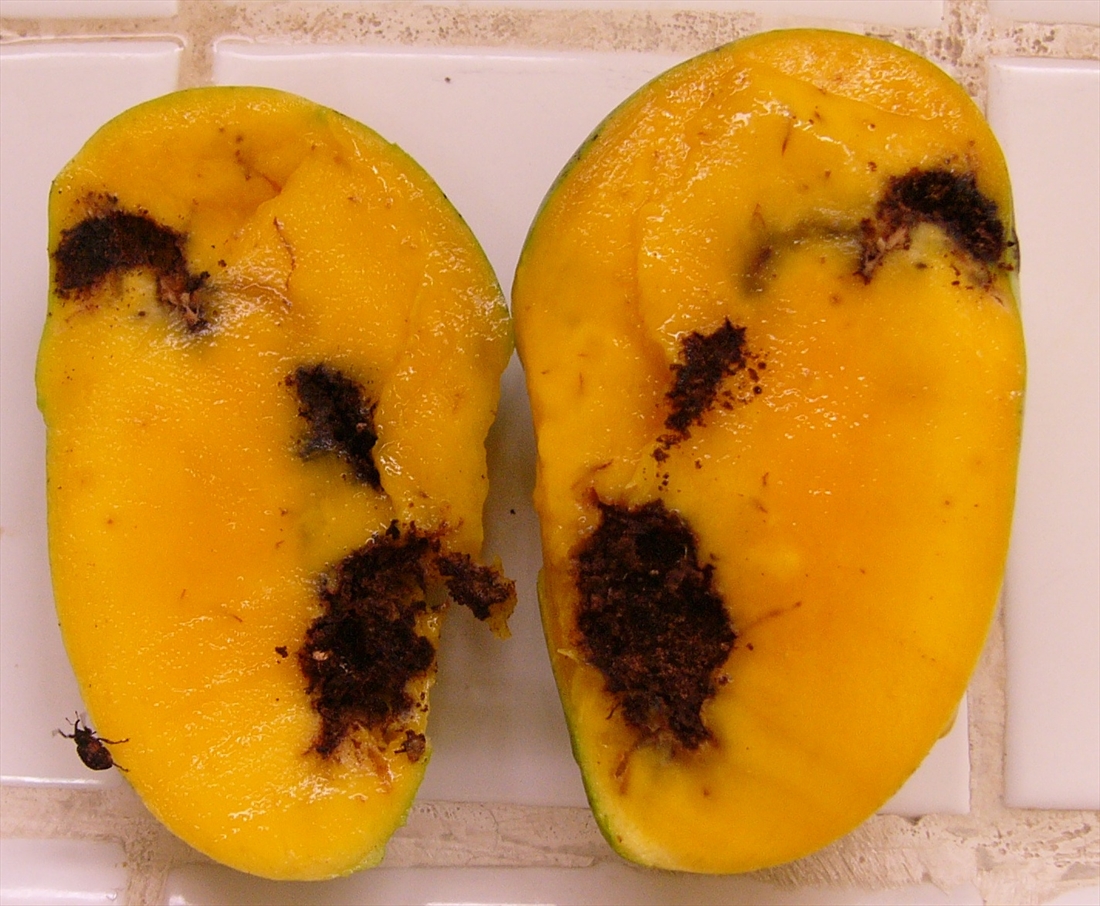
Weevils can cause both direct and indirect damage to fruit. Adults may make small bites or perforations while feeding, and females may lay eggs on or near the fruit. Subsequently, the larvae of certain species penetrate the fruit and feed on the pulp, seeds, or other tissues, creating galleries and progressively destroying the internal structures. Affected fruit may exhibit entry holes, small perforations, sunken areas, soft tissue, deformities, and a loss of commercial quality. When infestation occurs in the early stages of development, the damage can cause premature fruit drop, while infestations near ripening can lead to significant losses during harvesting, transport, and storage. The wounds caused by the insects can also facilitate the entry of fungi and bacteria, increasing the likelihood of secondary rots. In some species, the presence of larvae inside the fruit may not be externally apparent until the damage is advanced, making detection and control difficult. Among the most common signs are:
• Small entry or exit holes on the fruit surface.
• Perforations and galleries produced by larvae inside the fruit.
• Feeding damage caused by adults on the fruit surface.
• Presence of larvae or larval remains inside the fruit.
• Deformed or irregularly growing fruit as a result of attacks during the early stages of development.
• Sunken, necrotic, or discolored areas around the points of attack.
• Softening and progressive deterioration of internal tissues.
• Damage to seeds or internal fruit structures when the species feeds on these parts.
• Premature fruit drop in severely affected fruit.
• Presence of excrement, feeding remains, or debris in the internal galleries. • Appearance of secondary rots favored by insect-caused wounds.
• Reduction in the weight, quality, shelf life, and commercial value of the fruit.
• Presence of externally healthy fruit containing larvae or internal damage.
• Increased damage during storage when the fruit was infested before harvesting.


TEMPERATURE AND HUMIDITY
20-30 °C
60-90 %

TRANSMISSION PATHS
Movement of adults, Flight of adults, Infested fruit, Infested plant material, Plant debris, Contaminated soil, Contaminated tools and equipment, Transport of fruit, Transport of plant material
Do you want to remove this disease? Choose how you want to treat it.

TREATMENTS
Chemical treatment
• ORANGE OIL 60g/L [ME] P/S
• ACETAMIPRID 0.005% [AL] P/V
• AZADIRACTIN 1% (AS AZADIRACTIN A) [EC] P/V
• Azadirachtin 2.6% (AS AZADIRACTIN A) [EC] P/V
• CYPERMETHRIN 10% [EC] P/V
• CYPERMETHRIN 5% [EC] P/V
• DELTAMETHRIN 2.5% [EC] P/V
• LAMBDA CYHALOTHRIN 1.5% [CS] P/V
• LAMBDA CYHALOTHRIN 10% [CS] P/V
• LAMBDA CYHALOTHRIN 5% [EG] P/P
• SPINOSAD 48% [SC] P/V
Authorized treatments in organic farming
• ORANGE OIL 60g/L [ME] P/S
• AZADIRACTIN 1% (AS AZADIRACTIN A) [EC] P/V
• Azadirachtin 2.6% (AS AZADIRACTIN A) [EC] P/V
• LAMBDA CYHALOTHRIN 1.5% [CS] P/V
• LAMBDA CYHALOTHRIN 10% [CS] P/V
• LAMBDA CYHALOTHRIN 5% [EG] P/P
• SPINOSAD 48% [SC] P/V
Biological control
• STEINERNEMA FELTIAE (Parasitoid and predatory nematodes)
Recommendations
• Conduct regular fruit inspections to detect early signs of weevil activity such as holes, galleries, deformities, fallen fruit, or any other indication of weevil activity.
• Remove and destroy infested or severely damaged fruit to prevent larvae from completing their development and becoming adults.
• Regularly collect fruit that has fallen to the ground, especially if it shows holes or signs of infestation.
• Remove plant debris and abandoned fruit that could provide food or shelter for adults and immature stages.
• Maintain the soil and the immediate surroundings of the plants in conditions that reduce the availability of shelter for soil-dwelling stages.
• Avoid accumulating pruning debris, rotten fruit, and plant material around the plants.
• Pay particular attention to the flowering, fruit set, development, and ripening periods, adjusting the frequency of inspections according to the observed risk. • Pay special attention to the edges of plots and areas near abandoned crops or vegetation that could act as a refuge or source of infestation.
• Control weeds and spontaneous vegetation when they can provide food or shelter for adult populations.
• Use planting or propagation material and fruit from controlled and infestation-free sources.
• Avoid introducing fruit from infested plots into pest-free cultivation areas.
• Maintain proper hygiene during harvesting, avoiding transporting infested fruit, plant debris, or contaminated soil to other plots.
• Use monitoring traps or appropriate monitoring systems when available for the specific species, in order to detect the presence and development of adults.
• Record captures and observations to determine periods of greatest activity and optimize the timing of control measures. • Apply control measures before the larvae penetrate deeply into the fruit, as once protected inside, their control through external treatments can become considerably more difficult.
• Carry out phytosanitary treatments only with products authorized for the corresponding species, crop, and use.
• Adjust the application timing to the pest's stage of development and activity, prioritizing phases in which individuals are most accessible to treatment.
• Strictly adhere to the doses, application intervals, maximum number of treatments, and other conditions indicated on the product label.
• Alternate products belonging to different groups of mechanisms of action when repeated treatments are necessary.
• Avoid repeated and unnecessary applications of the same mechanism of action to reduce selection pressure on populations.
• Integrate chemical control with cultural, sanitary, monitoring, and eradication measures.
• Encourage the presence of natural enemies whenever compatible with the production system and avoid treatments that may unnecessarily harm beneficial insects.
• Conduct post-treatment monitoring to verify effectiveness and detect possible re-infestations.
• Increase hygiene and control measures during harvesting and storage, preventing infested fruit from being mixed with healthy fruit.
• In storage facilities, maintain adequate cleanliness, inspection, and product rotation to reduce the possibility of continued development of individuals originating from infested fruit.

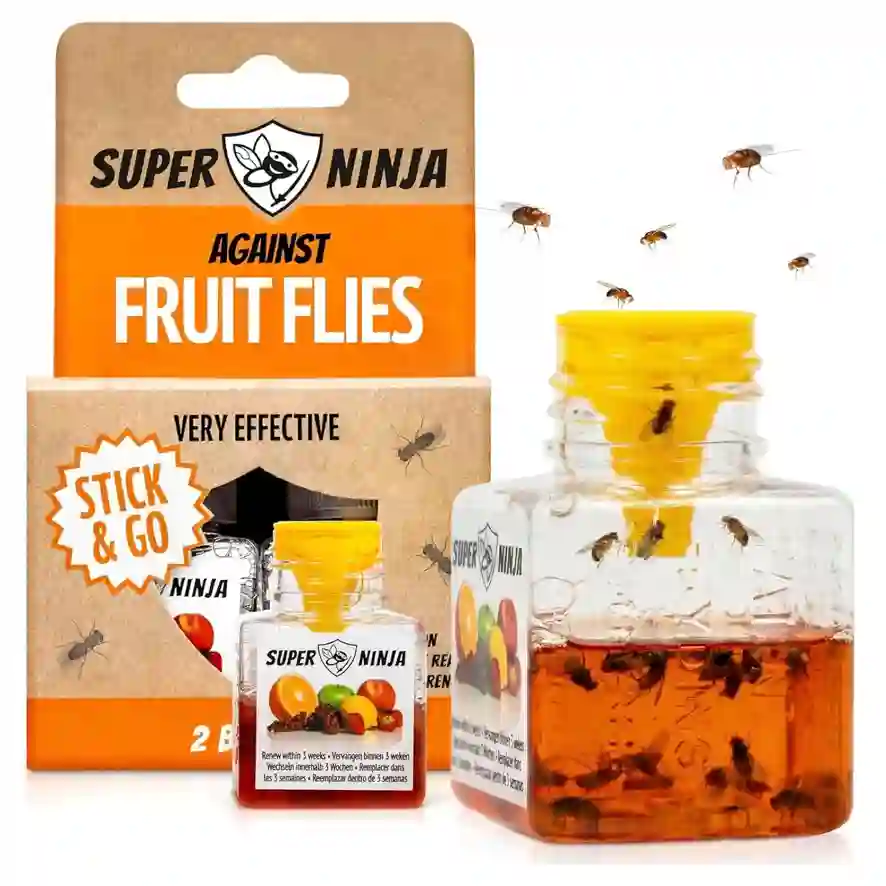
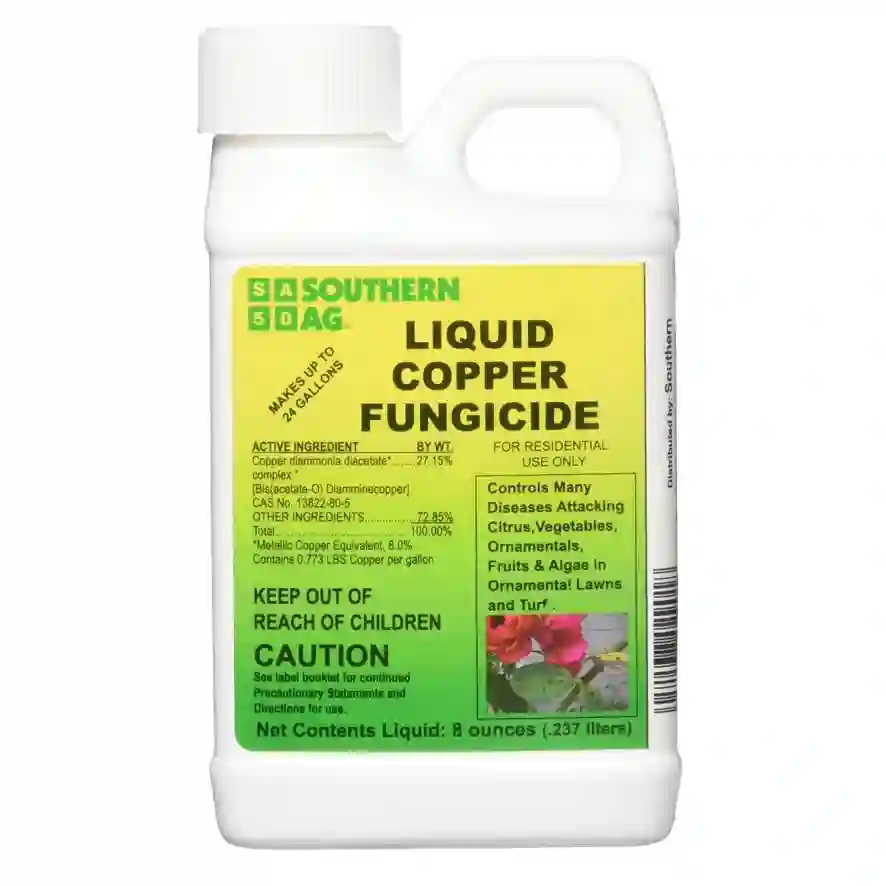


*The recommended treatments are still recommendations according to the databases of the authorities and at no time do they replace the guidelines established according to the legislation of each country
*The products shown are recommendations and are not our own products. As Amazon Associates, we earn revenue from purchases of recommended products.

TREATMENTS
Homemade treatments
There are no home treatments
Natural allies
Chemical treatments
There are no treatments for this disease. Treatments are directed at the insect vectors that transmit it. See insect treatments.

RECOMMENDATIONS

REPELLENT PLANTS
RECOMMENDED PRODUCTS TO ELIMINATE THIS PEST
*The recommended treatments are still recommendations according to the databases of the authorities and at no time do they replace the guidelines established according to the legislation of each country
*The products shown are recommendations and are not our own products. As Amazon Associates, we earn revenue from purchases of recommended products.



Explore more tools
Services
Contact
Legal
©2023 by ZeriMar Laboratoire. All rights reserved.