


Symptoms, treatments, and recommendations for treating leaf miner moths
Leaf Mining Moth
Cameraria Ohridella
Pathogen:
Type:
Insect
Risk:
HIGH
Castaño o castañas
Polillas

WHO CAUSES IT?
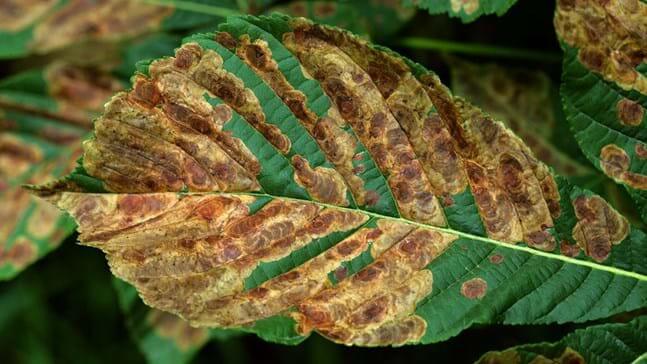
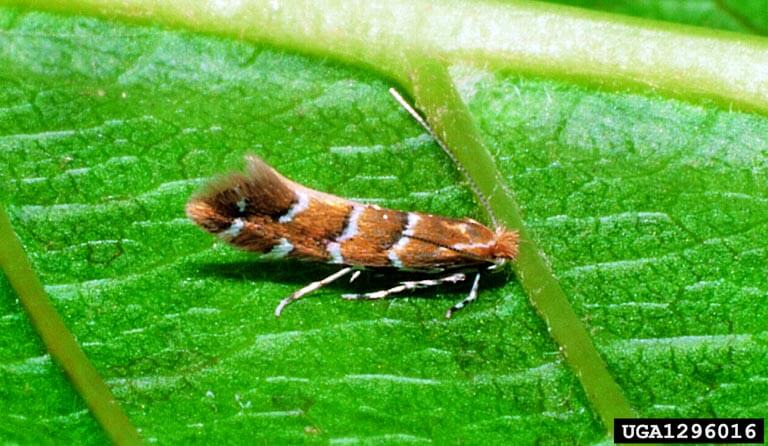
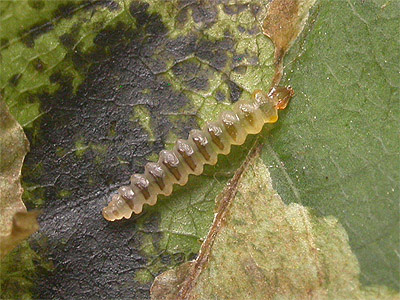
Cameraria ohridella, known as the leaf mining moth, is a small lepidopteran that mainly affects chestnut trees. Adults emerge in spring, usually in May, and are characterized by their brown front wings with white Taches. Females lay their eggs on the surface of leaves, where the larvae hatch and penetrate the leaf tissue. The larvae feed on the mesophyll of the leaves, creating mines that are visible as transparent Taches. This process lasts several weeks, after which the larvae pupate inside the mines. The moth can have several generations per year, especially in warm climates, which increases its ability to cause significant damage to chestnut trees. During the winter, pupae can survive in fallen leaf litter, resuming their activity with rising temperatures the following spring.

SYMPTOMS
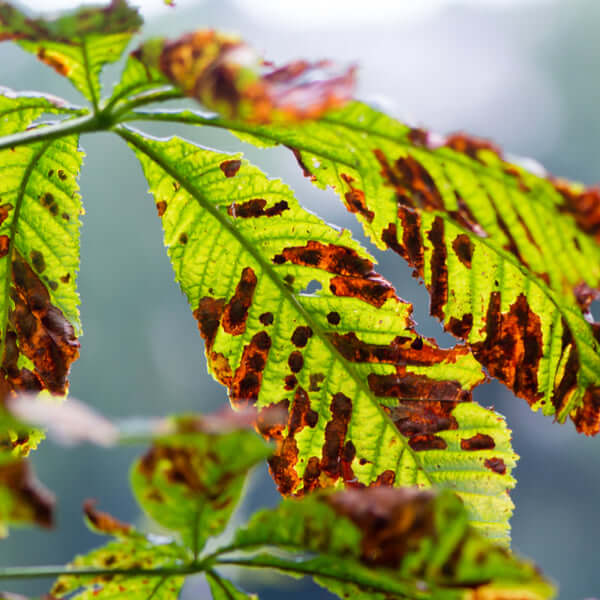
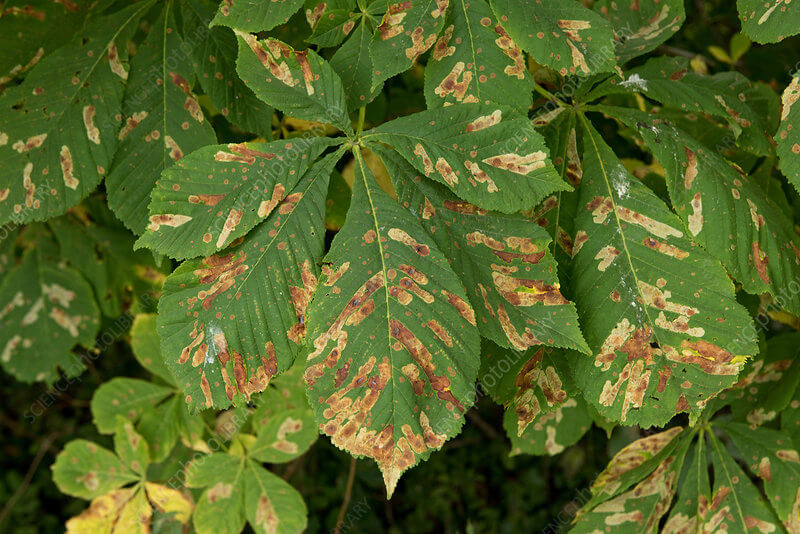
The leaf mining moth causes significant disease in chestnut trees, primarily affecting the leaves. Symptoms begin with small yellowish Taches on the leaf surface that progressively expand.
- Yellowish Taches that expand on the leaves.
- Presence of visible mines, which are transparent or brown areas on the leaves.
- Premature defoliation due to the high density of mines.
- Reduction in plant photosynthesis, affecting its growth.
- General weakening of trees, making them more susceptible to other diseases and pests.
- Mass leaf fall in severe cases, especially towards the end of summer.
- Presence of pupae in the leaf litter around the tree.
- Decrease in chestnut production due to the loss of tree vigor.


TEMPERATURE AND HUMIDITY
20°C - 25°C
60% - 80%

TRANSMISSION PATHS
Wind, movement of infected leaves, transport of contaminated wood, direct contact with infected trees, spread by contaminated tools
Do you want to remove this disease? Choose how you want to treat it.

TREATMENTS
Chemical treatment
• AZADIRACTIN 1% (AS AZADIRACTIN A) [EC] P/V
• MOTH TRAPS
Authorized treatments in organic farming
• AZADIRACTIN 1% (AS AZADIRACTIN A) [EC] P/V
• MOTH TRAPS
Biological control
• BACILLUS THURINGIENSIS KURSTAKI (ABTS-351 strain, 640 g/kg) (32 MILLION CLU/g) 64% [WP] P/P
• BACILLUS THURINGIENSIS KURSTAKI (ABTS-351 strain) (32 MILLION CLU/g) 54% (540 g/kg) [WG] P/P
• BACILLUS THURINGIENSIS KURSTAKI (Strain EG 2348) 22.6% (24 x 10E6 UI/g) [SC] P/V
• BACILLUS THURINGIENSIS KURSTAKI (STRAIN PB 54) (16x10E6 I.U./G) 8% [WP] P/P
• BACILLUS THURINGIENSIS KURSTAKI (STRAIN PB 54) 32% (32 MILLION IU/G) [WP] P/P
• BACILLUS THURINGIENSIS KURSTAKI (EG 2348) (24x106 I.U./G) 18.3% [SC] P/V
• BACILLUS THURINGIENSIS KURSTAKI (EG 2348) 37.5% [WP] P/P
Recommendations
- Collect and destroy fallen leaves around trees to reduce the pupa population.
- Apply specific insecticide treatments in spring, when adults emerge and larvae are active.
- Use pheromone traps to monitor the adult population and determine the optimal time to apply insecticides.
- Introduce natural enemies, such as parasitoid wasps, which can help control the moth population.
- Maintain adequate fertilization and irrigation to strengthen trees and improve their natural resistance to pests.
- Implement a rotation of insecticides with different modes of action to prevent the development of resistance.
- Prune low branches and remove dense vegetation around trees to improve air circulation.
- Regularly inspect trees for early signs of infestation and act quickly.





*The recommended treatments are still recommendations according to the databases of the authorities and at no time do they replace the guidelines established according to the legislation of each country
*The products shown are recommendations and are not our own products. As Amazon Associates, we earn revenue from purchases of recommended products.

TREATMENTS
Homemade treatments
There are no home treatments
Natural allies
Chemical treatments
There are no treatments for this disease. Treatments are directed at the insect vectors that transmit it. See insect treatments.

RECOMMENDATIONS

REPELLENT PLANTS
RECOMMENDED PRODUCTS TO ELIMINATE THIS PEST
*The recommended treatments are still recommendations according to the databases of the authorities and at no time do they replace the guidelines established according to the legislation of each country
*The products shown are recommendations and are not our own products. As Amazon Associates, we earn revenue from purchases of recommended products.



Explore more tools
Services
Contact
Legal
©2023 by ZeriMar Laboratoire. All rights reserved.