


Symptoms, treatments, and recommendations for treating codling moths, worms, or pear moths
Carpocapsa, Worm Or Pear Moth
Cydia Pomonella
Pathogen:
Type:
Insect
Risk:
CRITICAL
Peral
Polillas

WHO CAUSES IT?
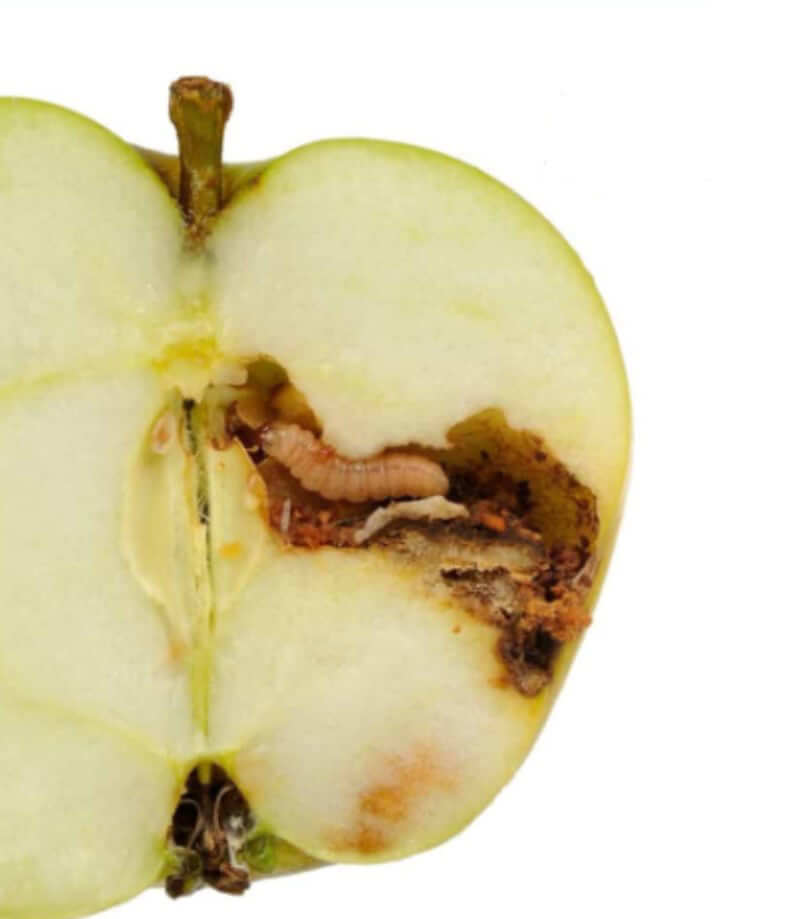
Cydia pomonella, known as the carpocapsa or pear moth, is a lepidopteran belonging to the family Tortricidae. The adult female lays her eggs individually on the leaves and fruits of the pear tree. The eggs hatch into larvae that pierce the skin of the fruits and feed on the inside, creating galleries in the pulp. After several weeks, the mature larvae leave the fruit to pupate in the bark of the tree or in nearby soil. The pupation phase lasts approximately two weeks, depending on environmental conditions. The adults emerge and restart the cycle. In temperate climates, codling moth can have two to three generations per year, while in warmer climates it can have up to four generations.

SYMPTOMS
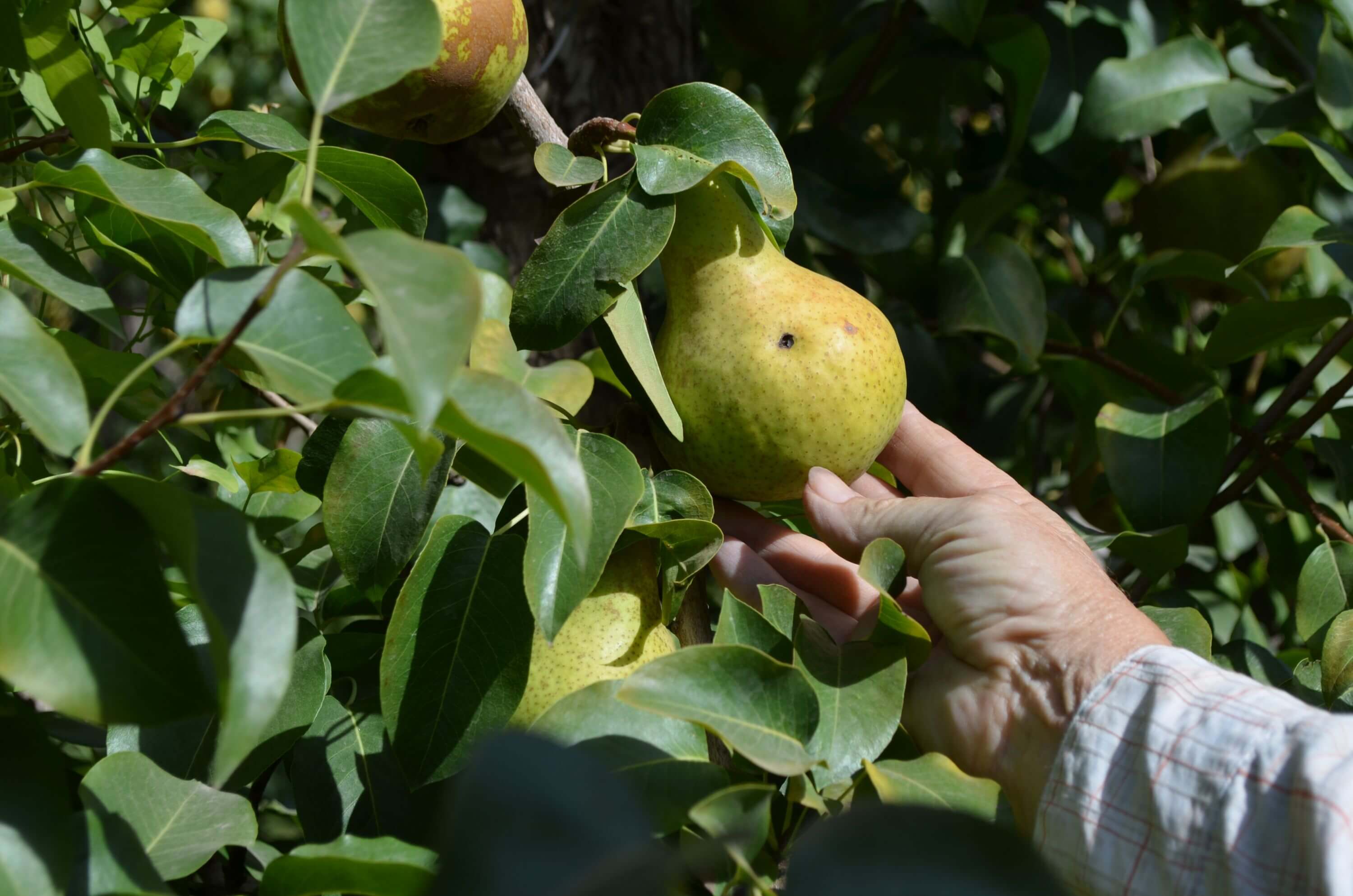
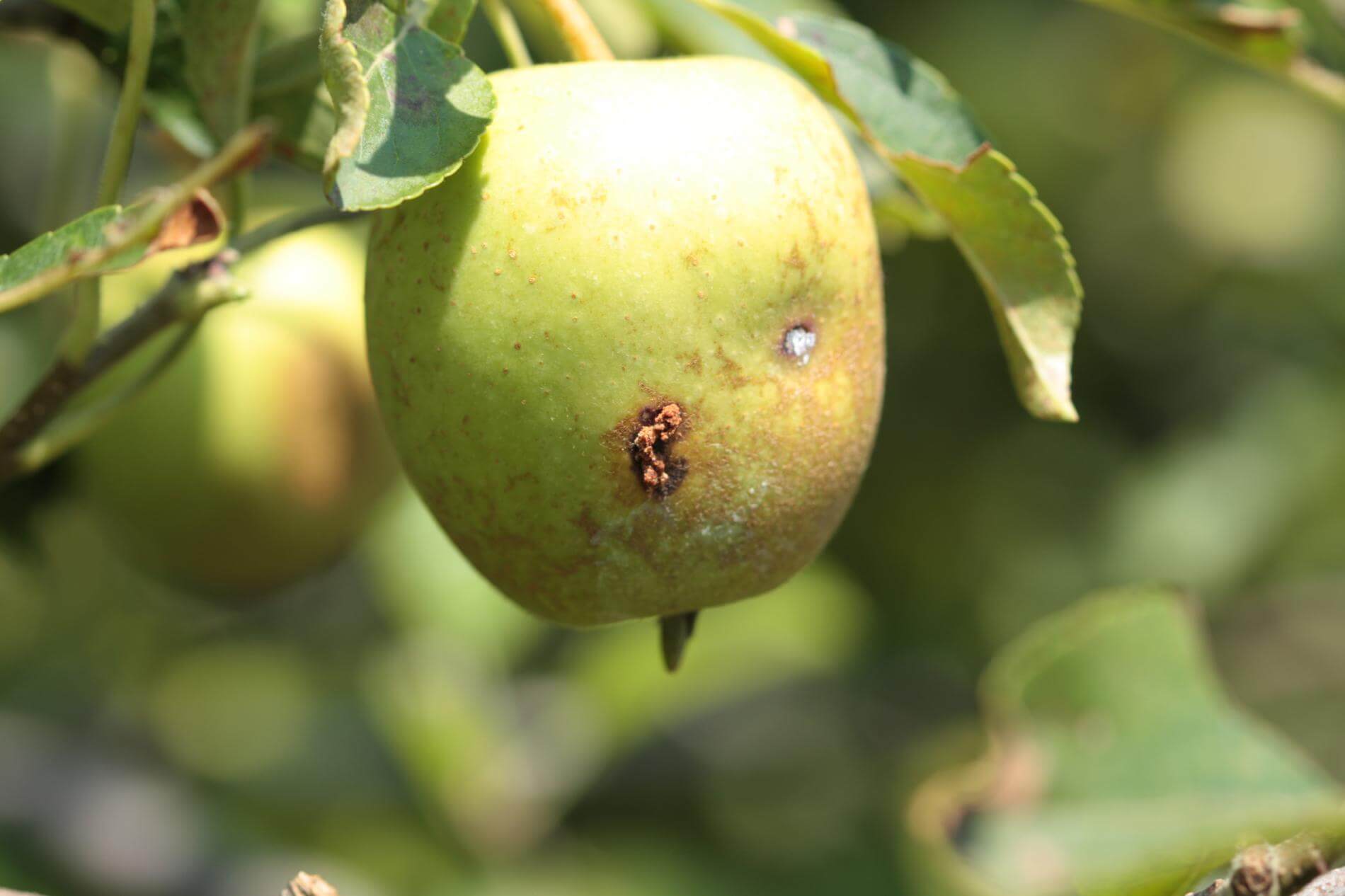
The infestation of Cydia pomonella in the pear tree causes severe damage to both the quantity and quality of the fruits, decreasing their commercial value. The larvae that feed inside the fruits cause their premature fall, in addition to facilitating the entry of secondary pathogens that cause rot. Affected fruits have a less attractive appearance and are more susceptible to rotting during storage.
- Small entrance holes in the skin of the fruit.
- Internal galleries full of larva excrement.
- Premature fall of infested fruits.
- Internal rot of the fruit.
- Presence of larvae inside the fruit.
- Reduction in the size and quality of the fruit.


TEMPERATURE AND HUMIDITY
15°C - 32°C
50% - 70%

TRANSMISSION PATHS
Wind, Mobility of adults, Infected plant material, Transport of infested fruits
Do you want to remove this disease? Choose how you want to treat it.

TREATMENTS
Chemical treatment
• (E,E)-8,10-DODECADIEN-1-OL 0.4g/diffuser + DODECAN-1-OL 0.2g/diffuser [VP] P/P
• (E,E)-8,10-DODECADIEN-1-OL 1100mg/diffuser [VP] P/P
• (E,E)-8,10-DODECADIEN-1-OL 14.18% (300mg/diffuser) [VP] P/P
• (E,E)-8,10-DODECADIEN-1-OL 18.05% [AE] P/P
• (E,E)-8,10-DODECEN-1-OL 18.05% + Mixture of: [(E)-8-DODECEN-1-YL ACETATE + (Z)-8-DODECEN-1-YL ACETATE+ (Z)-8-DODECEN-1-OL] 12.5% [AE] P/P
• (E,E)-8,10-DODECEN-1-OL 19.5% + (Z)-8-DODECEN-1-IL ACETATE 13.1% + (E)-8-DODECEN-1-IL ACETATE 0.75% + Z-8-DODECEN-1-OL 0.1% [AE] P/P
• (E,E)-8,10-DODECADIEN-1-OL 20.9% [AE] P/P
• (Z)-11 TETRADECEN-1-IL ACETATE 11.4% + (Z)-9- TETRADECEN-1-IL ACETATE 6.3% + (E,E)-8,10-DODECADIEN-1-OL 16 .9% [AE] P/P
• 1-TETRADECANOL 7.1% (31 MG S.A./DIFFUSOR) + DODECAN-1-OL 29.7% (132 MG S.A./DIFFUSOR) + E,E-8,10-DODECADIEN-1-OL 57.3% (254 MG S.A./DIFFUSER) [VP] P/P
• ACETAMIPRID 20% [SL] P/V
• CYPERMETHRIN 10% [EC] P/V
• CHLORANTRANILIPROL 20% [SC] P/V
• CHLORANTRANILIPROLE 5.17% [SC] P/V
• DELTAMETHRIN 1.5% [EW] P/V
• DELTAMETHRIN 1.57% [SC] P/V
• DELTAMETHRIN 10% [EC] P/V
• DELTAMETHRIN 2.5% [EC] P/V
• DELTAMETHRIN 2.5% [EW] P/V
• E,E-8,10-DODECADIEN-1-OL 0.798% (10.63 MG S.A./DIFFUSER) [VP] P/P
• E,E-8,10-DODECADIEN-1-OL 14% (3.35 X 10E-7 G I.A./CAPSULE) [CS] P/V
• E,E-8,10-DODECADIEN-1-OL 18.05% [AE] P/P
• E,E-8,10-DODECADIEN-1-OL 2.4% [VP] P/P
• E,E-8,10-DODECADIEN-1-OL 4.6% [VP] P/P
• E,E-8,10-DODECADIEN-1-OL 7.75% [VP] P/P
• E,E-8,10-DODECADIEN-1-OL 9.03% [AE] P/P
• ESFENVALERATE 2.5% [EC] P/V
• ESFENVALERATE 5% [EC] P/V
• ESFENVALERATO 5% [EW] P/V
• LAMBDA CYHALOTHRIN 1.5% [CS] P/V
• LAMBDA CYHALOTHRIN 10% [CS] P/V
• LAMBDA CYHALOTHRIN 2.5% [WG] P/P
• LAMBDA CYHALOTHRIN 5% [EG] P/P
• SPINETORAM 25% [WG] P/P
• SPINOSAD 48% [SC] P/V
• TEBUFENOCIDE 24% [SC] P/V
• CYDIA POMONELLA ATTRACTANT (Cairomonal attractant)
• Cydia pomonella (Pheromone)
Authorized treatments in organic farming
• (E,E)-8,10-DODECADIEN-1-OL 0.4g/diffuser + DODECAN-1-OL 0.2g/diffuser [VP] P/P
• (E,E)-8,10-DODECADIEN-1-OL 1100mg/diffuser [VP] P/P
• (E,E)-8,10-DODECADIEN-1-OL 14.18% (300mg/diffuser) [VP] P/P
• (E,E)-8,10-DODECADIEN-1-OL 18.05% [AE] P/P
• (E,E)-8,10-DODECEN-1-OL 18.05% + Mixture of: [(E)-8-DODECEN-1-YL ACETATE + (Z)-8-DODECEN-1-YL ACETATE+ (Z)-8-DODECEN-1-OL] 12.5% [AE] P/P
• (E,E)-8,10-DODECEN-1-OL 19.5% + (Z)-8-DODECEN-1-IL ACETATE 13.1% + (E)-8-DODECEN-1-IL ACETATE 0.75% + Z-8-DODECEN-1-OL 0.1% [AE] P/P
• (E,E)-8,10-DODECADIEN-1-OL 20.9% [AE] P/P
• (Z)-11 TETRADECEN-1-IL ACETATE 11.4% + (Z)-9- TETRADECEN-1-IL ACETATE 6.3% + (E,E)-8,10-DODECADIEN-1-OL 16 .9% [AE] P/P
• 1-TETRADECANOL 7.1% (31 MG S.A./DIFFUSOR) + DODECAN-1-OL 29.7% (132 MG S.A./DIFFUSOR) + E,E-8,10-DODECADIEN-1-OL 57.3% (254 MG S.A./DIFFUSER) [VP] P/P
• E,E-8,10-DODECADIEN-1-OL 0.798% (10.63 MG S.A./DIFFUSER) [VP] P/P
• E,E-8,10-DODECADIEN-1-OL 2.4% [VP] P/P
• E,E-8,10-DODECADIEN-1-OL 4.6% [VP] P/P
• LAMBDA CYHALOTHRIN 1.5% [CS] P/V
• LAMBDA CYHALOTHRIN 10% [CS] P/V
• LAMBDA CYHALOTHRIN 2.5% [WG] P/P
• LAMBDA CYHALOTHRIN 5% [EG] P/P
• SPINOSAD 48% [SC] P/V
• CYDIA POMONELLA ATTRACTANT (Cairomonal attractant)
• Cydia pomonella (Pheromone)
Biological control
• BACILLUS THURINGIENSIS AIZAWAI 50% [WG] P/P
• BACILLUS THURINGIENSIS KURSTAKI (ABTS-351 strain, 640 g/kg) (32 MILLION CLU/g) 64% [WP] P/P
• BACILLUS THURINGIENSIS KURSTAKI (ABTS-351 strain) (32 MILLION CLU/g) 54% (540 g/kg) [WG] P/P
• BACILLUS THURINGIENSIS KURSTAKI (ABTS-351 strain) (32 MILLION CLU/g) 54% [WG] P/P
• BACILLUS THURINGIENSIS KURSTAKI (ABTS-351 strain) 54[WG] P/P
• BACILLUS THURINGIENSIS KURSTAKI (STRAIN PB 54) (16x10E6 I.U./G) 8% [WP] P/P
• BACILLUS THURINGIENSIS KURSTAKI (STRAIN PB 54) (16x10E6 IU/G) 9.74% [SC] P/V
• BACILLUS THURINGIENSIS KURSTAKI (STRAIN PB 54) 32% (32 MILLION IU/G) [WP] P/P
• BACILLUS THURINGIENSIS KURSTAKI (Strain SA-11) 85% (32 MILLION IU/G) [WG] P/P
• CYDIA POMONELLA GRANULOVIRUS (MEXICAN ISOLATE) (2x10E13 viable granules/L) 4.96% [SC] P/V
• CYDIA POMONELLA GRANULOVIRUS (MEXICAN ISOLATE) 90.9% (1X10e13 GRANULES/L) [SC] P/V
• CYDIA POMONELLA GRANULOVIRUS (R5 ISOLATE) 90.9% (1 X 10E13 GV/L) [SC] P/V
• CYDIA POMONELLA GRANULOVIRUS (CpGV V15) (3 X 10E13 GRANULES/L) 52% [SC] P/V
• CYDIA POMONELLA GRANULOVIRUS (CpGV V22) (3 X 10E13 GRANULES/L) 52% [SC] P/V
• STEINERNEMA FELTIAE (Parasitoid and predatory nematodes)
Recommendations
- Carry out regular monitoring of trees to detect the presence of eggs, larvae or initial damage.
- Use pheromone traps to monitor and capture adult males, helping to reduce the population and predict flight peaks.
- Implement biological control programs through the release of specific codling parasitoids.
- Apply insecticide treatments at critical moments in the pest cycle, such as when larvae emerge.
- Practice integrated pest management combining biological, cultural and chemical methods to reduce dependence on insecticides.
- Remove and destroy fallen and affected fruits to reduce the number of larvae that can complete their development.
- Promote biodiversity in the orchard to encourage the presence of natural predators of the codling moth.
- Use ground covers or mulch to make it difficult for larvae to reach the ground to pupate.
- Implement sexual confusion techniques to reduce adult mating.





*The recommended treatments are still recommendations according to the databases of the authorities and at no time do they replace the guidelines established according to the legislation of each country
*The products shown are recommendations and are not our own products. As Amazon Associates, we earn revenue from purchases of recommended products.

TREATMENTS
Homemade treatments
There are no home treatments
Natural allies
Chemical treatments
There are no treatments for this disease. Treatments are directed at the insect vectors that transmit it. See insect treatments.

RECOMMENDATIONS

REPELLENT PLANTS
RECOMMENDED PRODUCTS TO ELIMINATE THIS PEST
*The recommended treatments are still recommendations according to the databases of the authorities and at no time do they replace the guidelines established according to the legislation of each country
*The products shown are recommendations and are not our own products. As Amazon Associates, we earn revenue from purchases of recommended products.



Explore more tools
Services
Contact
Legal
©2023 by ZeriMar Laboratoire. All rights reserved.