


Symptoms, treatments, and recommendations for treating elephantiasis
Elephantiasis
Ustilaginoidella oedipigera
Pathogen:
Type:
Fungus
Risk:
HIGH
Platanera
Virus


WHO CAUSES IT?
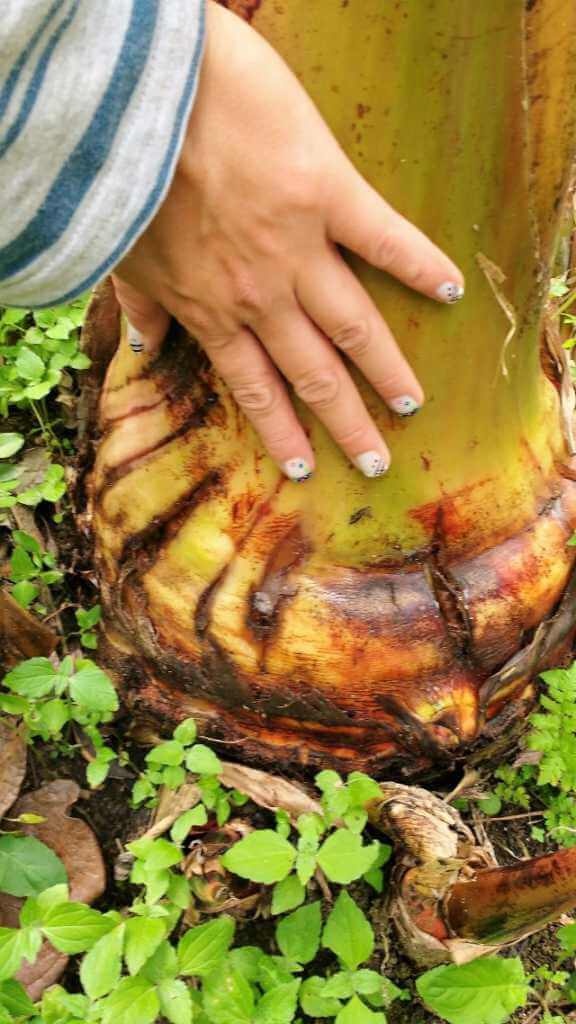
Ustilaginoidella oedipigera is a phytopathogenic fungus that attacks various species of musaceae, causing severe deformations in the affected tissues. It develops mainly in warm and humid climates, where its spores find optimal conditions for germination. Its infectious cycle begins with the production of spores that can be transported by wind, water and contaminated materials. Once in contact with plant tissue, they germinate and penetrate through wounds or stomata, colonizing internal tissues. As the fungus progresses, it induces abnormal cell growth, causing hypertrophy and characteristic malformations. The proliferation of mycelium within plant tissues triggers the accumulation of toxic substances that alter the normal development of the plant. Under favorable conditions, the fungus completes its development and releases new spores into the environment, ensuring its dispersion and persistence in the environment. It can survive in plant residues and soil for long periods, allowing new infections in subsequent seasons.

SYMPTOMS
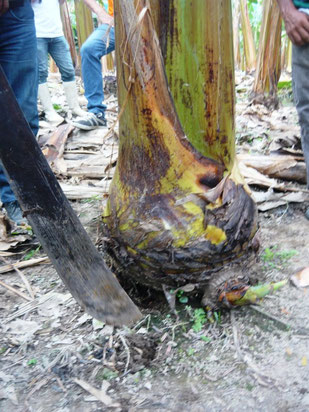
In banana trees, Ustilaginoidella oedipigera is the causal agent of elephantiasis, a disease that is characterized by exaggerated deformation of plant tissues, mainly in the pseudostem and petioles. The infection alters the growth of the plant, generating irregular swellings and abnormal development that compromises the production and quality of the fruits. In advanced stages, the affected tissues may become brittle and more susceptible to secondary infections, which aggravates the deterioration of the plant.
- Abnormal thickening of the pseudostem and petioles.
- Appearance of swellings or tumors in the affected tissues.
- Abnormal coloration in infected areas, with dark brown tones.
- Loss of rigidity in the leaves and structural weakening of the plant.
- Reduction in production and deformation of fruits.
- Greater predisposition to attacks by other opportunistic pathogens.


TEMPERATURE AND HUMIDITY
24°C - 32°C
85% - 100%

TRANSMISSION PATHS
Wind-borne spores, contaminated irrigation water, contact with infected agricultural tools, diseased plant debris, contaminated planting material
Do you want to remove this disease? Choose how you want to treat it.

TREATMENTS
Chemical treatment
Il n’existe aucun traitement efficace contre ce pathogène. Il est recommandé d'enlever les plantes, de les éliminer et de procéder à la désinfection et/ou à la solarisation du sol. Il est important de désinfecter les outils après contact avec la plante infectée.
Authorized treatments in organic farming
Il n’existe aucun traitement efficace contre ce pathogène. Il est recommandé d'enlever les plantes, de les éliminer et de procéder à la désinfection et/ou à la solarisation du sol. Il est important de désinfecter les outils après contact avec la plante infectée.
Biological control
-
Recommendations
- Use healthy and certified propagation material to avoid the introduction of the pathogen in new plantations.
- Implement adequate management of humidity in the crop, avoiding conditions of excess water that favor the proliferation of the fungus.
- Remove and destroy infected plant remains to reduce the source of inoculum in the environment.
- Disinfect agricultural tools and equipment with fungal solutions before and after use in the crop.
- Apply preventive fungicides in areas where the disease has been previously detected.
- Maintain adequate distance between plants to facilitate ventilation and reduce relative humidity in the crop canopy.
- Constantly monitor the presence of initial symptoms to perform sanitary pruning and prevent the spread of the pathogen.
- Avoid using contaminated water in irrigation, as it can transport fungal spores.
- Apply biological treatments with antagonistic fungi that limit the development of Ustilaginoidella oedipigera in the soil and the plant.
- Implement a crop rotation program with species not susceptible to the pathogen.
- Train farmers in integrated management practices to reduce the incidence of the disease.





*The recommended treatments are still recommendations according to the databases of the authorities and at no time do they replace the guidelines established according to the legislation of each country
*The products shown are recommendations and are not our own products. As Amazon Associates, we earn revenue from purchases of recommended products.

TREATMENTS
Homemade treatments
There are no home treatments
Natural allies
Chemical treatments
There are no treatments for this disease. Treatments are directed at the insect vectors that transmit it. See insect treatments.

RECOMMENDATIONS

REPELLENT PLANTS
RECOMMENDED PRODUCTS TO ELIMINATE THIS PEST
*The recommended treatments are still recommendations according to the databases of the authorities and at no time do they replace the guidelines established according to the legislation of each country
*The products shown are recommendations and are not our own products. As Amazon Associates, we earn revenue from purchases of recommended products.



Explore more tools
Services
Contact
Legal
©2023 by ZeriMar Laboratoire. All rights reserved.