


Symptoms, treatments, and recommendations for treating crown rot
Crown Rot
Phytophthora Cactorum
Pathogen:
Type:
Oomycete
Risk:
CRITICAL
Fresa
Phytophthora

WHO CAUSES IT?
Phytophthora cactorum is an oomycete that affects numerous plants, including strawberries. It is characterized as a soil pathogen that can survive in adverse conditions for long periods. This microorganism can infect both the roots and the aerial parts of the plant, causing significant damage to strawberry crops.

SYMPTOMS
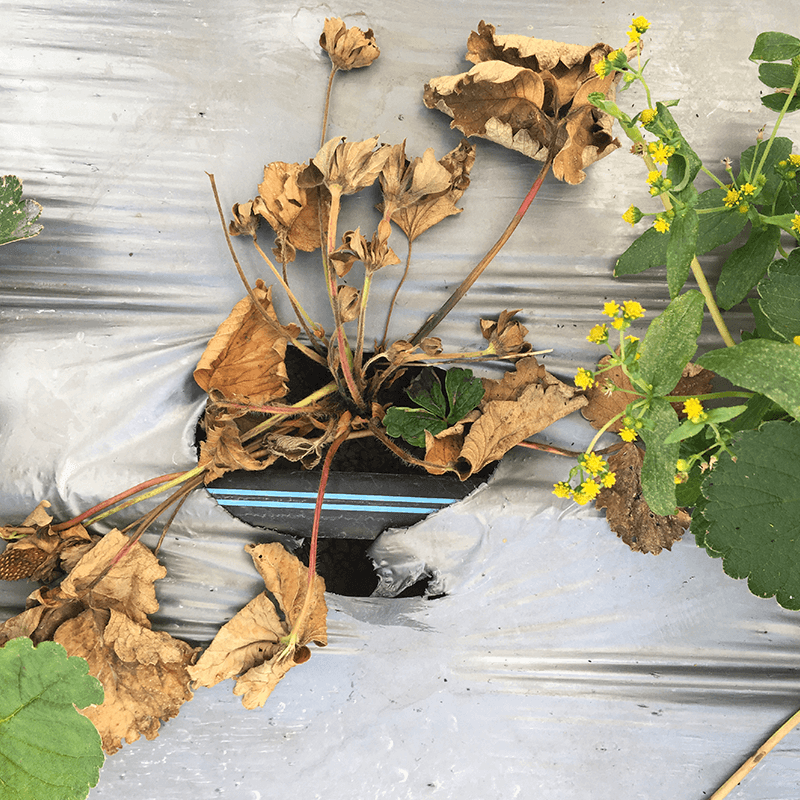
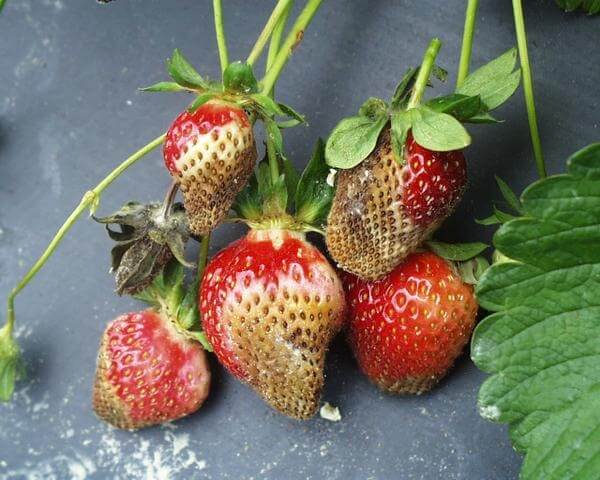
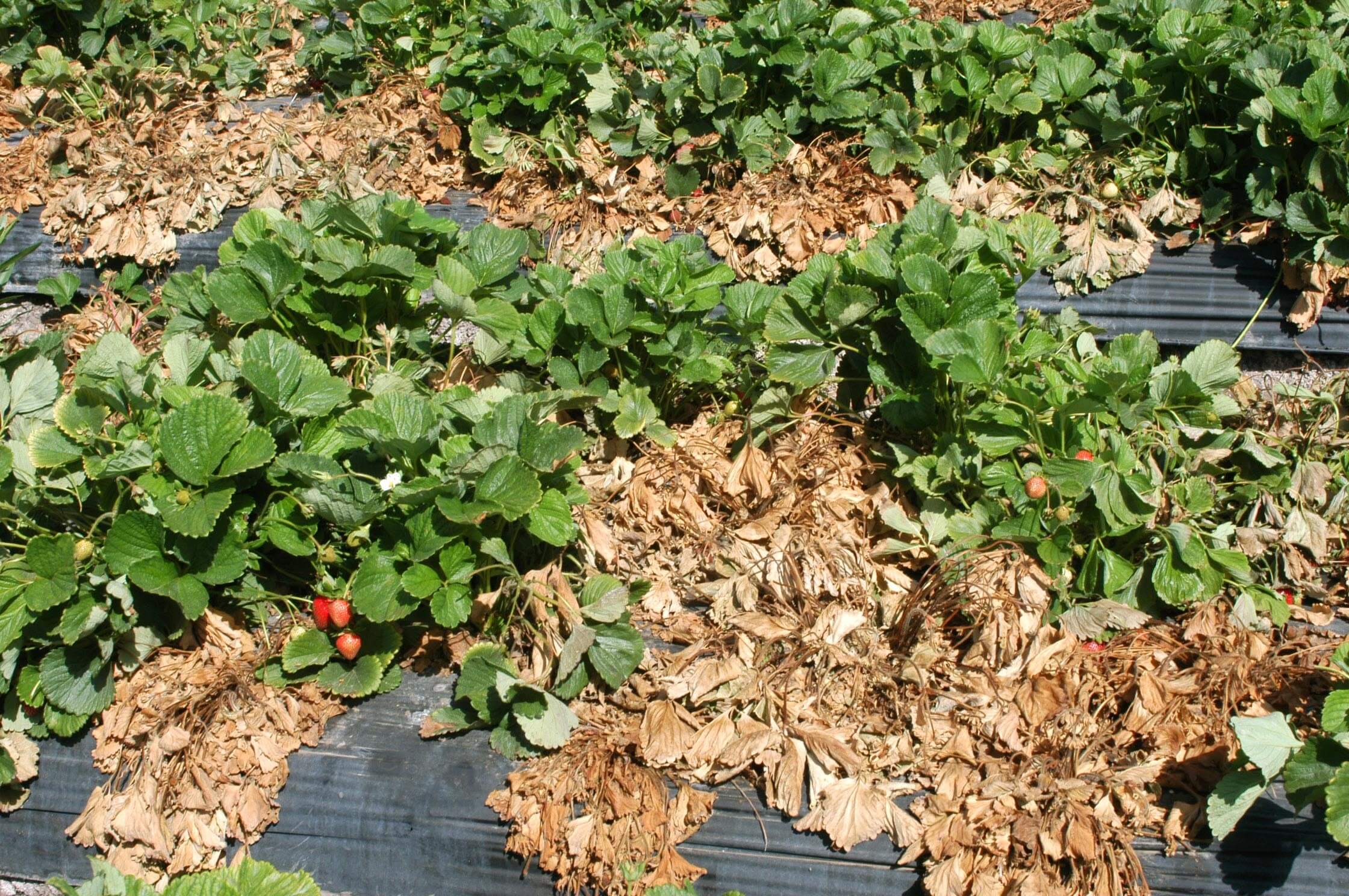
The disease it produces in strawberries, known as root wilt, initially manifests itself with a sudden wilting of the leaves, followed by yellowing and necrosis on the edges of the leaves. In addition, affected plants show poor growth and decreased fruit production. In advanced stages, a complete collapse of the plant is observed, which leads to death.


TEMPERATURE AND HUMIDITY
15°C - 25°C
70% - 90%

TRANSMISSION PATHS
Contaminated soil, irrigation water, infected plant material, cultivation tools, biotic vectors (such as nematodes), plant residues.
Do you want to remove this disease? Choose how you want to treat it.

TREATMENTS
Chemical treatment
• CAPTAN 47.5% [SC] P/V
• CAPTAIN 80% [WG] P/P
• FOSETIL-AL 80% [WG] P/P
• POTASSIUM PHOSPHONATES 50.4% (exp. as phosphorous acid) [SL] P/V
• POTASSIUM PHOSPHONATES 51% (Exp. as phosphorous acid) [SL] P/V
• METALAXIL 25% [WP] P/P
• COPPER OXYCHLORIDE 30% (EXPR. IN CU) [WP] P/P
• COPPER OXYCHLORIDE 35% (EXPR. IN CU) [WG] P/P
• COPPER OXYCHLORIDE 38% (EXPR. IN CU) [SC] P/V
• COPPER OXYCHLORIDE 50% (EXPR. IN CU) [WG] P/P
• COPPER OXYCHLORIDE 50% (EXPR. IN CU) [WP] P/P
• COPPER OXYCHLORIDE 52% (EXPR. IN CU) [SC] P/V
• CUPROCALCIC SULFATE 12.4% (EXPR. IN CU) [SC] P/V
• CUPROCALCIC SULFATE 20% (EXPR. IN CU) [WG] P/P
• CUPROCALCIC SULFATE 20% (EXPR. IN CU) [WP] P/P
Authorized treatments in organic farming
• COPPER OXYCHLORIDE 30% (EXPR. IN CU) [WP] P/P
• COPPER OXYCHLORIDE 35% (EXPR. IN CU) [WG] P/P
• COPPER OXYCHLORIDE 38% (EXPR. IN CU) [SC] P/V
• COPPER OXYCHLORIDE 50% (EXPR. IN CU) [WG] P/P
• COPPER OXYCHLORIDE 50% (EXPR. IN CU) [WP] P/P
• COPPER OXYCHLORIDE 52% (EXPR. IN CU) [SC] P/V
• CUPROCALCIC SULFATE 12.4% (EXPR. IN CU) [SC] P/V
• CUPROCALCIC SULFATE 20% (EXPR. IN CU) [WG] P/P
• CUPROCALCIC SULFATE 20% (EXPR. IN CU) [WP] P/P
Biological control
• BACILLUS AMYLOLIQUEFACIENS subsp. plantarum (strain D747) 5% [SC] P/V
• CLONOSTACHYS ROSEA CEPA J1446 (GLIOCLADIUM CATENULATUM (CEPA J1446)) (1 x 10E 9 cfu/g) 900 g/kg [WG] P/P
• TRICHODERMA ASPERELLUM (STRAIN ICC012) 2% (5 X 10 E7 CFU/G) + TRICHODERMA GAMSII (STRAIN ICC080) 2% (5
• TRICHODERMA ASPERELLUM (STRAIN ICC012) 2% + TRICHODERMA GAMSII (STRAIN ICC080) 2% (3 X 10E7 CFU/G (SUM OF BOTH MICROORGANISMS)) [WP] P/P
• TRICHODERMA ASPERELLUM (STRAIN T25) (1X10E8 CFU/G) 0.5% + TRICHODERMA ATROVIRIDE (STRAIN T11) (1X10E8 CFU/G) 0.5% [WG] P/P
Recommendations
To prevent the spread of Phytophthora cactorum in strawberry plantations, it is essential to practice adequate soil management, avoiding waterlogging and improving drainage. In addition, crop rotation and the use of certified, pathogen-free plant material is recommended. It is also important to regularly monitor the plants to detect any signs of disease early. To control the disease once it has appeared, specific fungicide treatments can be used applied to the soil or plants, following the recommendations for use. In addition, it is important to eliminate and destroy diseased plants to prevent the spread of the pathogen in the plantation.





*The recommended treatments are still recommendations according to the databases of the authorities and at no time do they replace the guidelines established according to the legislation of each country
*The products shown are recommendations and are not our own products. As Amazon Associates, we earn revenue from purchases of recommended products.

TREATMENTS
Homemade treatments
There are no home treatments
Natural allies
Chemical treatments
There are no treatments for this disease. Treatments are directed at the insect vectors that transmit it. See insect treatments.

RECOMMENDATIONS

REPELLENT PLANTS
RECOMMENDED PRODUCTS TO ELIMINATE THIS PEST
*The recommended treatments are still recommendations according to the databases of the authorities and at no time do they replace the guidelines established according to the legislation of each country
*The products shown are recommendations and are not our own products. As Amazon Associates, we earn revenue from purchases of recommended products.



Explore more tools
Services
Contact
Legal
©2023 by ZeriMar Laboratoire. All rights reserved.