


Symptoms, treatments, and recommendations for treating fire blight or fire blight
Fire Blight Or Pear Fog
Erwinia Amylovora
Pathogen:
Type:
Bacterium
Risk:
CRITICAL
Peral
Bacteriosis

WHO CAUSES IT?
Erwinia amylovora is a Gram-negative bacteria that causes the disease known as fire blight in various plants of the Rosaceae family. This bacteria multiplies in plant tissues and can survive inside infected plants, as well as on external surfaces such as the bark of trees. During spring, with increasing humidity and temperature, bacteria begin to exude from infected tissues in the form of a sticky substance containing millions of bacterial cells. These exudates can be spread by wind, rain, insects and pruning tools. Bacteria enter plants through wounds or natural openings such as stomata and nectaries. Once inside, they multiply rapidly, blocking the conducting vessels and causing the death of the affected tissues. This ability to disperse and survive in different environments allows Erwinia amylovora to be highly infectious and destructive.

SYMPTOMS
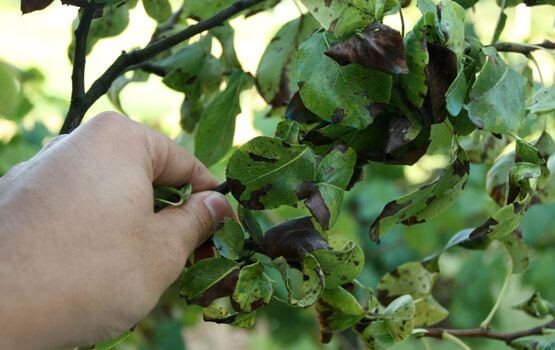
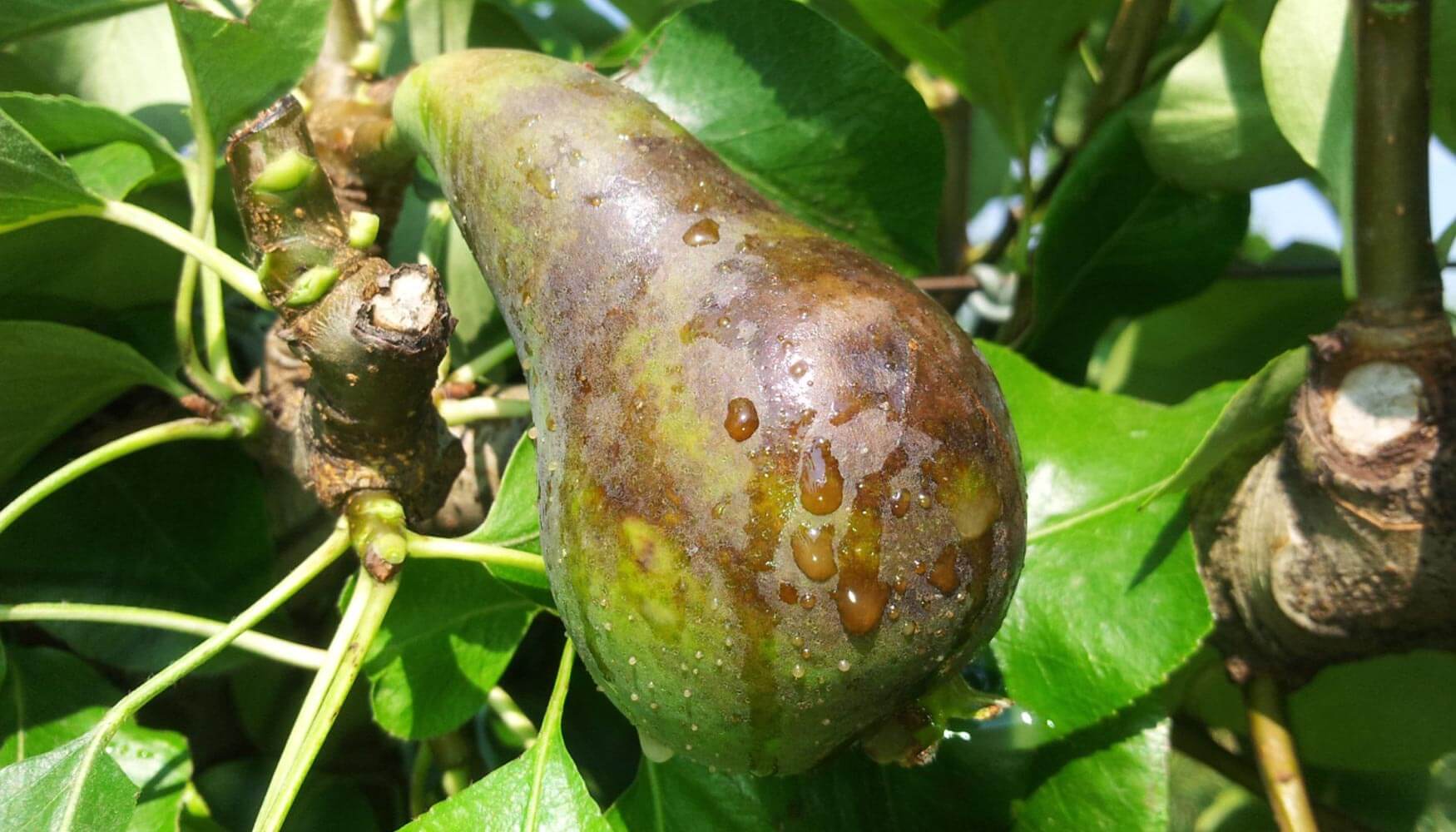
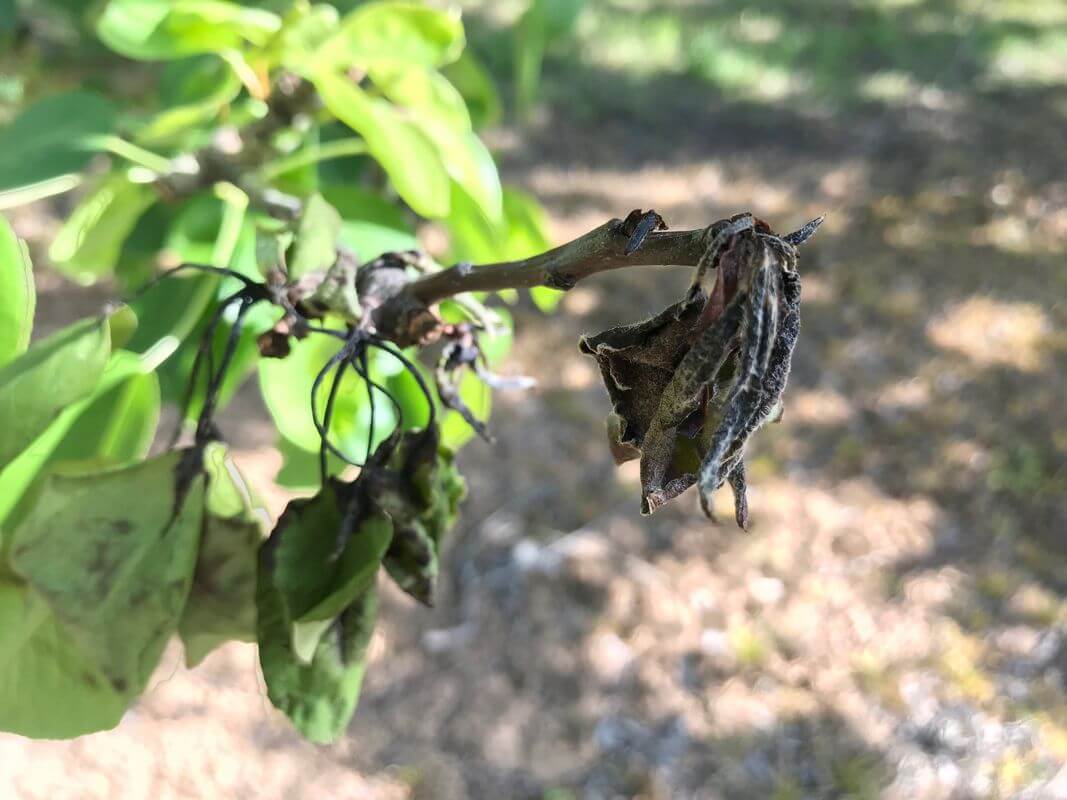
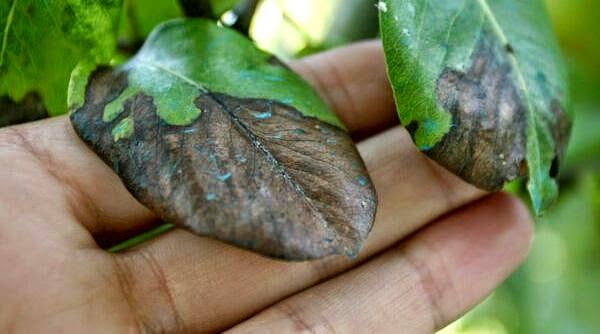
In the pear tree, Erwinia amylovora causes the disease known as fire blight or fire blight. This disease is characterized by the appearance of symptoms that can devastate plantations, especially during the active growing season. The first signs of infection usually appear in the flowers, which wilt and turn black, but remain attached to the plant. The infection can quickly spread to the branches, causing necrosis and the typical burnt appearance on the leaves and shoots.
- Withering and blackening of flowers
- Necrosis in shoots and branches
- Burnt appearance of leaves and buds
- Sticky bacterial exudate in wounds
- Cankers on branches and trunk
- Sudden death of young branches


TEMPERATURE AND HUMIDITY
18-24°C
70-90%

TRANSMISSION PATHS
Wind, Rain, Insects, Pruning tools, Direct contact between plants
Do you want to remove this disease? Choose how you want to treat it.

TREATMENTS
Chemical treatment
• FOSETIL-AL 80% [WG] P/P
• CUPRIC HYDROXIDE 13.6% (EXPR. IN CU) + COPPER OXYCHLORIDE 13.6% (EXPR. IN CU) [SC] P/V
• CUPRIC HYDROXIDE 20% (EXPR. IN CU) [WG] P/P
• CUPRIC HYDROXIDE 25% (EXPR. IN CU) [WG] P/P
• CUPRIC HYDROXIDE 35% (EXPR. IN CU) [WG] P/P
• CUPRIC HYDROXIDE 36% (EXPR. IN CU) [SC] P/V
• CUPRIC HYDROXIDE 40% (EXPR. IN CU) [WG] P/P
• CUPRIC HYDROXIDE 50% (EXPR. IN CU) [WG] P/P
• CUPRIC HYDROXIDE 50% (EXPR. IN CU) [WP] P/P
• LAMINARIN 4.5% [SL] P/S
• COPPER OXYCHLORIDE (Exp. in Cu) 52% [SC] P/V
• COPPER OXYCHLORIDE 25% (EXPR. IN CU) [WG] P/P
• COPPER OXYCHLORIDE 30% (EXPR. IN CU) [WP] P/P
• COPPER OXYCHLORIDE 35% (exp. in Cu) [WG] P/P
• COPPER OXYCHLORIDE 35% (EXPR. IN CU) [WG] P/P
• COPPER OXYCHLORIDE 37.5% (EXPR. IN CU) [WG] P/P
• COPPER OXYCHLORIDE 38% (EXPR. IN CU) [SC] P/V
• COPPER OXYCHLORIDE 50% (EXPR. IN CU) [WG] P/P
• COPPER OXYCHLORIDE 50% (EXPR. IN CU) [WP] P/P
• COPPER OXYCHLORIDE 52% (EXPR. IN CU) [SC] P/V
• COPPER OXYCHLORIDE 70% (EXPR. IN CU) [SC] P/V
• COPPER OXYCHLORIDE 70% [SC] P/V
• CUPROUS OXIDE 50% (EXPR. IN CU) [WP] P/P
• CUPROUS OXIDE 75% (EXPR. IN CU) [WG] P/P
• PROHEXADIONE-CALCIC 10% [WG] P/P
• CUPROCALCIC SULFATE 12.4% (EXPR. IN CU) [SC] P/V
• CUPROCALCIC SULFATE 20% (EXPR. IN CU) [WG] P/P
• CUPROCALCIC SULFATE 20% (EXPR. IN CU) [WP] P/P
• CUPROCALCIC SULFATE 20% (EXPR. IN CU) [WG] P/P
• CUPROCALCIC SULFATE 20% [WP] P/P
Authorized treatments in organic farming
• CUPRIC HYDROXIDE 13.6% (EXPR. IN CU) + COPPER OXYCHLORIDE 13.6% (EXPR. IN CU) [SC] P/V
• CUPRIC HYDROXIDE 20% (EXPR. IN CU) [WG] P/P
• CUPRIC HYDROXIDE 25% (EXPR. IN CU) [WG] P/P
• CUPRIC HYDROXIDE 35% (EXPR. IN CU) [WG] P/P
• CUPRIC HYDROXIDE 36% (EXPR. IN CU) [SC] P/V
• CUPRIC HYDROXIDE 40% (EXPR. IN CU) [WG] P/P
• CUPRIC HYDROXIDE 50% (EXPR. IN CU) [WG] P/P
• CUPRIC HYDROXIDE 50% (EXPR. IN CU) [WP] P/P
• LAMINARIN 4.5% [SL] P/S
• COPPER OXYCHLORIDE (Exp. in Cu) 52% [SC] P/V
• COPPER OXYCHLORIDE 25% (EXPR. IN CU) [WG] P/P
• COPPER OXYCHLORIDE 30% (EXPR. IN CU) [WP] P/P
• COPPER OXYCHLORIDE 35% (exp. in Cu) [WG] P/P
• COPPER OXYCHLORIDE 35% (EXPR. IN CU) [WG] P/P
• COPPER OXYCHLORIDE 37.5% (EXPR. IN CU) [WG] P/P
• COPPER OXYCHLORIDE 38% (EXPR. IN CU) [SC] P/V
• COPPER OXYCHLORIDE 50% (EXPR. IN CU) [WG] P/P
• COPPER OXYCHLORIDE 50% (EXPR. IN CU) [WP] P/P
• COPPER OXYCHLORIDE 52% (EXPR. IN CU) [SC] P/V
• COPPER OXYCHLORIDE 70% (EXPR. IN CU) [SC] P/V
• COPPER OXYCHLORIDE 70% [SC] P/V
• CUPROUS OXIDE 50% (EXPR. IN CU) [WP] P/P
• CUPROUS OXIDE 75% (EXPR. IN CU) [WG] P/P
• CUPROCALCIC SULFATE 12.4% (EXPR. IN CU) [SC] P/V
• CUPROCALCIC SULFATE 20% (EXPR. IN CU) [WG] P/P
• CUPROCALCIC SULFATE 20% (EXPR. IN CU) [WP] P/P
• CUPROCALCIC SULFATE 20% (EXPR. IN CU) [WG] P/P
• CUPROCALCIC SULFATE 20% [WP] P/P
Biological control
• AUREOBASIDIUM PULLULANS (STRAIN DSM 14940) 25% (2.5
• BACILLUS AMYLOLIQUEFACIENS (subsp. plantarum, strain D747) 25% [WG] P/P
• BACILLUS SUBTILIS (STRAIN QST 713) 1.34% [SC] P/V
Recommendations
- Plant varieties of pear trees resistant to fire blight.
- Maintain good hygiene in the garden, eliminating and destroying infected plants.
- Prune affected branches at least 30 cm below the infected area and disinfect pruning tools.
- Avoid overhead irrigation during flowering to reduce the spread of the bacteria.
- Apply preventive treatments with copper-based bactericides or specific antibiotics under the supervision of an agronomist.
- Control insect vectors that can transmit the bacteria between plants.
- Monitor the weather and apply preventive treatments before favorable conditions for infection (high humidity and moderate temperatures).
- Carry out regular and early inspections to detect initial symptoms of the disease.





*The recommended treatments are still recommendations according to the databases of the authorities and at no time do they replace the guidelines established according to the legislation of each country
*The products shown are recommendations and are not our own products. As Amazon Associates, we earn revenue from purchases of recommended products.

TREATMENTS
Homemade treatments
There are no home treatments
Natural allies
Chemical treatments
There are no treatments for this disease. Treatments are directed at the insect vectors that transmit it. See insect treatments.

RECOMMENDATIONS

REPELLENT PLANTS
RECOMMENDED PRODUCTS TO ELIMINATE THIS PEST
*The recommended treatments are still recommendations according to the databases of the authorities and at no time do they replace the guidelines established according to the legislation of each country
*The products shown are recommendations and are not our own products. As Amazon Associates, we earn revenue from purchases of recommended products.



Explore more tools
Services
Contact
Legal
©2023 by ZeriMar Laboratoire. All rights reserved.