top of page

Symptoms, treatments, and recommendations for treating corn eye spot

Corn Eye Spot

Kabatiella Zeae / Aureobasidium Zeae

Pathogen:

Type:

Fungus

Risk:

INTERMEDIATE
Symptoms, treatments, and recommendations for treating corn eye spot

Maíz

Virus

Corn Eyespot: Symptoms and Damage in Corn
1709890758744.png

WHO CAUSES IT?

Kabatiella zeae is a fungal pathogen responsible for the disease known as corn eyespot. This fungus survives mainly in the remains of infected crops and in the soil during the winter. With the onset of the corn growing season, the pathogen produces conidia that are dispersed by wind, rain, and water splashes. When conidia land on corn leaves, they germinate and penetrate through stomata or wounds, initiating infection. During active plant growth, the fungus develops within the leaf tissues, producing characteristic symptoms of the disease. Under favorable conditions of high humidity and moderate temperatures, Kabatiella zeae is able to sporulate profusely, generating new spores that facilitate the continued spread of the disease. The ability to survive in plant residues and soil makes the management of this pathogen challenging, requiring comprehensive management strategies.

1713099015053 (2).png

SYMPTOMS

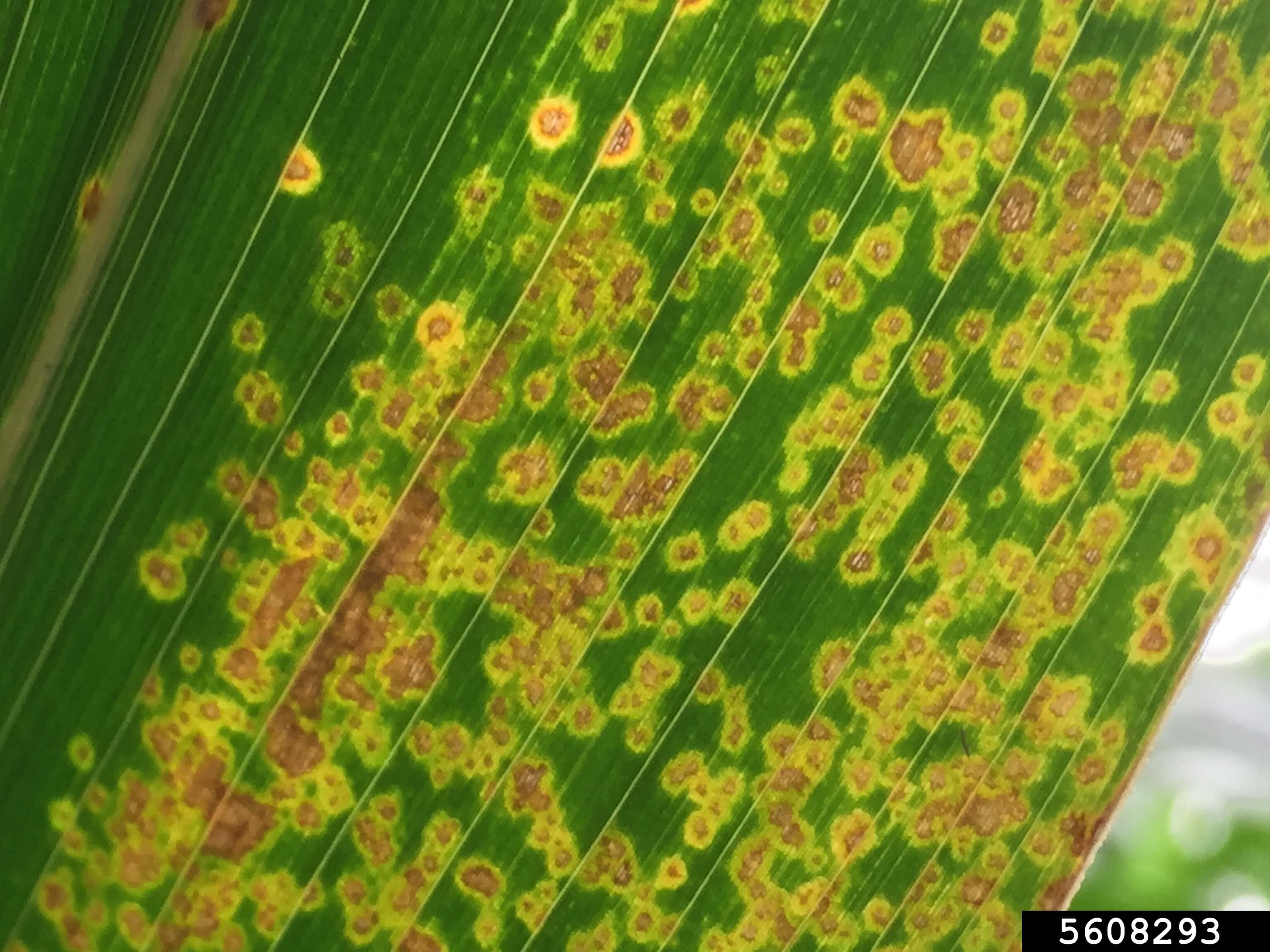
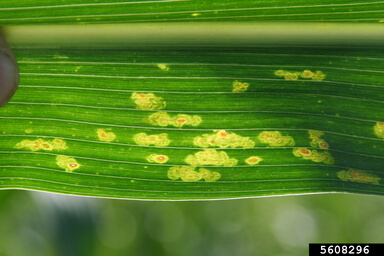
Corn eyespot is a disease that mainly affects the leaves of corn plants, reducing their photosynthetic capacity and, consequently, the crop yield. The first symptoms usually appear as small chlorotic Taches that expand and develop a dark brown center surrounded by a chlorotic halo, resembling an eye.

- Small, circular Taches on the leaves.
- Dark brown centers in the Taches, with chlorotic halos.
- Fusion of Taches in advanced stages, creating extensive necrotic areas.
- Reduction of the photosynthetic capacity of the plant.
- General weakening of the plant.
- Decrease in grain yield.
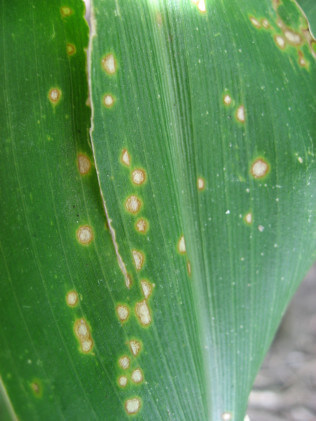
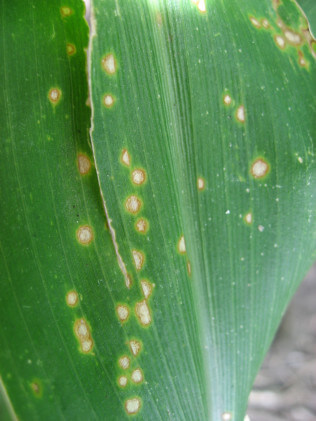
Damage caused by corn eyespot in corn
Corn eyespot in corn: How to recognize and treat it effectively
Corn eyespot | idMicrobe
Online diagnostic service for plant problems and diseases
1709890758650.png

TEMPERATURE AND HUMIDITY

20°C - 25°C

80% - 100%

1709890758697.png

TRANSMISSION PATHS

Wind spores, water splashes, infected crop residues, contaminated agricultural tools

Do you want to remove this disease? Choose how you want to treat it.

1709890758673.png

TREATMENTS

Chemical treatment

The disease is controlled by preventing its early development. To do this, it is advisable to avoid repeating the cultivation of corn on soils where symptoms were observed the previous year and, in any case, bury the remains of the harvest through deep work. Although there are large differences in sensitivity between commercial hybrids currently on the market, there is no variety that is completely resistant to the disease.

Authorized treatments in organic farming

The disease is controlled by preventing its early development. To do this, it is advisable to avoid repeating the cultivation of corn on soils where symptoms were observed the previous year and, in any case, bury the remains of the harvest through deep work. Although there are large differences in sensitivity between commercial hybrids currently on the market, there is no variety that is completely resistant to the disease.

Biological control

-

Recommendations

- Crop rotation to reduce the accumulation of inoculum in the soil.
- Elimination and destruction of infected crop residues to reduce the source of spores.
- Use of corn varieties resistant to Kabatiella zeae when available.
- Implementation of deep tillage practices to bury infected waste.
- Regular monitoring of the field to detect early symptoms of the disease.
- Application of protective and curative fungicides following technical recommendations.
- Maintain good drainage in the fields to reduce excessive humidity.
- Avoid overhead irrigation during periods of high humidity to minimize spore dispersal.
- Train agricultural personnel in the identification and management of corn eyespot.

Sponsored link

Ecoworm Potassium Soap

Ecoworm Potassium Soap

Multi-purpose solution for insects. Effective against whiteflies, mites, thrips, leafhoppers, aphids and scale insects.

Sponsored link

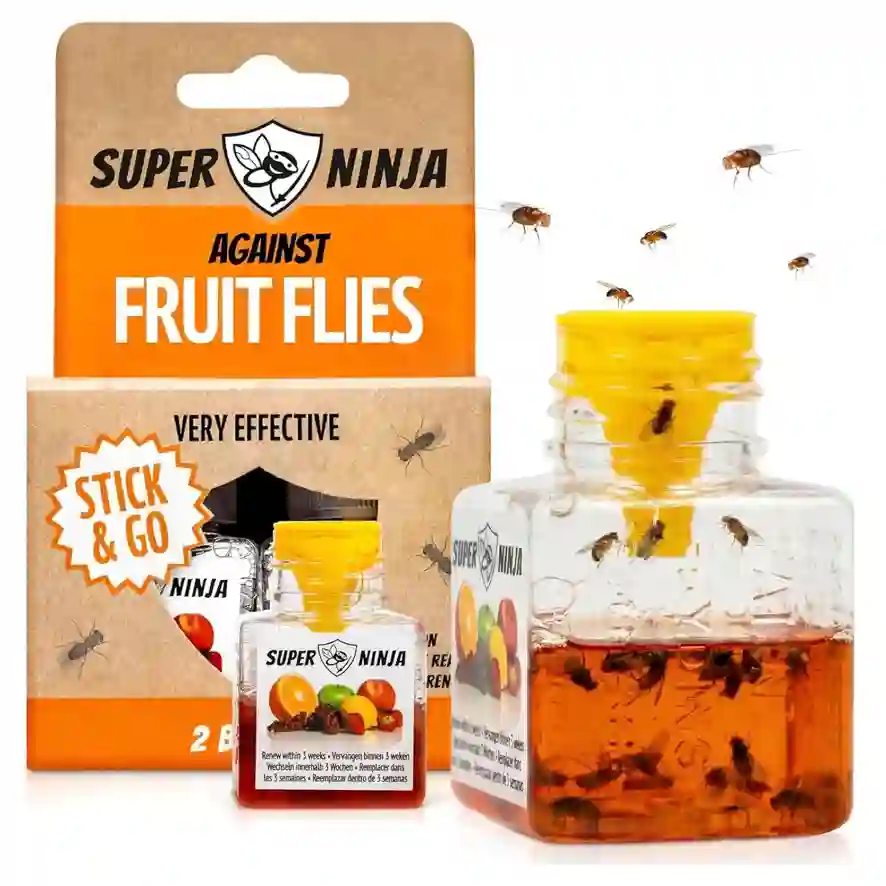
Fruit Fly Traps

Fruit Fly Traps

Ready-to-use fruit fly trap with attractant.

Sponsored link

Liquid Copper Fungicide

Liquid Copper Fungicide

Copper fungicide for fungal diseases and plant diseases.

Sponsored link

Organic Seaweed Fertiliser

Organic Seaweed Fertiliser

Plant Food Ideal for All Plants, Rich in Additional Nutrients

Sponsored link

Fungus Fighter Plus | Fungicide for Plants

Fungus Fighter Plus | Fungicide for Plants

Broad-spectrum fungicide for effective control of fungal diseases in plants.

Sponsored link

Ultimate Bug Killer | Broad-Spectrum Insecticide

Ultimate Bug Killer | Broad-Spectrum Insecticide

Fast acting bug spray with up to 2 weeks protection, controls common garden pests

*The recommended treatments are still recommendations according to the databases of the authorities and at no time do they replace the guidelines established according to the legislation of each country

*The products shown are recommendations and are not our own products. As Amazon Associates, we earn revenue from purchases of recommended products.

1709890758673.png

TREATMENTS

Homemade treatments

BONE MEAL OR GROUND FISH SHELLS

RUSTY NAILS OR IRON SHAVINGS

BANANA PEELS

EPSOM SALTS (MAGNESIUM SULFATE)

SOLUTION WITH HOUSEHOLD BORAX

GROUND OR BOILED EGGSHELLS

COMPOST WITH ONION OR GARLIC SCRAPS

VEGETABLE COOKING WATER

WOOD ASH

WATER WITH VINEGAR OR LEMON (VERY DILUTED)

GARLIC INFUSION

USED COFFEE OR TEA

BANANA AND EGGSHELL INFUSION

POTATO OR LEGUME COOKING WATER

COMPOST FROM FRESH GREEN LEAVES

COMPOST OR WELL-AGED MANURE

DILUTED MILK (1:10)

BANANA TEA

LEAF COMPOST

NETTLE SLURRY

POTASSIUM SOAP AND NEEM OIL SOLUTION

POTASSIUM SOAP SOLUTION + NEEM OIL + DIATOMACEOUS EARTH

BAKING SODA AND NEUTRAL SOAP SOLUTION

GARLIC INFUSION WITH NEUTRAL SOAP

CHROMATIC OR ADHESIVE TRAPS

DILUTED MILK

HORSETAIL INFUSION

TRUNK WHITEWASHING

DIATOMACEOUS EARTH

WOOD ASH

NETTLE SLURRY

CUT THE AFFECTED BRANCHES AND APPLY CINNAMON

GARLIC AND CINNAMON INFUSION

INFUSION OF WORMWOOD, CHILI OR CHILLI

CLEAN THE AFFECTED AREA AND APPLY ASH PASTE WITH GARLIC OR CINNAMON

GARLIC AND MINT INFUSION

LIGHT TRAPS

APPLY CINNAMON POWDER

PITFALL TRAPS

CRUSHED EGG SHELLS

CLEAN AND SEAL THE WOUND WITH CLAY, CINNAMON AND GARLIC PASTE

GARLIC INFUSION

MATURE COMPOST

TRAPS WITH VINEGAR AND SOAP

SEAL HOLES WITH ASH PASTE AND CRUSHED GARLIC

VINEGAR AND BAKING SODA SOLUTION

ANT TRAP

TAPE TRAP

PHEROMONE TRAP

ALCOHOL TRAPS

FUNNEL TRAP

There are no home treatments

Natural allies

PREDATORY MITES

LADYBUGS

LACEWINGS

PARASITIC WASPS

HOVERFLIES OR PARASITIC FLIES

PREDATORY BUGS

There are no natural allies

Mycodiplosis oidii (predatory mosquito)

Chemical treatments

AGRICULTURAL SULFUR (POWDER OR SOLUBLE)

POTASSIUM FERTILIZERS

MAGNESIUM FERTILIZERS

BORON FERTILIZERS

CALCIUM FERTILIZERS

NITROGEN FERTILIZERS

PHOSPHORUS FERTILIZERS

IRON FERTILIZERS

SULFUR FERTILIZERS

NPK FERTILIZERS

There are no treatments for this disease. Treatments are directed at the insect vectors that transmit it. See insect treatments.

ABAMECTIN 0.0015% + PYRETHRINS 0.02%

RAPESEAL OIL

RAPESEAL OIL + PYRETHRINS

ORANGE OIL 6%

PARAFFIN OIL

ACETAMIPRID

ACETAMIPRID 0.005%

ACETAMIPRID 20%

SULFUR

COPPER 20%

COPPER 25%

COPPER 35%

COPPER 38%

COPPER 50%

COPPER 52%

DELTAMETHRIN 1.57%

DELTAMETHRIN 10%

DELTAMETHRIN 2.5%

DIFENOCONAZOLE 1.67%

ESFENVALERATE 2.5%

ESFENVALERATE 5%

100% GARLIC EXTRACT

PHENHEXAMIDE 50%

FLUPYRADIFURONE

FLUPIRADIFURONE 20%

FOSETIL-AL 80%

FERRIC PHOSPHATE

ALUMINUM PHOSPHIDE 56%

PHOSTIAZATE 10%

PHOSTIAZATE 15%

HEXITIAZOX 10%

POTASSIUM HYDROGEN CARBONATE

LAMBDA CYHALOTHRIN

LAMINARIN 4.5%

METALDEHYDE

PIRACLOSTROBIN 6.7% + BOSCALIDE 26.7%

PYRETHRINS

PYRIPROXIFEN 10%

POTASSIUM SALTS OF UNSATURATED FATTY ACIDS

SPINOSAD 0.024%

SPINOSAD 12%

SPINOSAD 48%

TAU-FLUVALINATE 24%

TETRACONAZOLE 10%

TETRACONAZOLE 12.5%

TETRACONAZOLE 4%

TRICHODERMA ASPERELLUM (STRAIN T34)

1709890758720.png

RECOMMENDATIONS

​

1714749024044.png

REPELLENT PLANTS

​

RECOMMENDED PRODUCTS TO ELIMINATE THIS PEST

Sponsored link

Multi-purpose solution for insects. Effective against whiteflies, mites, thrips, leafhoppers, aphids and scale insects.

Ecoworm Potassium Soap

Multi-purpose solution for insects. Effective against whiteflies, mites, thrips, leafhoppers, aphids and scale insects.

Sponsored link

Ready-to-use fruit fly trap with attractant.

Fruit Fly Traps

Ready-to-use fruit fly trap with attractant.

Sponsored link

Copper fungicide for fungal diseases and plant diseases.

Liquid Copper Fungicide

Copper fungicide for fungal diseases and plant diseases.

Sponsored link

Plant Food Ideal for All Plants, Rich in Additional Nutrients

Organic Seaweed Fertiliser

Plant Food Ideal for All Plants, Rich in Additional Nutrients

Sponsored link

Broad-spectrum fungicide for effective control of fungal diseases in plants.

Fungus Fighter Plus | Fungicide for Plants

Broad-spectrum fungicide for effective control of fungal diseases in plants.

Sponsored link

Fast acting bug spray with up to 2 weeks protection, controls common garden pests

Ultimate Bug Killer | Broad-Spectrum Insecticide

Fast acting bug spray with up to 2 weeks protection, controls common garden pests

*The recommended treatments are still recommendations according to the databases of the authorities and at no time do they replace the guidelines established according to the legislation of each country

*The products shown are recommendations and are not our own products. As Amazon Associates, we earn revenue from purchases of recommended products.

Consulting on plant problems and diseases

OTHER PESTS

Fruit with symptoms of calcium deficiency and developmental abnormalities

Calcium deficiency or blossom-end rot

Fruit affected by water stress with symptoms of dehydration and cracking

Water stress

Fruit affected by weevils with holes and surface damage

Weevils

Fruit affected by waterlogging with soft areas and rot

Watery fruits

Fruit affected by bacterial disease with spots and lesions on the surface

Bacterial infection

Fruit affected by fungi with spots, rot and mold

Mycosis

Fruit with symptoms of boron deficiency and developmental deformities

Boron Deficiency

Fruit with sunburn and areas damaged by excessive sun exposure

Excessive sun

Fruit damaged by snails and slugs with bites and eroded areas

Snails and/or slugs

Fruit affected by powdery mildew with spots and presence of white powder

Powdery mildew

Fruit affected by downy mildew with spots and damaged areas

Mildew

Fruit affected by Alternaria with dark spots and areas of rot

Alternaria

Fruit with symptoms of potassium deficiency and ripening disorders

Potassium Deficiency

Fruit affected by monilia with brown spots and rot

Moniliosis or brown rot

Fruit affected by Botrytis with rot and gray mold

Botrytis or gray mold

Fruit affected by bed bugs with bites and spots on the surface

Bed bugs

Fruit damaged by beetles with holes and bites on the surface

Beetles

Fruit affected by anthracnose with dark spots and sunken lesions

Anthracnose

bottom of page