


Symptoms, treatments and recommendations for treating mildew
Mildew
Peronosclerospora Sorghi / Sclerophthora Macrospora
Pathogen:
Type:
Oomycete
Risk:
HIGH
Maíz
Mildiu

WHO CAUSES IT?
Peronosclerospora sorghi and Sclerophthora macrospora are two fungal pathogens responsible for downy mildew in corn. P. sorghi is an oomycete that produces sporangia that release motile zoospores, capable of swimming in films of water towards the stomata of plants, where they germinate and infect internal tissues. This infection spreads systemically, affecting the entire plant. On the other hand, S. macrospora forms reproductive structures called sporangiophores, which release sporangia through air or water. These sporangia germinate under favorable conditions, releasing zoospores that swim toward host plants. Both pathogens survive in the remains of infected crops and in the soil, through resistant structures such as oospores, which can persist for several years. Environmental conditions, especially high humidity and moderate temperatures, favor spore germination and initial infection.

SYMPTOMS
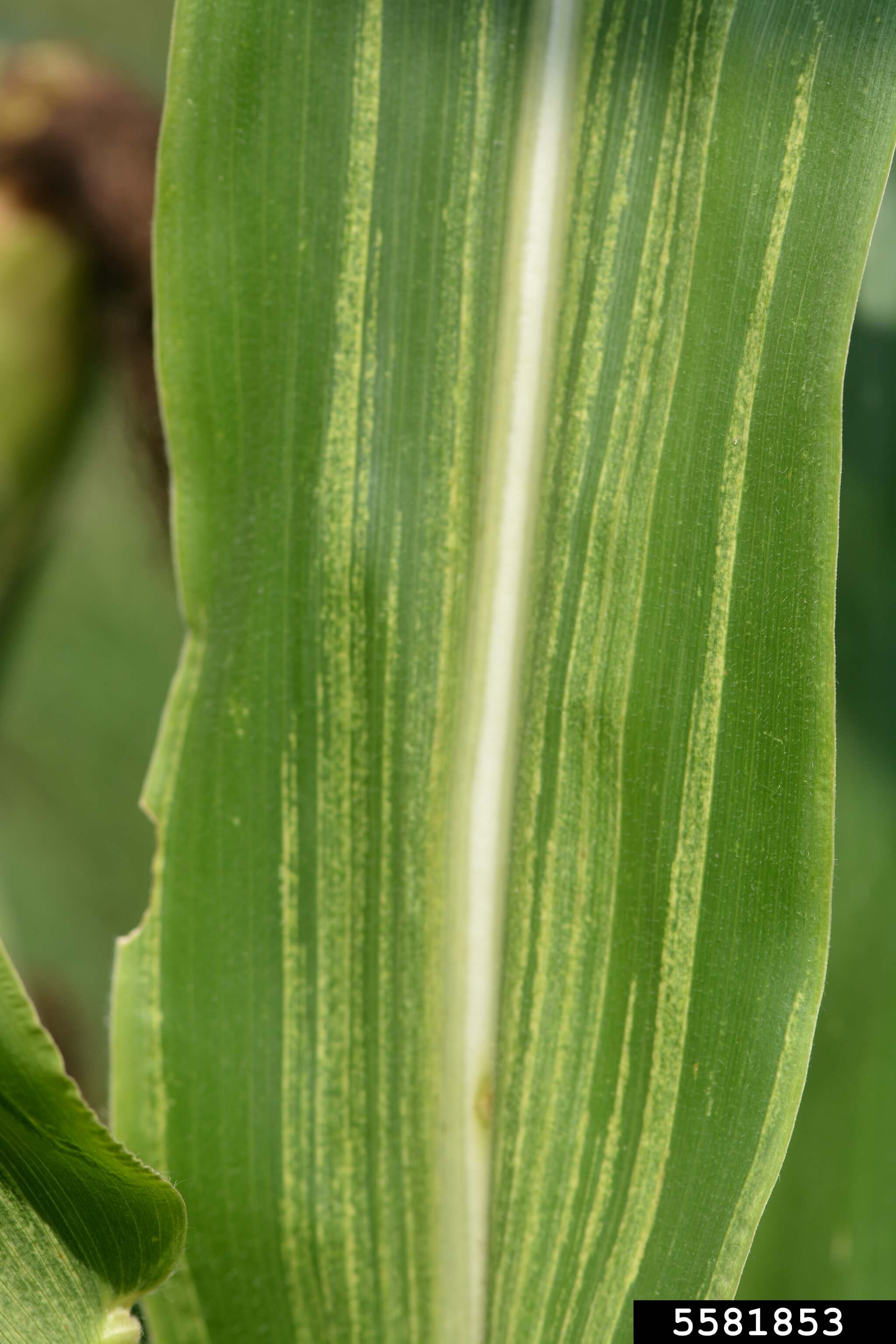
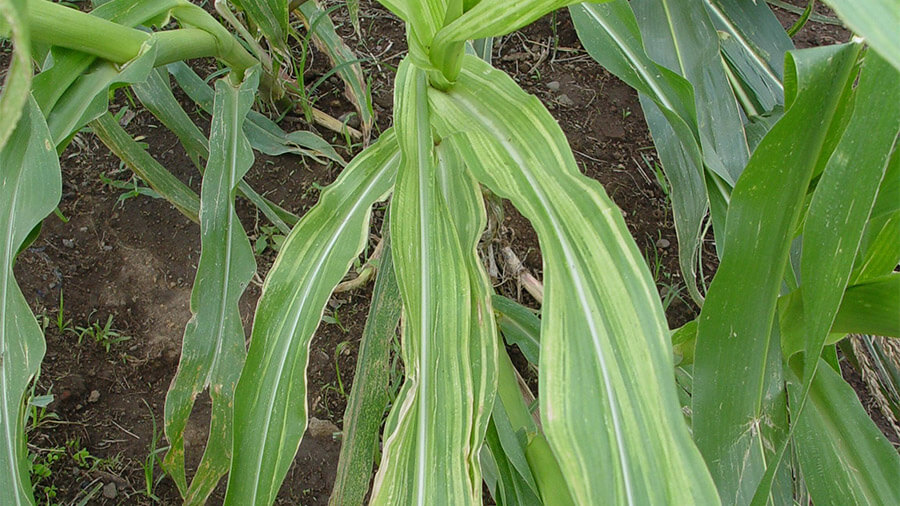
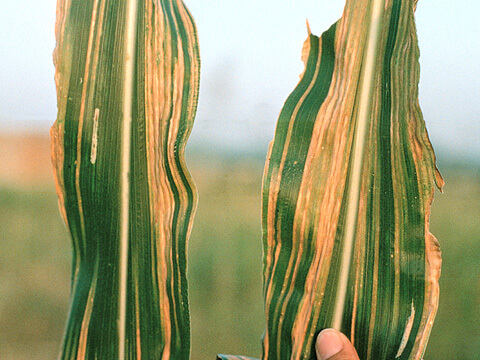
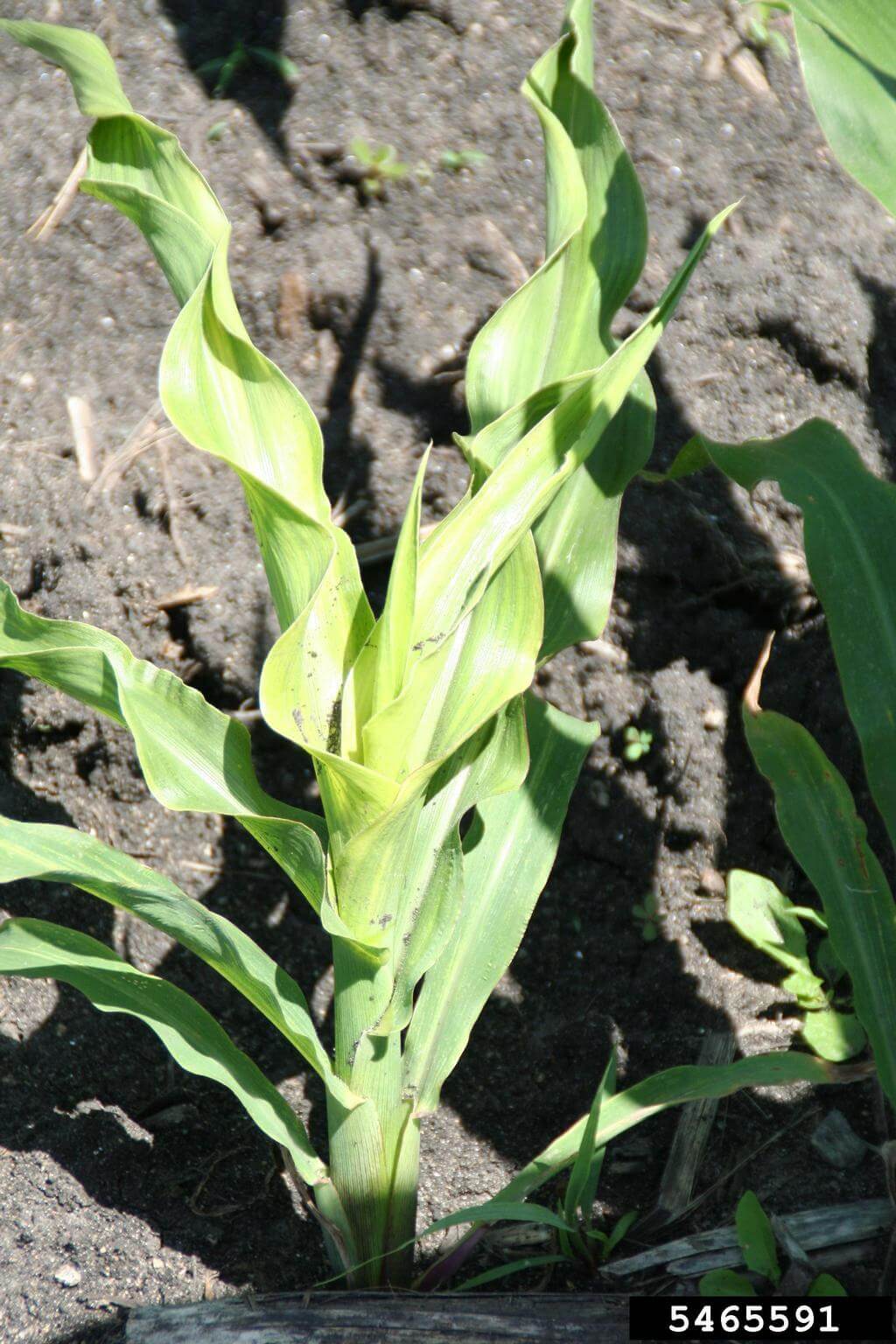
Infection with Peronosclerospora sorghi and Sclerophthora macrospora causes the development of the disease known as downy mildew in corn. This disease manifests itself with a series of characteristic symptoms that can significantly reduce crop yield. Infected plants usually show reduced and deformed growth, with yellowing or chlorotic discoloration of young leaves. Under high humidity conditions, a white or gray downy growth appears on the lower surface of the leaves, composed of the reproductive structures of the pathogen. In advanced stages, plants can suffer extensive necrosis and die prematurely.
- Chlorosis of young leaves.
- White or gray hairy growth on the underside of leaves.
- Reduction in plant growth and deformation.
- Leaf necrosis.
- Premature death of plants.
- Decrease in the size and number of ears.


TEMPERATURE AND HUMIDITY
20°C - 28°C
80% - 100%

TRANSMISSION PATHS
Spores in the air, irrigation water, contaminated tools, infected crop residues, contaminated seeds
Do you want to remove this disease? Choose how you want to treat it.

TREATMENTS
Chemical treatment
• AZOXISTROBIN 25% [SC] P/V
Authorized treatments in organic farming
-
Biological control
-
Recommendations
- Use certified and pathogen-free seeds.
- Implement crop rotation with non-host species to reduce the accumulation of inoculum in the soil.
- Maintain an adequate distance between plants to improve air circulation and reduce leaf humidity.
- Apply preventive fungicides in the early stages of the crop, following technical recommendations and appropriate doses.
- Regularly monitor crops to detect early symptoms and act quickly to control the spread.
- Remove and destroy infected crop residues to reduce inoculum sources.
- Practice proper irrigation management, avoiding excess moisture in the foliage.
- Use corn varieties resistant or tolerant to downy mildew, if available.





*The recommended treatments are still recommendations according to the databases of the authorities and at no time do they replace the guidelines established according to the legislation of each country
*The products shown are recommendations and are not our own products. As Amazon Associates, we earn revenue from purchases of recommended products.

TREATMENTS
Homemade treatments
There are no home treatments
Natural allies
Chemical treatments
There are no treatments for this disease. Treatments are directed at the insect vectors that transmit it. See insect treatments.

RECOMMENDATIONS

REPELLENT PLANTS
RECOMMENDED PRODUCTS TO ELIMINATE THIS PEST
*The recommended treatments are still recommendations according to the databases of the authorities and at no time do they replace the guidelines established according to the legislation of each country
*The products shown are recommendations and are not our own products. As Amazon Associates, we earn revenue from purchases of recommended products.



Explore more tools
Services
Contact
Legal
©2023 by ZeriMar Laboratoire. All rights reserved.