


Symptoms, treatments, and recommendations for dealing with fungus gnats
Fungus gnats
Mycetophyllids
Pathogen:
Type:
Insect
Risk:
INTERMEDIATE
Plantas decorativas de jardín y/o interior
Mosquitos de los hongos

WHO CAUSES IT?
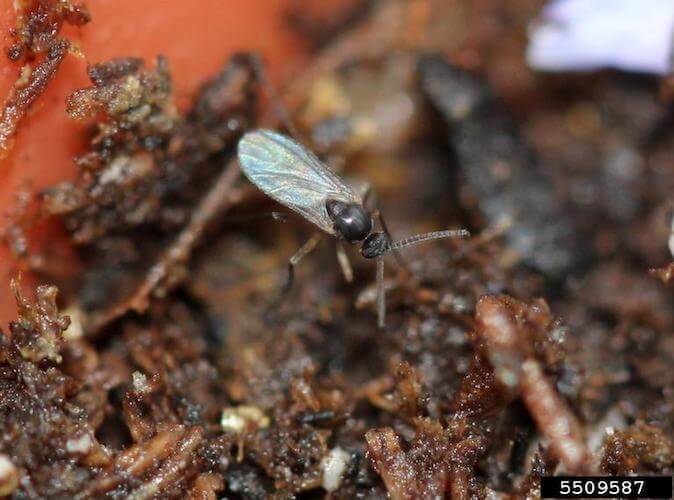
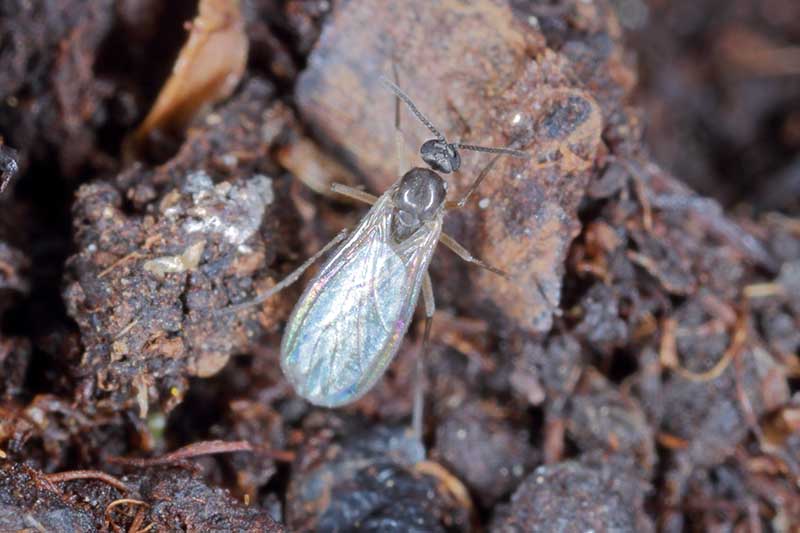
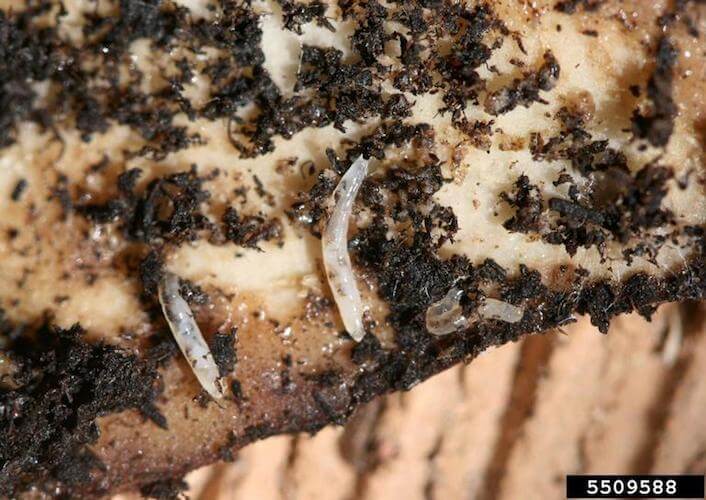
Mycetophilids, commonly known as fungus gnats, are small diptera with a dark body and long legs that live in humid environments rich in organic matter. Its presence is common in poorly drained substrates, especially in greenhouse crops or indoor pots. The adults, which live only a few days, feed mainly on nectar and do not cause direct damage to the plants, but the females lay their eggs in the moist substrate, where thin, white larvae hatch. These larvae are saprophagous, feeding on decomposing organic matter, although they can also attack fine roots of young plants when population density is high. The larvae go through several stages before pupating in the substrate and emerging as adults. Under favorable humidity and temperature conditions, development from egg to adult can be completed in less than two weeks, allowing multiple generations per year and rapid expansion in confined spaces or with little substrate renewal.

SYMPTOMS
Fungus gnats affect plants mainly through the action of their larvae, which damage the root system when the number of individuals is high. The weakening of the roots prevents proper absorption of water and nutrients, which translates into visible symptoms at the foliar level. In addition, damage to the roots facilitates the entry of secondary pathogens such as Pythium or Fusarium.
- Yellowing of young leaves
- Daytime wilting, with partial nighttime recovery
- Reduction in general plant growth
- Appearance of leaf spots due to water stress
- Root rot in seedlings or cuttings
- Premature leaf fall
- Presence of small flying insects when moving the pots


TEMPERATURE AND HUMIDITY
18 °C – 26 °C
65 % – 90 %

TRANSMISSION PATHS
Contaminated substrate, Infested pots, Cultivation tools, Irrigation water, Movement of plants between spaces
Do you want to remove this disease? Choose how you want to treat it.

TREATMENTS
Chemical treatment
• ABAMECTIN 0.0015% + PYRETHRINS 0.02% [AL] P/V
• RAPE OIL 0.825% + PYRETHRINS 0.018% [AL] P/V
• RAPE OIL 1.53% [AL] P/V
• RAPE OIL 1.69% ( ) [AL] P/V
• RAPE OIL 77.7% [EC] P/V
• RAPE OIL 82.53% + PYRETHRINS 0.459% [EC] P/V
• RAPE OIL 848.24 g/l [EC] P/V
• ORANGE OIL 6% [SL] P/V
• ACETAMIPRID 20% [SG] P/P
• DELTAMETHRIN 1.57% [SC] P/V
• DELTAMETHRIN 10% [EC] P/V
• DELTAMETHRIN 2.5% [EW] P/V
• ESFENVALERATE 2.5% [EC] P/V
• ESFENVALERATE 5% [EC] P/V
• FLUPYRADIFURONE 20% [SL] P/V
• HEXITIAZOX 10% [WP] P/P
• LAMBDA CYHALOTHRIN 1.5% [CS] P/V
• LAMBDA CYHALOTHRIN 1.5% [CS] P/V
• LAMBDA CYHALOTHRIN 10% [CS] P/V
• LAMBDA CYHALOTHRIN 10% [CS] P/V
• LAMBDA CYHALOTHRIN 2.5% [WG] P/P
• LAMBDA CYHALOTHRIN 2.5% [WG] P/P
• LAMBDA CYHALOTHRIN 2.5% [WG] P/P
• LAMBDA CYHALOTHRIN 5% [EG] P/P
• PYRETHRINS 4.65% (as pyrethrum extract) [EC] P/V
• PYRETHRINS 5% [SC] P/V
• PYRIPROXIFEN 10% [EC] P/V
• SPINOSAD 48% [SC] P/V
Authorized treatments in organic farming
• RAPE OIL 0.825% + PYRETHRINS 0.018% [AL] P/V
• RAPE OIL 1.53% [AL] P/V
• RAPE OIL 1.69% ( ) [AL] P/V
• RAPE OIL 77.7% [EC] P/V
• RAPE OIL 82.53% + PYRETHRINS 0.459% [EC] P/V
• RAPE OIL 848.24 g/l [EC] P/V
• ORANGE OIL 6% [SL] P/V
• LAMBDA CYHALOTHRIN 1.5% [CS] P/V
• LAMBDA CYHALOTHRIN 1.5% [CS] P/V
• LAMBDA CYHALOTHRIN 10% [CS] P/V
• LAMBDA CYHALOTHRIN 10% [CS] P/V
• LAMBDA CYHALOTHRIN 2.5% [WG] P/P
• LAMBDA CYHALOTHRIN 2.5% [WG] P/P
• LAMBDA CYHALOTHRIN 2.5% [WG] P/P
• LAMBDA CYHALOTHRIN 5% [EG] P/P
• PYRETHRINS 4.65% (as pyrethrum extract) [EC] P/V
• PYRETHRINS 5% [SC] P/V
• SPINOSAD 48% [SC] P/V
Biological control
-
Recommendations
- Use well-drained substrates and avoid excess watering, allowing the top layer of soil to dry between waterings.
- Remove plant remains and decomposing organic matter from the surface of the substrate to reduce larval food sources.
- Place yellow sticky traps near the crop to monitor and capture adults, helping to control populations.
- Avoid continuous use of the same substrate without prior disinfection, especially in intensive production environments or indoors.
- Apply biocontrollers such as Bacillus thuringiensis var. israelensis or entomopathogenic nematodes (Steinernema feltiae) to specifically attack the larvae in the substrate.
- Improve ventilation and reduce environmental humidity in greenhouses or closed interiors to make insect reproduction difficult.
- Cover the surface of the substrate with coarse sand or perlite to make it difficult for females to access the oviposition site.
- Avoid transplants with contaminated substrate and check new pots before introducing them to the crop.





*The recommended treatments are still recommendations according to the databases of the authorities and at no time do they replace the guidelines established according to the legislation of each country
*The products shown are recommendations and are not our own products. As Amazon Associates, we earn revenue from purchases of recommended products.

TREATMENTS
Homemade treatments
There are no home treatments
Natural allies
Chemical treatments
There are no treatments for this disease. Treatments are directed at the insect vectors that transmit it. See insect treatments.

RECOMMENDATIONS

REPELLENT PLANTS
RECOMMENDED PRODUCTS TO ELIMINATE THIS PEST
*The recommended treatments are still recommendations according to the databases of the authorities and at no time do they replace the guidelines established according to the legislation of each country
*The products shown are recommendations and are not our own products. As Amazon Associates, we earn revenue from purchases of recommended products.



Explore more tools
Services
Contact
Legal
©2023 by ZeriMar Laboratoire. All rights reserved.