


Symptoms, treatments, and recommendations for treating crown rot
Crown Or Neck Rot
Phytophthora Sp.
Pathogen:
Type:
Oomycete
Risk:
CRITICAL

Frutales de pepita
Phytophthora
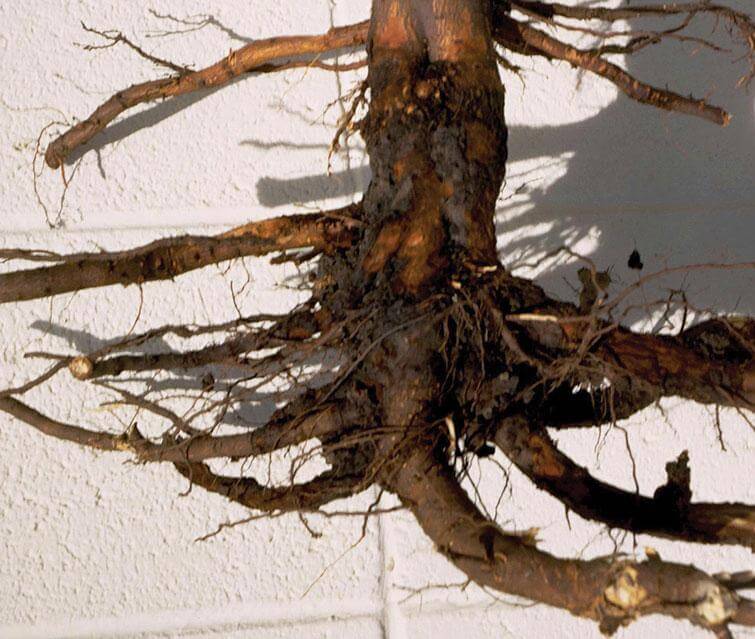

WHO CAUSES IT?
Phytophthora sp. It is a genus of oomycetes, a group of organisms that, although similar to fungi, belong to a different evolutionary line. Oomycetes of the genus Phytophthora are known to be devastating pathogens on a variety of crops. These organisms survive in the soil as resistant spores called oospores, which can persist in adverse conditions for long periods. Under favorable conditions, oospores germinate and produce asexual structures called sporangia, which release motile zoospores. These zoospores are attracted to the exudates of the roots and plant tissues, where they adhere and penetrate, initiating the infection. Once inside the plant tissue, the pathogen develops a mycelium that spreads and colonizes the plant, producing new sporangia that perpetuate the infection cycle. During periods of high humidity and moderate temperatures, the release of zoospores and the dispersal of the pathogen increase, facilitating the rapid spread of the disease.

SYMPTOMS
Crown rot disease affects pome fruit trees, causing significant damage that can lead to the total loss of the affected trees.
- General decay of the plant.
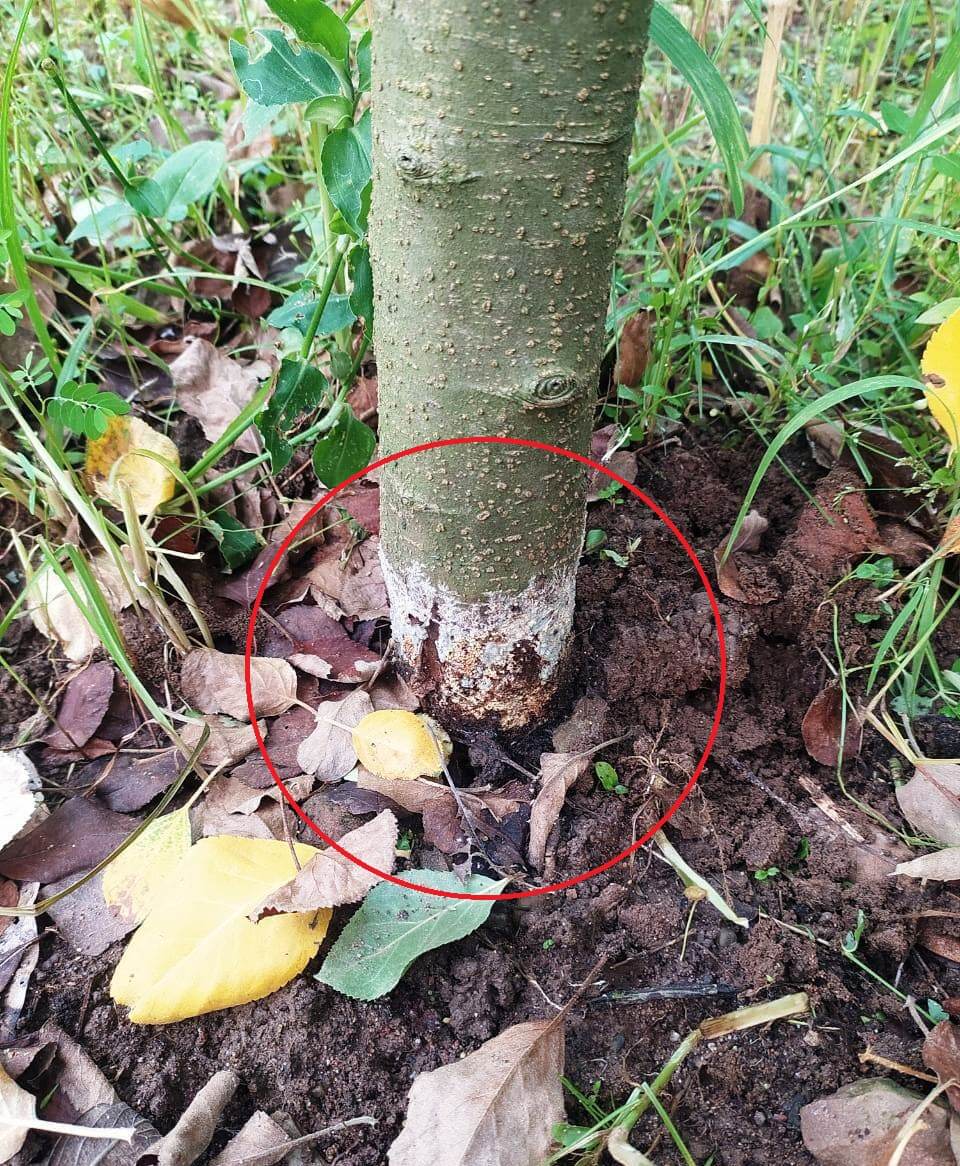
- Dark, moist lesions at the base of the trunk and roots.
- Loss of vigor and delay in growth.
- Yellowing and premature leaf fall.
- Reduction in fruit production.
- Sudden death of severely affected plants.




TEMPERATURE AND HUMIDITY
15-25 °C
80-100 %

TRANSMISSION PATHS
Contaminated irrigation water, infected soil, agricultural tools, infected plant material, water splashes during rains
Do you want to remove this disease? Choose how you want to treat it.

TREATMENTS
Chemical treatment
• CAPTAN 47.5% [SC] P/V
• CAPTAIN 80% [WG] P/P
• FOSETIL-AL 80% [WG] P/P
• FOSETIL-AL 80% [WP] P/P
• POTASSIUM PHOSPHONATES 50.4% (exp. as phosphorous acid) [SL] P/V
• CUPRIC HYDROXIDE 50% (EXPR. IN CU) [WG] P/P
• CUPRIC HYDROXIDE 50% (EXPR. IN CU) [WP] P/P
• COPPER OXYCHLORIDE 14% (exp. in Cu) + CUPRIC HYDROXIDE 14% (exp. in Cu) [WG] P/P
• COPPER OXYCHLORIDE 25% (EXPR. IN CU) [WG] P/P
• COPPER OXYCHLORIDE 30% (EXPR. IN CU) [WP] P/P
• COPPER OXYCHLORIDE 35% (exp. in Cu) [WG] P/P
• COPPER OXYCHLORIDE 35% (EXPR. IN CU) [WG] P/P
• COPPER OXYCHLORIDE 38% (EXPR. IN CU) [SC] P/V
• COPPER OXYCHLORIDE 50% (EXPR. IN CU) [WG] P/P
• COPPER OXYCHLORIDE 50% (EXPR. IN CU) [WP] P/P
• COPPER OXYCHLORIDE 52% (EXPR. IN CU) [SC] P/V
• CUPROCALCIC SULFATE 12.4% (EXPR. IN CU) [SC] P/V
• CUPROCALCIC SULFATE 20% (EXPR. IN CU) [WG] P/P
• CUPROCALCIC SULFATE 20% (EXPR. IN CU) [WP] P/P
Authorized treatments in organic farming
• CUPRIC HYDROXIDE 50% (EXPR. IN CU) [WG] P/P
• CUPRIC HYDROXIDE 50% (EXPR. IN CU) [WP] P/P
• COPPER OXYCHLORIDE 14% (exp. in Cu) + CUPRIC HYDROXIDE 14% (exp. in Cu) [WG] P/P
• COPPER OXYCHLORIDE 25% (EXPR. IN CU) [WG] P/P
• COPPER OXYCHLORIDE 30% (EXPR. IN CU) [WP] P/P
• COPPER OXYCHLORIDE 35% (exp. in Cu) [WG] P/P
• COPPER OXYCHLORIDE 35% (EXPR. IN CU) [WG] P/P
• COPPER OXYCHLORIDE 38% (EXPR. IN CU) [SC] P/V
• COPPER OXYCHLORIDE 50% (EXPR. IN CU) [WG] P/P
• COPPER OXYCHLORIDE 50% (EXPR. IN CU) [WP] P/P
• COPPER OXYCHLORIDE 52% (EXPR. IN CU) [SC] P/V
• CUPROCALCIC SULFATE 12.4% (EXPR. IN CU) [SC] P/V
• CUPROCALCIC SULFATE 20% (EXPR. IN CU) [WG] P/P
• CUPROCALCIC SULFATE 20% (EXPR. IN CU) [WP] P/P
Biological control
• TRICHODERMA ASPERELLUM (STRAIN ICC012) 2% + TRICHODERMA GAMSII (STRAIN ICC080) 2% (3 X 10E7 CFU/G (SUM OF BOTH MICROORGANISMS)) [WP] P/P
Recommendations
- Use rootstocks resistant to Phytophthora.
- Avoid waterlogging of the soil through a good drainage system.
- Carry out adequate soil preparation before planting.
- Avoid wounds at the base of the trunk and roots during agricultural work.
- Apply systemic and protective fungicides at critical moments.
- Regularly monitor the orchard for early signs of the disease.
- Remove and destroy affected trees to prevent spread.
- Perform soil and irrigation water analysis to detect the presence of Phytophthora.
- Implement crop rotation to reduce the accumulation of pathogens in the soil.





*The recommended treatments are still recommendations according to the databases of the authorities and at no time do they replace the guidelines established according to the legislation of each country
*The products shown are recommendations and are not our own products. As Amazon Associates, we earn revenue from purchases of recommended products.

TREATMENTS
Homemade treatments
There are no home treatments
Natural allies
Chemical treatments
There are no treatments for this disease. Treatments are directed at the insect vectors that transmit it. See insect treatments.

RECOMMENDATIONS

REPELLENT PLANTS
RECOMMENDED PRODUCTS TO ELIMINATE THIS PEST
*The recommended treatments are still recommendations according to the databases of the authorities and at no time do they replace the guidelines established according to the legislation of each country
*The products shown are recommendations and are not our own products. As Amazon Associates, we earn revenue from purchases of recommended products.



Explore more tools
Services
Contact
Legal
©2023 by ZeriMar Laboratoire. All rights reserved.