


Symptoms, treatments and recommendations for treating white rust
White Rust
Phakopsora Zeae
Pathogen:
Type:
Fungus
Risk:
INTERMEDIATE
Maíz
Royas

WHO CAUSES IT?
Phakopsora zeae is a phytopathogenic fungus that causes the disease known as white rust in corn. It belongs to the group of fungi of the genus Phakopsora, which are characterized by infecting a wide variety of plants and producing specific symptoms in each host. The life cycle of Phakopsora zeae involves the production of spores that are dispersed by wind and can survive on infected crop debris or in soil for prolonged periods of time. The spores germinate in favorable conditions, colonizing the corn leaves and giving rise to the appearance of the characteristic symptoms of the disease.

SYMPTOMS
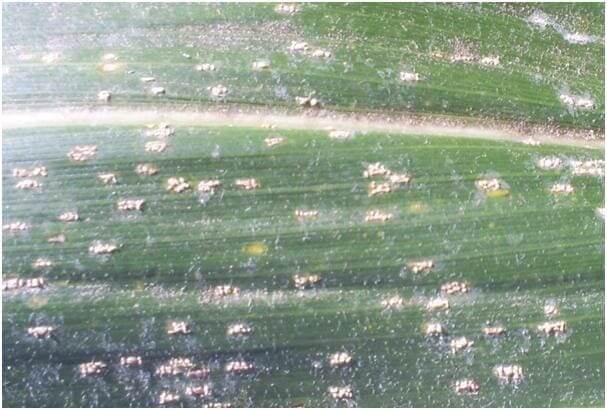
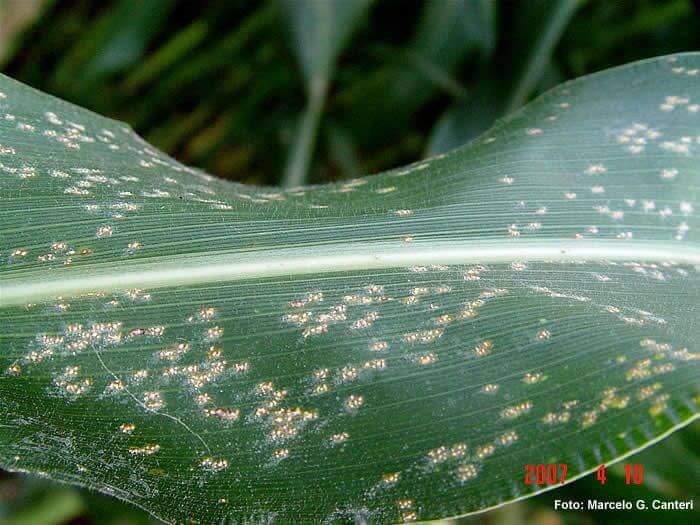
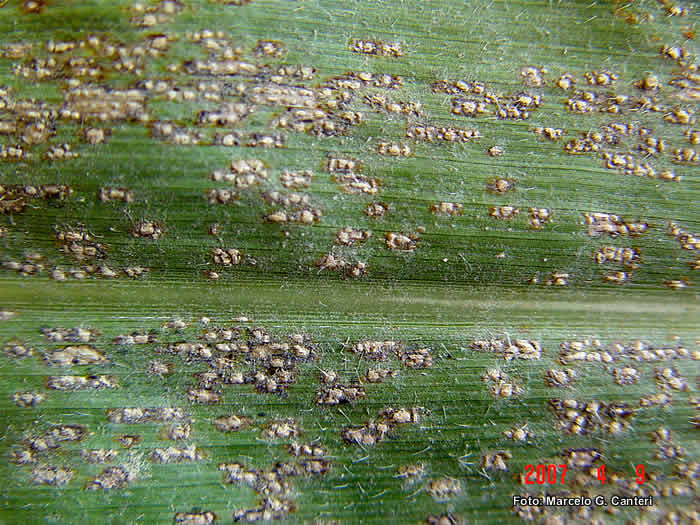
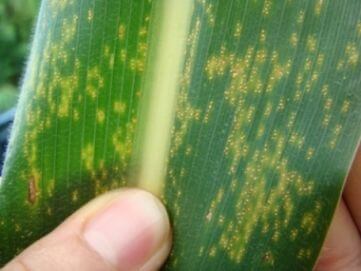
White rust in corn manifests itself with the appearance of yellow Taches on the leaves, which later turn white due to the presence of the reproductive structures of the fungus. These Taches can coalesce and cover large areas of the leaf surface, which reduces the photosynthetic capacity of the plant and affects its development and performance.
- Yellow Taches that turn white on the leaves.
- Possible fusion of Taches, covering large leaf areas.
- Reduction of photosynthetic capacity.
- Negative impact on the development and performance of the plant.


TEMPERATURE AND HUMIDITY
20-30°C
80-90%

TRANSMISSION PATHS
Air, infected seeds, infected crop remains
Do you want to remove this disease? Choose how you want to treat it.

TREATMENTS
Chemical treatment
• AZOXISTROBIN 25% [SC] P/V
• SULFUR 80% [SC] P/V
• SULFUR 80% [WG] P/P
• SULFUR 80% [WP] P/P
• SULFUR 82.5% [SC] P/V
Authorized treatments in organic farming
• SULFUR 80% [SC] P/V
• SULFUR 80% [WG] P/P
• SULFUR 80% [WP] P/P
• SULFUR 82.5% [SC] P/V
Biological control
-
Recommendations
- Crop rotation to interrupt the life cycle of the fungus.
- Use of corn varieties resistant or tolerant to white rust.
- Removal and destruction of infected crop remains.
- Application of preventive fungicides at critical moments of crop development.
- Maintenance of an adequate planting density to promote ventilation and reduce humidity in the crop.





*The recommended treatments are still recommendations according to the databases of the authorities and at no time do they replace the guidelines established according to the legislation of each country
*The products shown are recommendations and are not our own products. As Amazon Associates, we earn revenue from purchases of recommended products.

TREATMENTS
Homemade treatments
There are no home treatments
Natural allies
Chemical treatments
There are no treatments for this disease. Treatments are directed at the insect vectors that transmit it. See insect treatments.

RECOMMENDATIONS

REPELLENT PLANTS
RECOMMENDED PRODUCTS TO ELIMINATE THIS PEST
*The recommended treatments are still recommendations according to the databases of the authorities and at no time do they replace the guidelines established according to the legislation of each country
*The products shown are recommendations and are not our own products. As Amazon Associates, we earn revenue from purchases of recommended products.



Explore more tools
Services
Contact
Legal
©2023 by ZeriMar Laboratoire. All rights reserved.