


Symptoms, treatments and recommendations for treating rust
Rust
Uromyces Betae
Pathogen:
Type:
Fungus
Risk:
HIGH
Remolacha de mesa
Royas

WHO CAUSES IT?
Uromyces betae is a fungus that causes rust in beet, belonging to the Pucciniaceae family. This pathogen has a complex life that includes several stages and types of spores. The cycle begins with the germination of teliospore spores under favorable conditions of humidity and temperature, producing basidia and basidiospores that infect the host. Subsequently, urediniospore spores form, which are responsible for the rapid spread of the disease during the growing season. These spores can reinfect beet leaves multiple times, creating new lesions. In the last stage, teliospores are produced that survive in plant remains and in the soil during the winter, guaranteeing the perpetuation of the fungus until the next growing season. These resistant spores can tolerate adverse conditions, such as cold temperatures and drought, facilitating their dispersal and persistence in the agricultural environment.

SYMPTOMS
Beet rust caused by Uromyces betae is a disease that mainly affects the leaves, decreasing photosynthetic efficiency and weakening the plant. Severe infections can significantly reduce crop yield and quality.
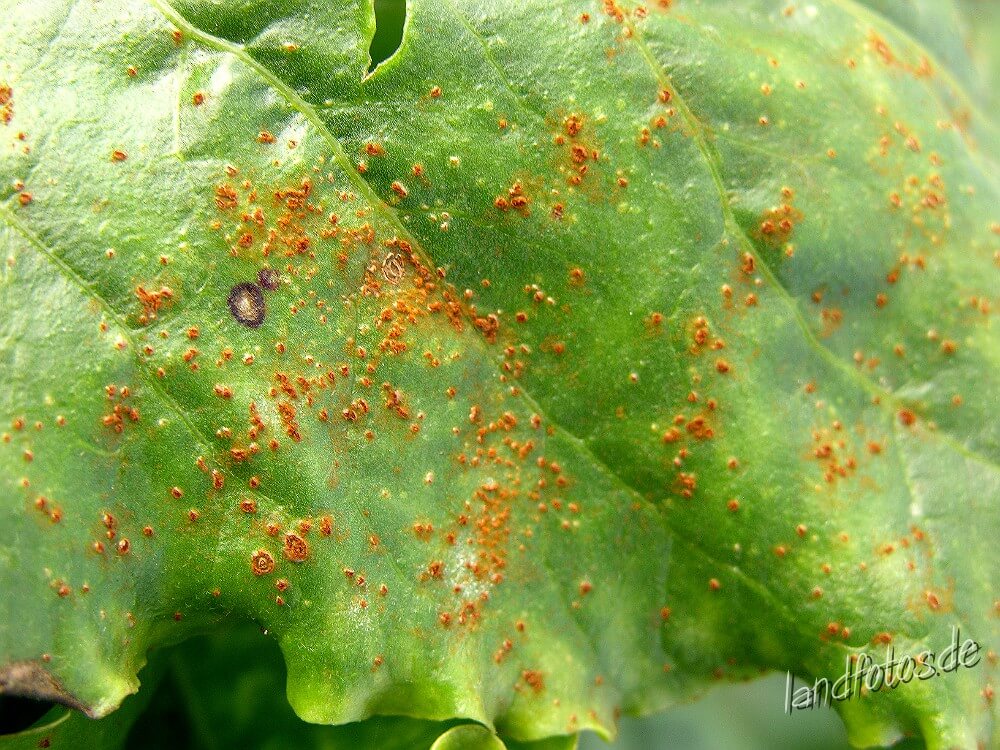
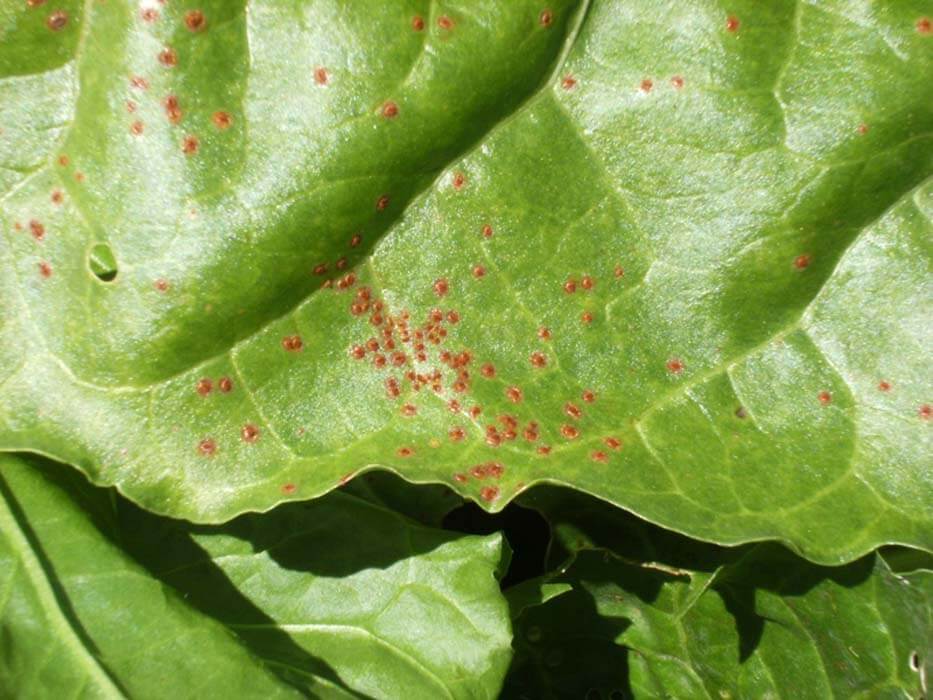
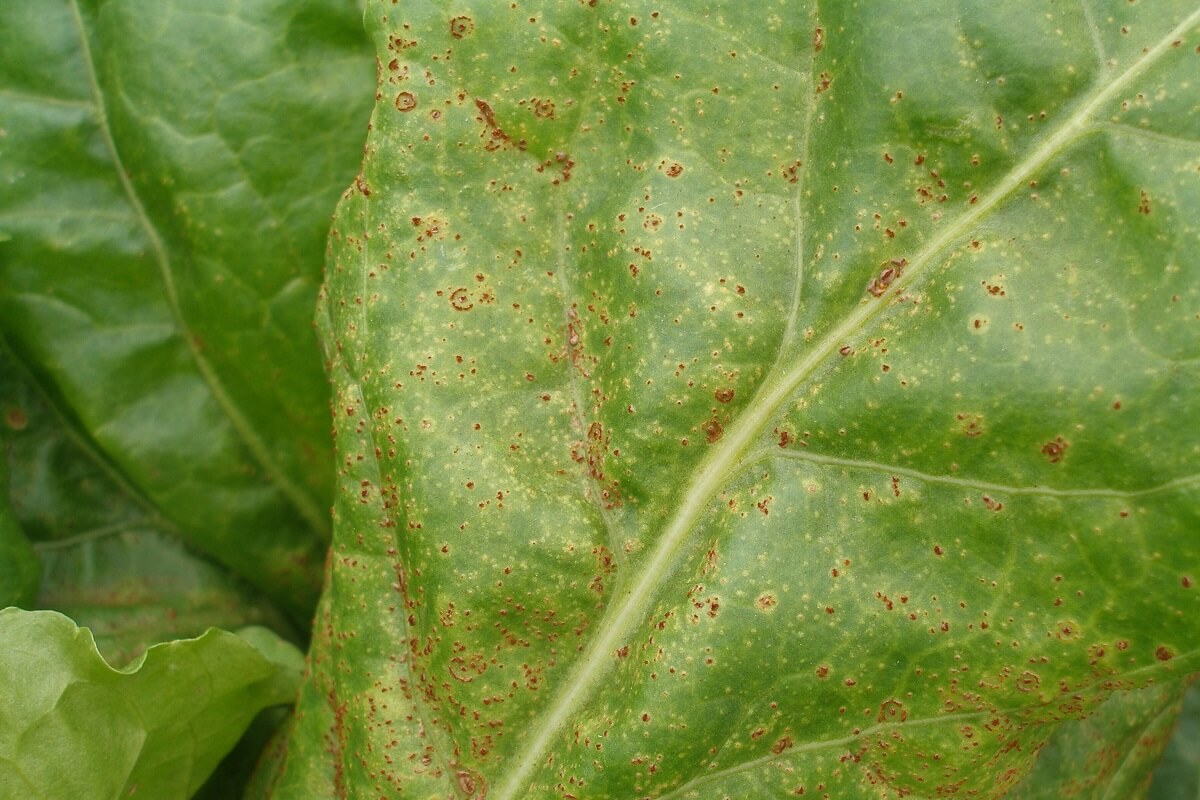
- Appearance of orange to reddish pustules on the surface of the leaves.
- Yellowing and death of affected leaves.
- Reduction of photosynthesis and general weakening of the plant.
- Development of lesions that can merge, covering large areas of the leaves.
- Premature fall of infected leaves.


TEMPERATURE AND HUMIDITY
15°C - 25°C
70% - 90%

TRANSMISSION PATHS
Wind-borne spores, infected plant remains, direct contact between plants, contaminated tools
Do you want to remove this disease? Choose how you want to treat it.

TREATMENTS
Chemical treatment
• DIFENOCONAZOLE 25% [EC] P/V
Authorized treatments in organic farming
-
Biological control
-
Recommendations
- Use rust-resistant beet varieties to reduce susceptibility.
- Implement an adequate crop rotation to avoid the accumulation of the fungus in the soil.
- Remove and destroy the remains of infected plants to reduce sources of inoculum.
- Maintain an adequate distance between plants to improve air circulation and reduce humidity in the foliage.
- Apply specific fungicides preventively and at the beginning of the first symptoms to control the spread.
- Regularly monitor crops for early detection and effective management of the disease.
- Practice proper fertilization management to keep plants healthy and vigorous.
- Avoid overhead irrigation, which can increase humidity in the leaves and promote infection.





*The recommended treatments are still recommendations according to the databases of the authorities and at no time do they replace the guidelines established according to the legislation of each country
*The products shown are recommendations and are not our own products. As Amazon Associates, we earn revenue from purchases of recommended products.

TREATMENTS
Homemade treatments
There are no home treatments
Natural allies
Chemical treatments
There are no treatments for this disease. Treatments are directed at the insect vectors that transmit it. See insect treatments.

RECOMMENDATIONS

REPELLENT PLANTS
RECOMMENDED PRODUCTS TO ELIMINATE THIS PEST
*The recommended treatments are still recommendations according to the databases of the authorities and at no time do they replace the guidelines established according to the legislation of each country
*The products shown are recommendations and are not our own products. As Amazon Associates, we earn revenue from purchases of recommended products.



Explore more tools
Services
Contact
Legal
©2023 by ZeriMar Laboratoire. All rights reserved.