


Symptoms, treatments and recommendations for treating grasshoppers
Grasshopper
Grasshopper
Pathogen:
Type:
Insect
Risk:
CRITICAL
Plantas decorativas de jardín y/o interior
Saltamontes

WHO CAUSES IT?
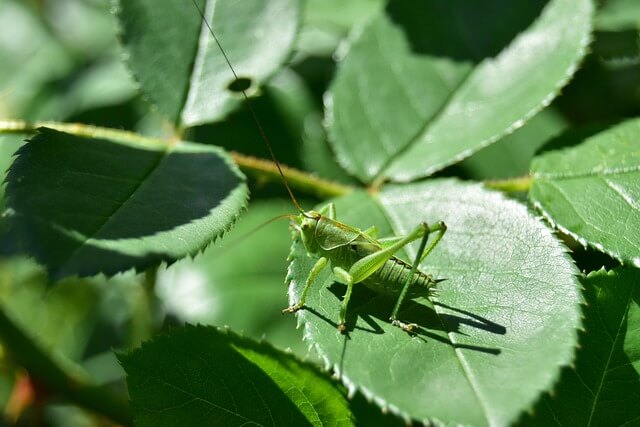
Grasshoppers are insects of the order Orthoptera and are characterized by their jumping ability, thanks to their long and muscular hind legs. Their robust body and chewing mouthparts allow them to feed on a wide variety of vegetation. Females lay their eggs on the ground, generally in sunny areas with loose soil. These eggs remain dormant during the winter and hatch with rising temperatures in spring. The nymphs emerge and go through several molts until they reach the adult phase, a process that can last weeks or months, depending on the species and environmental conditions. During the juvenile stages, they do not have wings and move around by walking or jumping, actively feeding. Once they reach adulthood, they can move long distances and form swarms when ecological conditions are favorable. These massive migrations drastically increase their destructive capacity on crops and green areas. Some species, such as lobsters, can change their behavior from solitary to gregarious, multiplying their invasive and harmful potential.

SYMPTOMS
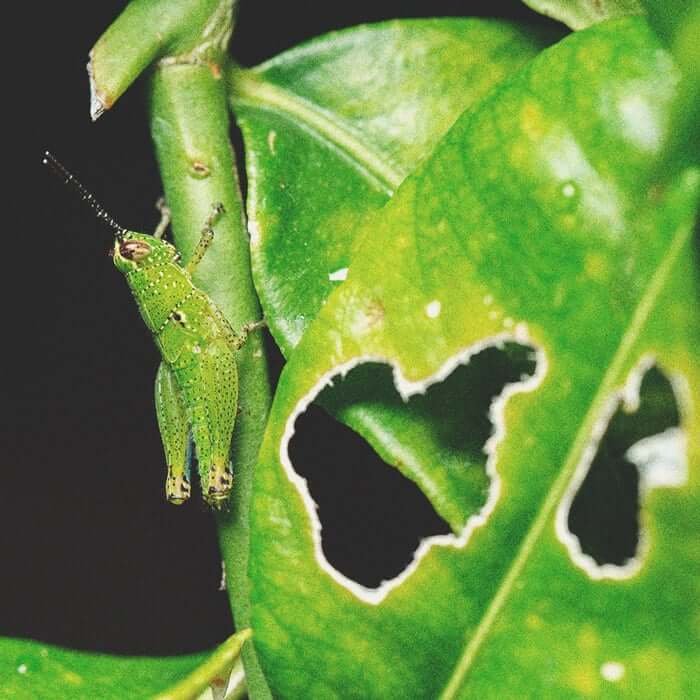
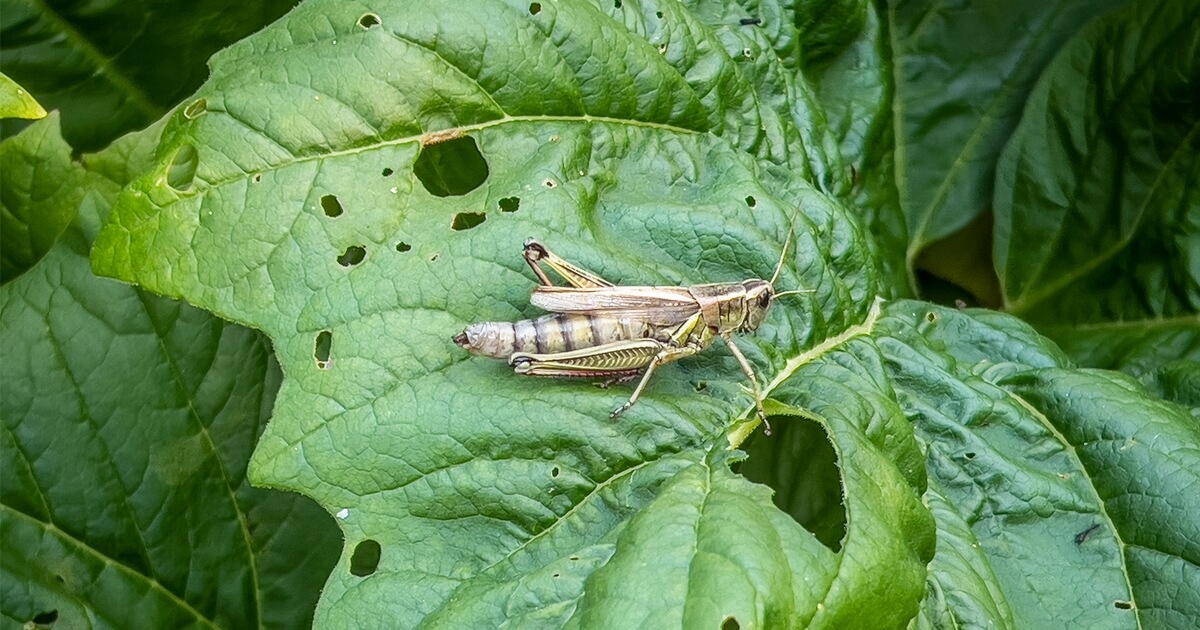
In Plants, grasshoppers cause physical disease by direct destruction of plant tissue. Its chewing action drastically reduces leaf biomass, decreases photosynthetic capacity, and weakens the plant against other threats. In high density situations, they can devour leaves, flowers, tender stems and even fruits, affecting the production and commercial value of the crop. Intense feeding pressure can also lead to complete defoliation and death of young plants.
- Irregular perforations in leaves and stems
- Chewed edges and partial loss of foliage
- Premature fall of flowers and fruits due to mechanical damage
- Visible presence of adults and nymphs in the aerial parts
- Weakened plants, with stopped or stunted growth
- Severe defoliation in tender shoots or seedlings
- Scars and bites on fruits


TEMPERATURE AND HUMIDITY
25 °C – 35 °C
30 % – 60 %

TRANSMISSION PATHS
Natural migration, Movement of winged adults, Transport of agricultural machinery, Transport of forage or plant material, Wind, Infested neighboring land
Do you want to remove this disease? Choose how you want to treat it.

TREATMENTS
Chemical treatment
• DELTAMETHRIN 2.5% [EW] P/V
• DELTAMETHRIN 1.57% [SC] P/V
Authorized treatments in organic farming
-
Biological control
-
Recommendations
- Keep the land clean of weeds, since many species of grasshoppers develop in these areas before migrating to crops.
- Carry out visual monitoring and bait traps on the edges of the crop to detect their presence early.
- Till the soil in autumn or winter to expose and destroy the laid eggs.
- Implement bands of trap vegetation around the crop to attract grasshoppers and facilitate their localized elimination.
- Apply biopesticides based on entomopathogenic fungi or plant extracts in areas of high activity.
- Use physical barriers such as meshes or fences in small crops or vulnerable orchards.
- Avoid the indiscriminate use of insecticides that can eliminate natural enemies such as birds, reptiles and other predatory insects.
- In critical situations, apply authorized chemical treatments locally and rotating active ingredients to minimize the appearance of resistance.
- Coordinate collective actions between farmers in risk areas to reduce the regional population.
- Avoid excessive irrigation that favors the development of tender vegetation, preferred by grasshoppers.





*The recommended treatments are still recommendations according to the databases of the authorities and at no time do they replace the guidelines established according to the legislation of each country
*The products shown are recommendations and are not our own products. As Amazon Associates, we earn revenue from purchases of recommended products.

TREATMENTS
Homemade treatments
There are no home treatments
Natural allies
Chemical treatments
There are no treatments for this disease. Treatments are directed at the insect vectors that transmit it. See insect treatments.

RECOMMENDATIONS

REPELLENT PLANTS
RECOMMENDED PRODUCTS TO ELIMINATE THIS PEST
*The recommended treatments are still recommendations according to the databases of the authorities and at no time do they replace the guidelines established according to the legislation of each country
*The products shown are recommendations and are not our own products. As Amazon Associates, we earn revenue from purchases of recommended products.



Explore more tools
Services
Contact
Legal
©2023 by ZeriMar Laboratoire. All rights reserved.