


Symptoms, treatments and recommendations for treating leaf blight
Leaf Blight
Stemphylium Vesicarium
Pathogen:
Type:
Fungus
Risk:
HIGH
Cebolla
Micosis/Hongos

WHO CAUSES IT?
Stemphylium vesicarium is a phytopathogenic fungus that affects various crops, including onion, causing a disease known as leaf blight. This fungus can survive in the remains of infected plants and in the soil. It produces spores (conidia) that spread easily through the air, infecting new plants. The fungus thrives in humid, warm conditions, and the spores can be dispersed through water droplets and wind, promoting the spread of the disease.

SYMPTOMS
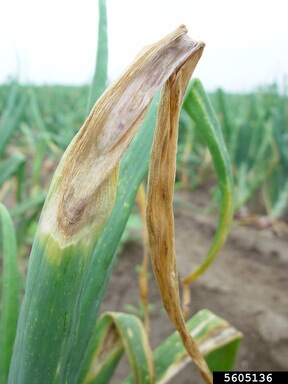
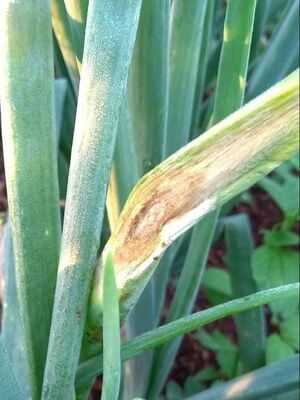
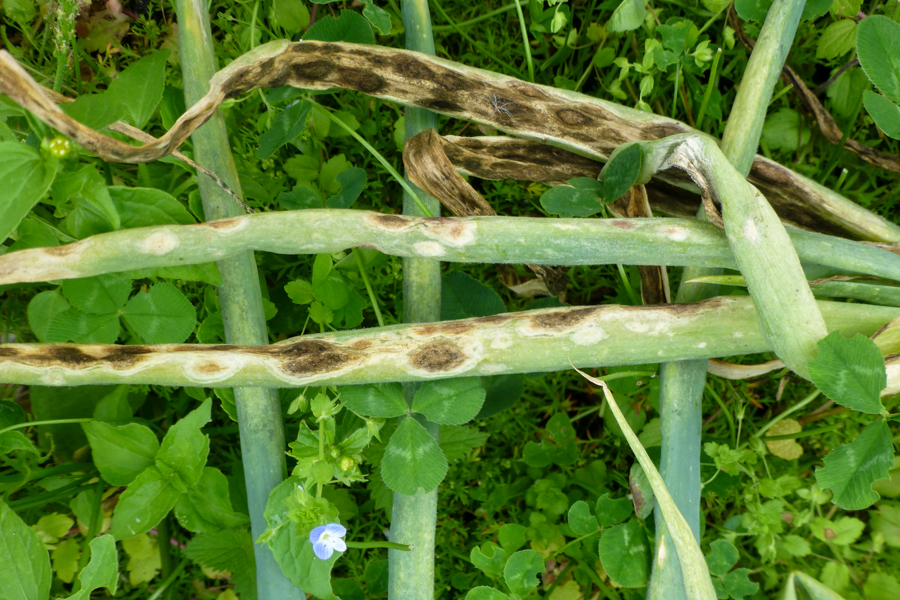
Leaf blight caused by Stemphylium vesicarium on onions manifests itself with the appearance of brown or necrotic Taches on the leaves. The lesions can expand and join together, causing wilting of the leaves and reduced photosynthetic capacity of the plant.
• Brown or necrotic Taches on onion leaves.
• Lesions may expand and cause wilting of leaves.
• Reduction in the photosynthetic capacity of the plant.
• Decrease in the quality and quantity of the harvest.


TEMPERATURE AND HUMIDITY
20 ºC - 28ºC
80% - 100%

TRANSMISSION PATHS
Air, water, remains of infected plants, contact with contaminated tools.
Do you want to remove this disease? Choose how you want to treat it.

TREATMENTS
Chemical treatment
• AZOXISTROBIN 20% + DIFENOCONAZOLE 12.5% [SC] P/V
• AZOXISTROBIN 25% [SC] P/V
• CIPRODINIL 37.5% + FLUDIOXONIL 25% [WG] P/P
• FLUOPYRAM 20% + TEBUCONAZOLE 20% [SC] P/V
• FLUOXASTROBIN 10% + PROTHIOCONAZOLE 10% [EC] P/V
• PIRACLOSTROBIN 6.7% + BOSCALIDE 26.7% ( ) [WG] P/P
• TEBUCONAZOLE 20% [EW] P/V
• TEBUCONAZOLE 25% [EW] P/V
• TEBUCONAZOLE 50% + TRIFLOXISTROBIN 25% [WG] P/P
Authorized treatments in organic farming
-
Biological control
• BACILLUS AMYLOLIQUEFACIENS (strain AH2) (1x10E11 CFU/l) [SC] P/V
• BACILLUS AMYLOLIQUEFACIENS (subsp. plantarum, strain D747) 25% [WG] P/P
• BACILLUS SUBTILIS (STRAIN QST 713) 1.34% [SC] P/V
• TRICHODERMA ASPERELLUM (STRAIN ICC012) 2% + TRICHODERMA GAMSII (STRAIN ICC080) 2% (3 X 10E7 CFU/G (SUM OF BOTH MICROORGANISMS)) [WP] P/P
• TRICHODERMA HARZIANUM RIFAI (STRAIN T-22) 1% (1 X 10E9 CFU/G) [WG] P/P
Recommendations
• Use onion varieties that are resistant or tolerant to the fungus.
• Maintain good irrigation management to avoid excess humidity.
• Practice crop rotation to reduce pathogen pressure in the soil.
• Apply specific fungicides following local recommendations.
• Improve air circulation between plants to reduce humidity.
• Remove and destroy the remains of infected plants.





*The recommended treatments are still recommendations according to the databases of the authorities and at no time do they replace the guidelines established according to the legislation of each country
*The products shown are recommendations and are not our own products. As Amazon Associates, we earn revenue from purchases of recommended products.

TREATMENTS
Homemade treatments
There are no home treatments
Natural allies
Chemical treatments
There are no treatments for this disease. Treatments are directed at the insect vectors that transmit it. See insect treatments.

RECOMMENDATIONS

REPELLENT PLANTS
RECOMMENDED PRODUCTS TO ELIMINATE THIS PEST
*The recommended treatments are still recommendations according to the databases of the authorities and at no time do they replace the guidelines established according to the legislation of each country
*The products shown are recommendations and are not our own products. As Amazon Associates, we earn revenue from purchases of recommended products.



Explore more tools
Services
Contact
Legal
©2023 by ZeriMar Laboratoire. All rights reserved.