


Products and treatments to eliminate Alternaria from plants
How to recognize, treat and eliminate Alternaria from plants
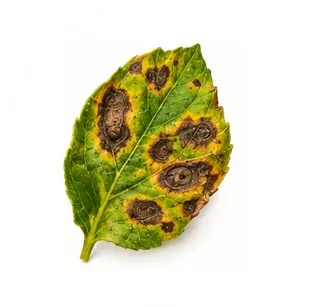
Alternaria is a disease that mainly affects the leaves and can appear on many plants, especially when there is humidity and the leaves remain wet for a long time. If the disease progresses, the spots can increase in size and cause the leaves to weaken, dry out and eventually fall.
How to recognize Alternaria on plants?

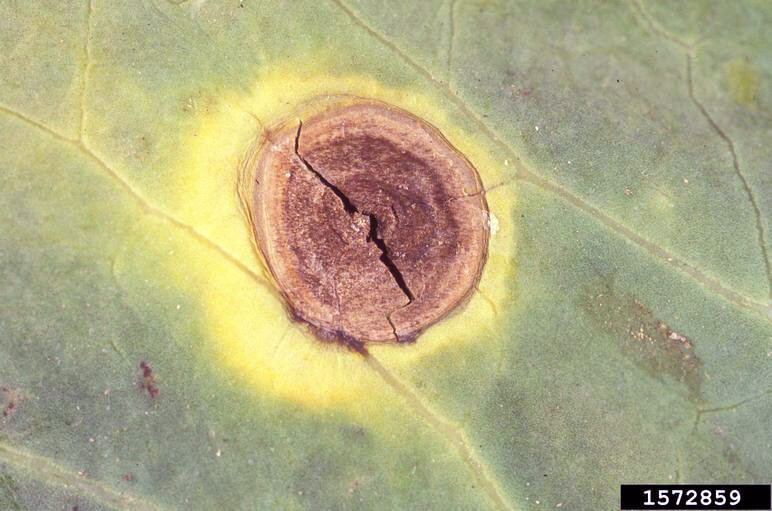
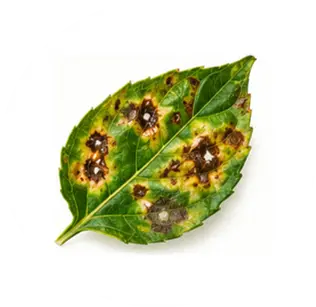
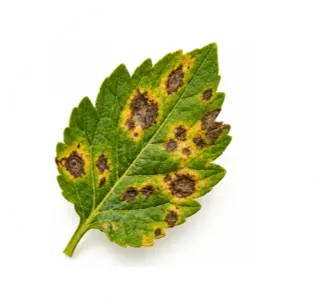
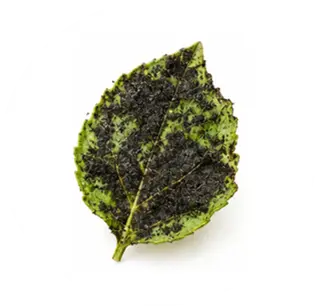
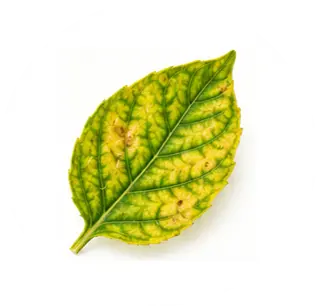
Alternaria usually begins with small dark spots on the leaves that progressively increase in size. In many plants, these spots are brown or black and may form circles or concentric rings. As the disease progresses, several spots may merge and eventually damage large areas of the leaf.
The main symptoms are:
• Brown, black or very dark spots on the leaves.
• Small dots or lesions that progressively increase in size.
• Circular or irregularly shaped spots.
• Concentric rings in some lesions.
• Premature leaf drop when the disease is advanced.
• In some plants, similar spots may appear on stems or fruits.
Do not confuse with bacteria and other fungi
Alternaria can easily be confused with other diseases that also cause spots on the leaves. Dark spots and, especially, the presence of concentric rings can help identify it, although symptoms may vary depending on the affected plant.
Other fungi can also produce spots on the leaves and, in some cases, show concentric rings, so this symptom alone does not confirm that it is Alternaria. Spots caused by bacteria are usually smaller and may appear very scattered. In some plants they have a wet or water-soaked appearance and may look like small splashes of water.
Treatments to eliminate Alternaria from plants
Control of Alternaria should focus on reducing sources of infection and preventing the disease from continuing to spread. Removing severely affected leaves helps eliminate sources of infection and keep the plant clean. It is also advisable to avoid wetting the leaves when watering, as water can favor the spread of the fungus to healthy parts of the plant.
The main recommendations are:
• Remove severely affected leaves: leaves with large damaged areas usually do not recover and can become a source of infection. Removing them helps reduce the presence of the fungus and promotes the development of healthy leaves.
• Avoid wetting the leaves: watering directly onto the soil or growing medium helps prevent splashes from carrying the fungus to healthy leaves and limits its spread.
• Copper: an effective option as a contact treatment, especially for preventing new infections and controlling the first symptoms. Applying it to healthy parts of the plant helps protect them from the progression of the disease.
• Broad-spectrum fungicides: they can be used when the disease is already present and symptoms are visible. These fungicides have an effective action against fungal development and can help slow the progression of the disease.
Products for treating Alternaria

Other common problems
Discover the most common problems and select the one that interests you.



Explore more tools
Services
Contact
Legal
©2023 por ZeriMar Laboratoire. Todos os direitos reservados.