


Products and treatments to eliminate leaf miners
How to recognize, treat and eliminate leaf miners
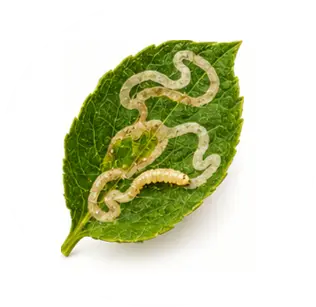
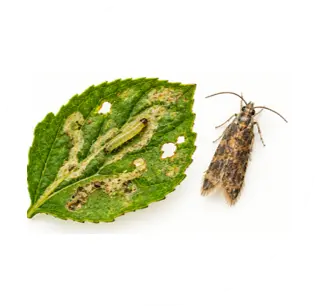
Leaf miners are larvae of small insects that feed inside leaves, creating visible galleries between their layers. The damage usually begins as a small mark that gradually becomes longer as the larva moves forward, leaving a characteristic trail in the tissue. Although the damage may initially appear minor, a severe infestation can considerably reduce the usable leaf surface and weaken the plant.
How to recognize leaf miners?
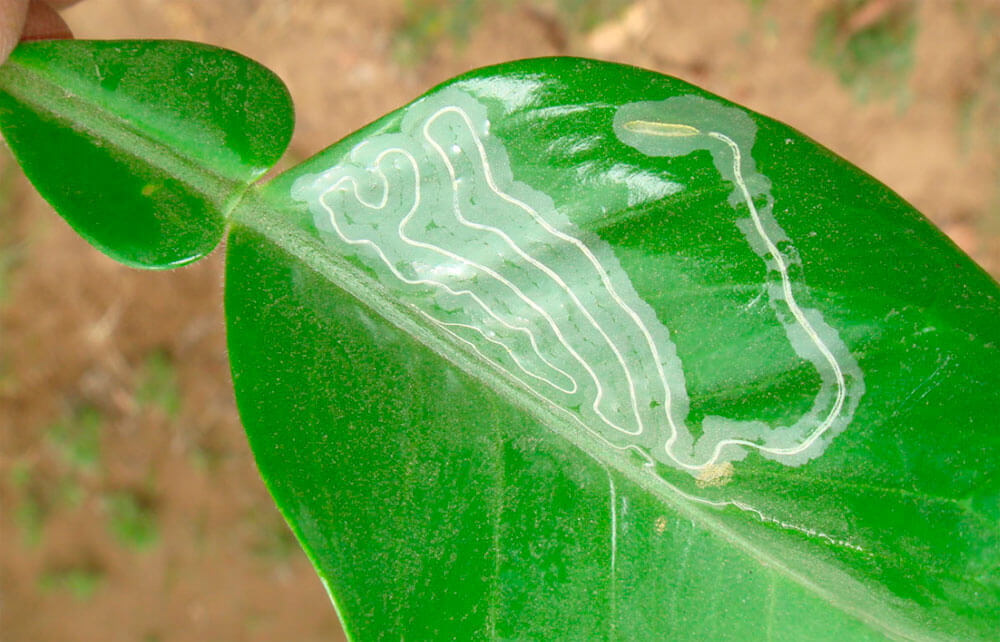
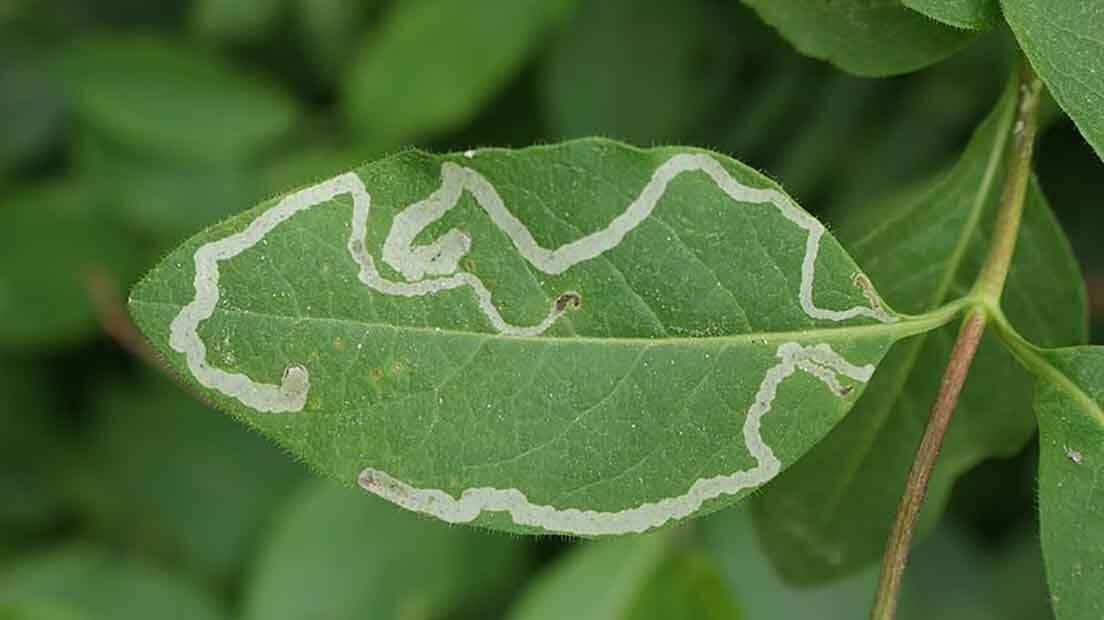
Leaf miners are insects whose larvae feed inside leaves, between the layers of plant tissue. For this reason, the damage appears as visible galleries or trails inside the leaf, while the larva is normally not found on the surface. As the larva moves forward and feeds, the gallery may become longer and wider.
The main symptoms are:
• Whitish, yellowish or transparent lines or trails inside the leaves.
• Winding galleries running through the inside of the leaf.
• Galleries that progressively become longer as the larva feeds.
• Galleries that may become wider as the larva grows.
• Small dark spots inside the gallery or near its end, corresponding to larval excrement.
• Larvae visible inside the leaf when examining the affected area.
• Several galleries on the same leaf when there is a severe infestation.
• Leaves with large areas of affected tissue when the galleries are numerous.
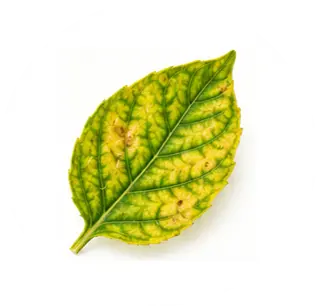
• Leaves that may turn yellow, dry out or fall when a significant part of the tissue has been destroyed.
Do not confuse with Tuta absoluta
Tuta absoluta also produces galleries because its larvae feed inside plant tissues; however, its galleries are shorter and wider. In tomato plants, in addition to the leaves, it can attack stems and fruits, where it can produce galleries and perforations.
Do not confuse with caterpillars
Caterpillars that feed on the surface of leaves usually leave holes, chewed edges or large areas of consumed tissue. In leaf miners, on the other hand, the tissue is consumed from inside the leaf, leaving the gallery visible between its layers.
Treatments to eliminate leaf miners
Leaf miners are particularly difficult to control because their larvae develop protected inside the leaves, where they form galleries as they feed on plant tissue. For this reason, a treatment applied only to the surface may not reach the larva. To control the infestation effectively, it is important to use a treatment capable of penetrating the leaf and reaching the internal areas where the insect is found, as well as acting on adults to reduce the appearance of new generations.
The main recommendations and treatments are:
• Inspect the leaves: regularly inspecting the leaves and removing those that still contain larvae inside is essential to prevent the appearance of more adults and a greater number of larvae. The sooner leaf miner activity is stopped, the more healthy tissue the plant will be able to preserve.
• Remove fallen leaves: collecting affected leaves that fall to the ground helps reduce the presence of larvae and pupae and limits the appearance of new generations around the plant.
• Translaminar insecticide: this is the main solution when numerous galleries appear or the infestation is progressing. Its ability to penetrate the leaf allows the treatment to reach the internal tissues where the larva is located, acting directly on the area where it is causing damage. In this way, the treatment does not rely solely on contact with the insect and allows the progression of the galleries to be stopped while protecting the foliar tissue that remains healthy.
Products for treating leaf miners

Other common problems
Discover the most common problems and select the one that interests you.








Explore more tools
Services
Contact
Legal
©2023 por ZeriMar Laboratoire. Todos os direitos reservados.