


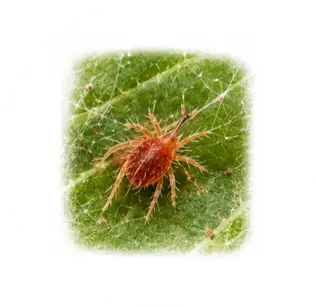
Products and treatments to eliminate red spider mites from plants
How to recognize, treat and eliminate red spider mites from plants
Red spider mites are a very common pest that can affect many plants. They feed on the leaves and can quickly weaken them when conditions are favorable. Detecting them in the early stages makes them much easier to control and allows you to start with gentler treatments.
How to recognize red spider mites on plants?
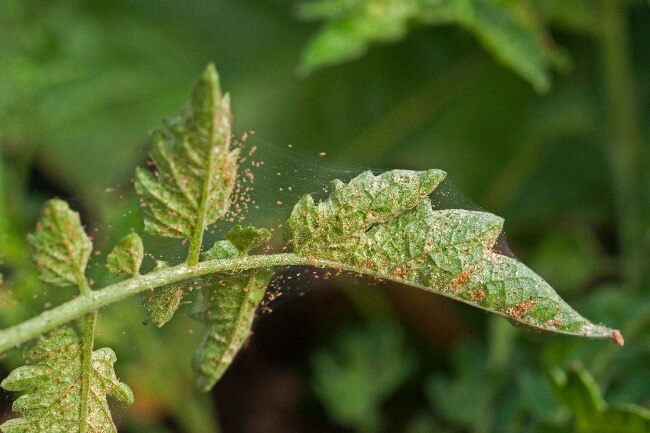

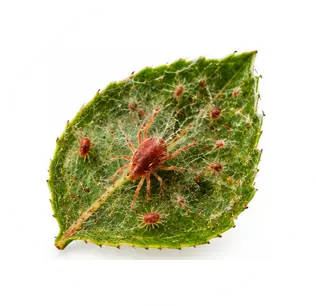
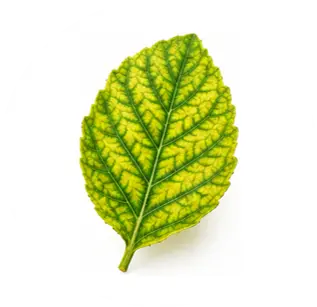
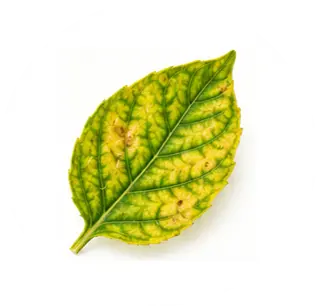
Red spider mites usually cause small light-colored spots on the leaves which, little by little, make them lose their color and healthy appearance. As the pest population increases, fine webs may appear between the leaves, stems and other parts of the plant. If not controlled, the leaves may eventually dry out and fall.
The main symptoms are:
• Small dots or light-colored spots on the leaves.
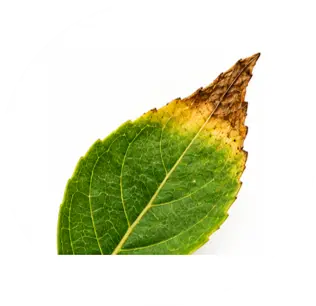
• Leaves with a dull or yellowish appearance.
• Progressive loss of green color.
• Dry or weakened leaves.
• Slower plant growth.
• Fine webs around the leaves and stems, especially when the infestation is advanced.
• Presence of small mites on the underside of the leaves.
Do not confuse with thrips, fungi or nutritional deficiencies
Red spider mite damage can be confused with damage caused by thrips, some diseases or certain nutritional deficiencies. One of the most characteristic signs of red spider mites is the fine stippling that appears on the leaves and, when the infestation increases, the fine webs.
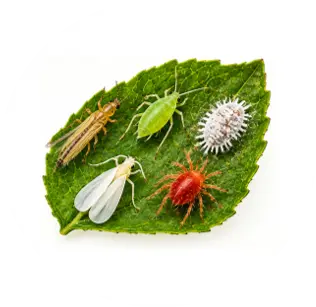
Thrips can produce silvery areas and small dark but scattered spots, while nutritional deficiencies usually cause more uniform color changes distributed throughout the plant.
Treatments to eliminate red spider mites from plants
Treatment depends on the number of red spider mites present. When the first symptoms appear, a mixture of potassium soap and neem oil may be enough to control the pest and monitor the plant. It is also advisable to remove severely affected leaves and maintain good environmental humidity, as red spider mites develop more easily in dry environments. In more advanced infestations, biological control solutions using predatory mites or a specific acaricide can be used.
The main recommendations and treatments are:
• Remove severely affected leaves: this helps to quickly reduce the number of red spider mites present and prevents the most damaged areas from continuing to act as a source of the pest.
• Increase environmental humidity: maintaining adequate humidity around the plant can help make it more difficult for red spider mites to develop, especially in very dry and hot environments.
• Potassium soap and neem oil: an option for acting during the early stages of the problem and as maintenance. Applying them to the leaves helps reduce the existing population, and special attention should be paid to the underside of the leaves, where the mites tend to concentrate.
• Predatory mites: a biological control alternative for naturally reducing the red spider mite population. They are especially useful when the pest is detected early and you want to keep its population under control.
• Acaricide: recommended when symptoms are very visible, the infestation is more advanced or when red spider mites appear recurrently. It is an effective option for quickly reducing the population and controlling the pest.
Products for treating red spider mites

Other common problems
Discover the most common problems and select the one that interests you.



Explore more tools
Services
Contact
Legal
©2023 por ZeriMar Laboratoire. Todos os direitos reservados.