


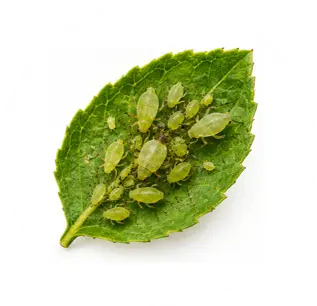
Aphids on plants: how to recognise and control them
How to identify aphids and protect your plants
Aphids are small insects that feed on plant sap and tend to concentrate on young shoots, young leaves and stems. By feeding continuously, they can cause deformation, yellowing, weakening and poor growth in the affected parts. They also produce honeydew, a sugary substance that remains on the leaves and can encourage the development of sooty mould. Aphid populations can increase rapidly under favourable conditions, so it is important to recognise their presence as soon as possible and act before they spread and cause more serious damage to the plant.
How to recognise aphids
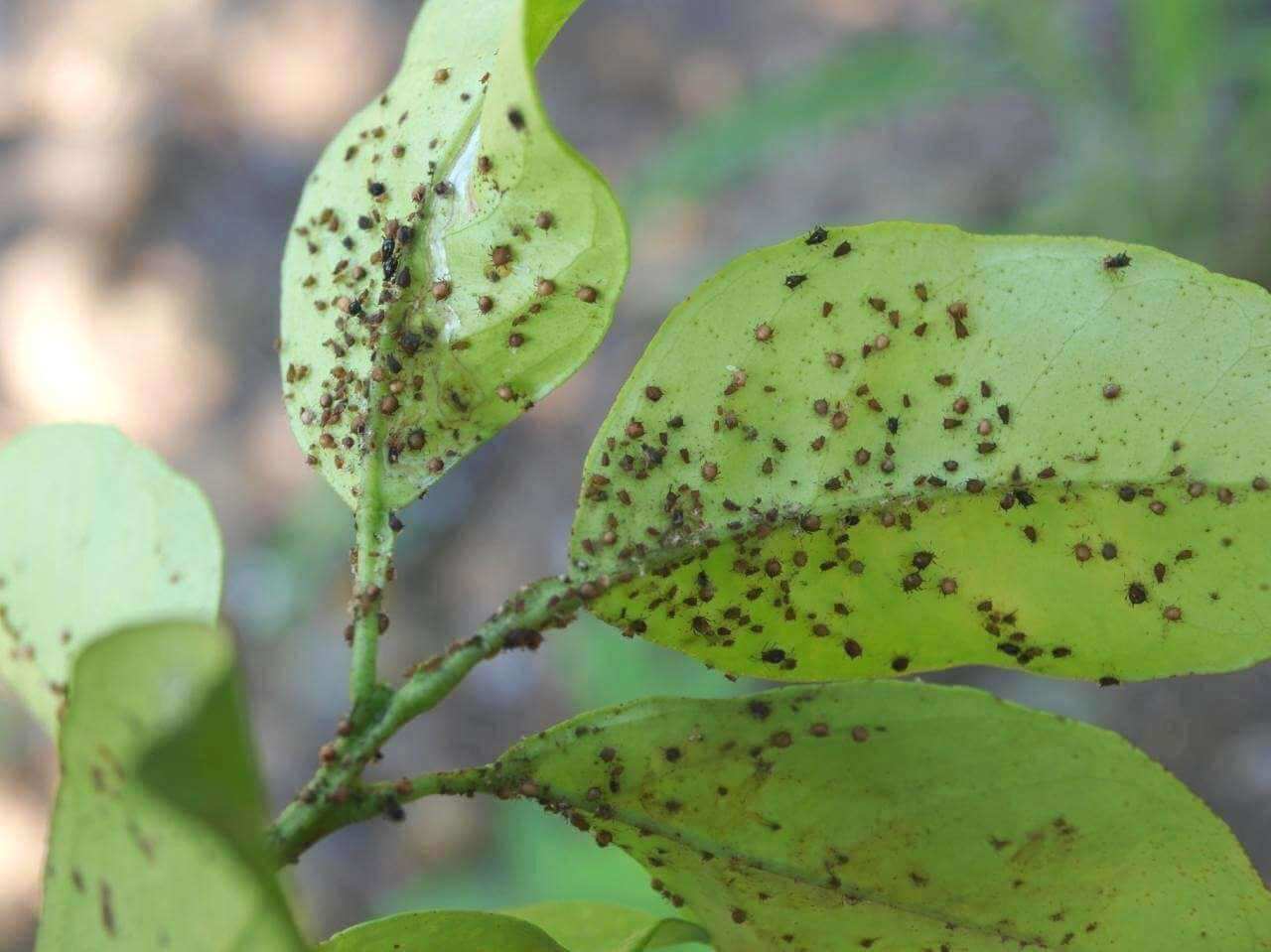
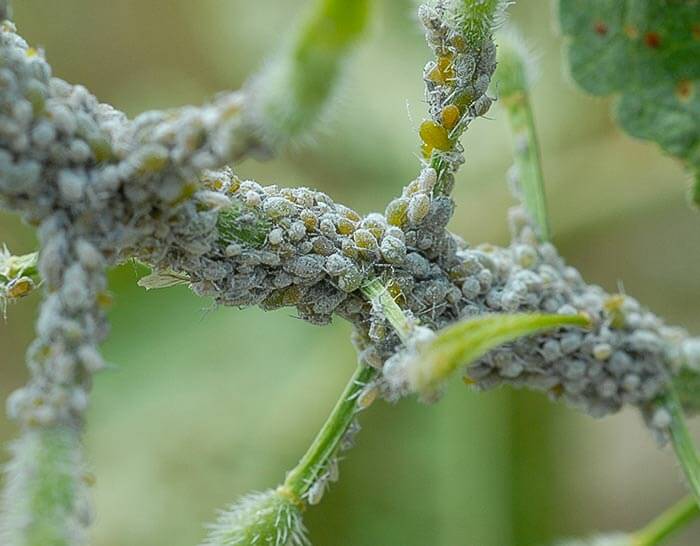
Aphids are small, soft-bodied insects that can have different colours, such as green, black, yellow, brown or grey, depending on the species. They usually appear in colonies on young shoots, stems, young leaves and, in some plants, also on flowers. They feed on plant sap and can weaken the plant, as well as causing deformation and loss of vigour.
The main symptoms are:
• Presence of small insects grouped in colonies on the plant.
• Aphids concentrated on young shoots and young leaves.
• Presence of aphids on stems or flowers in some species.
• Curled or rolled leaves. • Deformed leaves or irregular growth.
• Leaves turning yellow when the infestation is severe.
• Weakened young shoots or reduced development.
• Slower plant growth.
• General loss of vigour.
• Sticky surfaces on leaves, stems or fruit caused by honeydew.
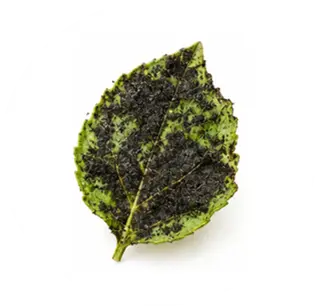
• Appearance of sooty mould on areas covered with honeydew.
• Presence of ants around infested areas, attracted by the honeydew.
• Greater presence of aphids during periods of active growth and development of young shoots.
Treatments recommended against aphids
Aphids mainly concentrate on young shoots, young leaves and other actively growing parts, where they feed on plant sap and form colonies that can increase rapidly. To control the pest, it is important to act on existing colonies and also reduce winged adults that can move to other plants.
The main recommendations and treatments are:
• Inspect young shoots and leaves: pay particular attention to the underside of leaves and growing points, where aphid colonies often concentrate.
• Remove severely affected parts: removing leaves or shoots with very large colonies helps to quickly reduce the population and limit its spread through the plant.
• Control ants: ants often protect and transport aphids to take advantage of the honeydew they produce. Controlling their presence helps prevent colonies from becoming established again.
• Sticky traps: help capture winged aphids moving between plants and reduce the arrival of new individuals in the crop. They are particularly useful as a complementary measure to help keep the population under control.
• Potassium soap + neem oil: potassium soap acts by contact on exposed aphids and helps remove honeydew and accumulated residues from the leaves. Neem oil complements the treatment and helps reduce insect feeding and development.
• Broad-spectrum contact insecticide: an effective solution when large colonies are present or aphids are causing new damage. It acts directly on insects present on the plant and can rapidly reduce the population.
Products for treating aphids

Other common problems
Discover the most common problems and select the one that interests you.



Explore more tools
Services
Contact
Legal
©2023 por ZeriMar Laboratoire. Todos os direitos reservados.