

Frutos
How to recognize and combat moths in fruit
Moths
Insect
Type:
Risk to the plant:
HIGH
Different species
Pathogen:
Polillas


WHO CAUSES IT?
Fruit moths belong primarily to different species of Lepidoptera whose larvae feed on plant tissues and can cause direct damage and significant production losses. Among the most agriculturally important species are various moths from the families Tortricidae, Pyralidae, Gelechiidae, and other Lepidoptera families. The adults are small to medium-sized moths that reproduce and lay their eggs on fruits, leaves, shoots, or structures near the crop, depending on the species. After hatching, the larvae are responsible for most of the damage. Newly hatched larvae can move across the fruit's surface before penetrating the tissues, entering directly through vulnerable areas or taking advantage of wounds and small lesions. Once inside, they excavate galleries and feed on the pulp, seeds, or other internal structures. During their development, they go through several larval stages, progressively increasing in size and feeding capacity. Mature larvae generally leave the fruit or seek a sheltered place to pupate. Pupation can occur in the soil, among plant debris, under the bark, in crevices, on plant structures, in rolled leaves, or even on equipment and materials near the crop, depending on the species. After pupating, the adult emerges, reproduces, and lays new eggs. Depending on the species and climatic conditions, several generations can occur during a single growing season, allowing populations to increase rapidly when temperatures are favorable and susceptible fruit is plentiful. Some species spend unfavorable periods as eggs, larvae, pupae, or adults in sheltered locations, resuming activity later when environmental conditions are suitable. Adult dispersal occurs primarily by flight, while eggs, larvae, and pupae can be accidentally transported on contaminated fruit, plant material, boxes, packaging, machinery, and other materials. High temperatures within the appropriate range for each species can accelerate development and reduce the time required to complete a generation. The continuous availability of fruit, the absence of control measures, and favorable environmental conditions can favor overlapping generations and increasing pest pressure during the season.
.png)
SYMPTOMS
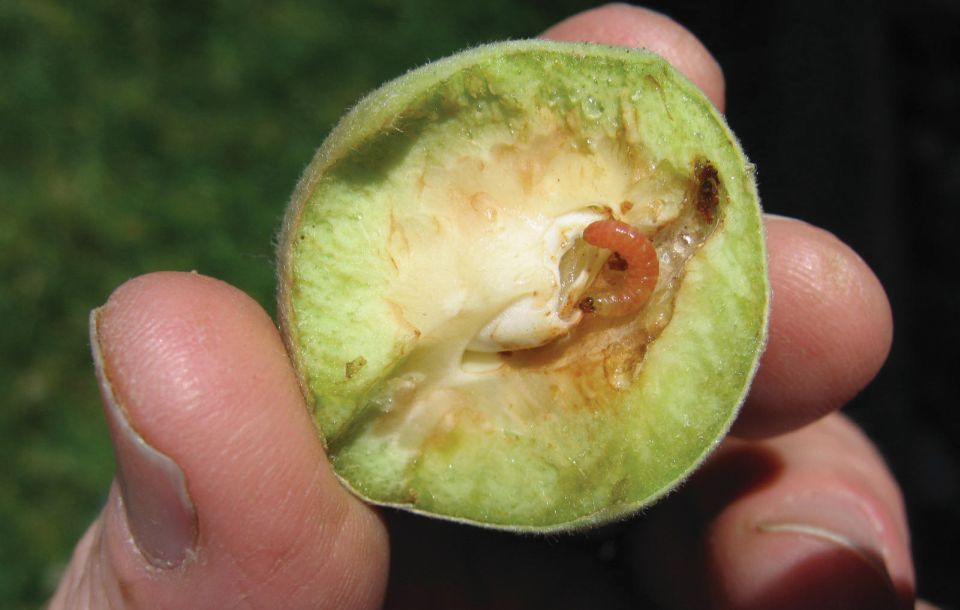
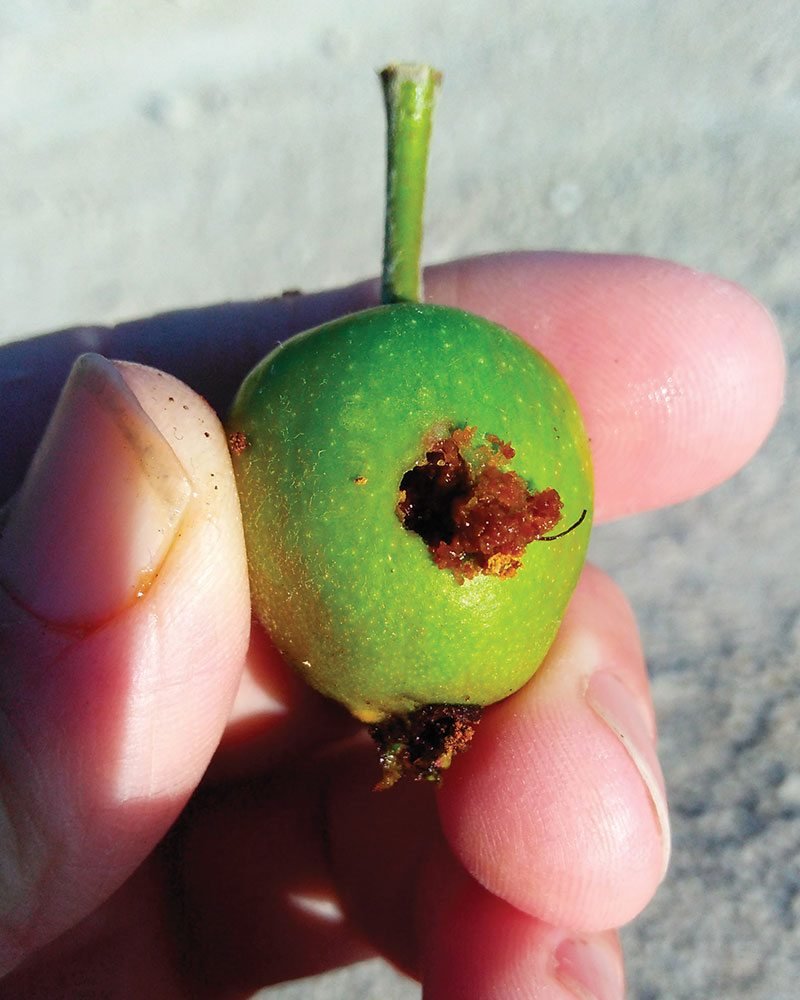
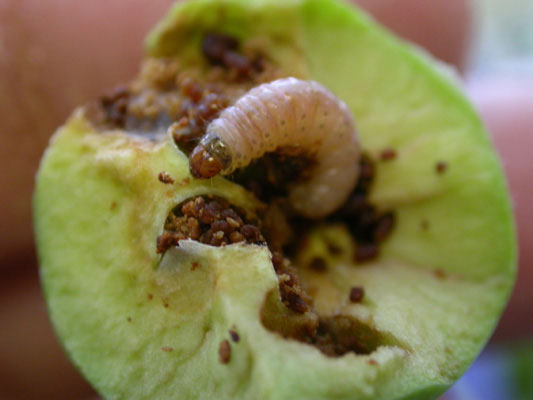
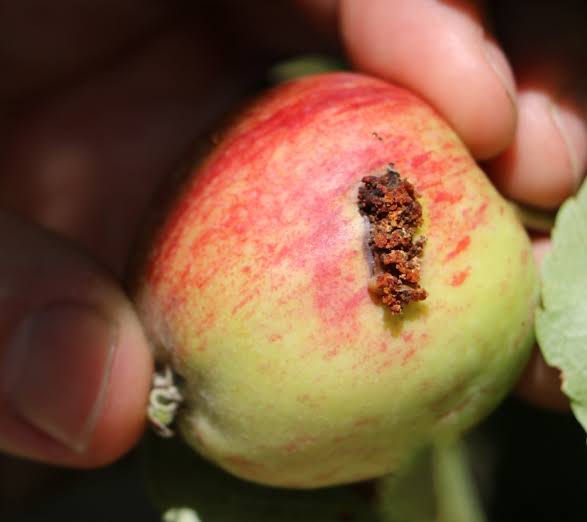
Moths can cause significant damage to fruit, primarily due to larval feeding and penetration. Damage typically begins after egg-laying and subsequent hatching. The larvae can burrow into the fruit and develop galleries inside. The larval entry can produce small perforations accompanied by excrement, feeding debris, and damaged tissue. As the larvae progress, the galleries can reach internal areas and affect the pulp, seeds, or structures near the stem, depending on the species. The resulting wounds also facilitate the entry of fungi and bacteria, potentially leading to secondary rots that accelerate deterioration. In fruit affected during the early stages of development, damage can cause deformities, premature fruit drop, or stunted growth. In fruit nearing or already ripe, the galleries and rots can considerably reduce its commercial quality and hinder storage and transport. The presence of larvae inside the fruit can also lead to its rejection during selection and marketing processes. The disease or problem can manifest itself through:
• Entry holes made by larvae in the fruit.
• Small visible holes in the epidermis.
• Presence of excrement or feeding debris around the entry points.
• Galleries excavated in the pulp and other internal tissues.
• Presence of larvae inside the fruit.
• Damage to seeds or internal structures.
• Localized tissue destruction.
• Loss of firmness around the affected areas.
• Deformities and alterations in fruit growth.
• Premature fruit drop in severely affected fruit.
• Appearance of secondary rots around the galleries.
• Exudation of liquids or substances from damaged tissues in certain species. • Presence of molted skin, silk, or pupal remains in protected areas of the fruit or plant.
• Accelerated deterioration during storage.
• Loss of commercial quality and increased percentage of rejected fruit.


DEVELOPMENT CONDITIONS
Temperature:
20–30 °C
Humidity:
60–90 %

HOW IS IT SPREAD?
Adult flight, eggs transported with plant material, larvae present in fruit, pupae in plant debris, infested fruit, contaminated plant material, collection boxes, contaminated packaging, agricultural machinery, contaminated tools, transport of infested fruit.

HOW TO ELIMINATE IT?
Home treatments
There are no home treatments
Natural allies
Chemical treatments
There are no treatments for this disease. Treatments are directed at the insect vectors that transmit it. See insect treatments.
RECOMMENDED PRODUCTS TO ELIMINATE THE PEST
Sponsored link

Sponsored link
Sponsored link


Sponsored link
Sponsored link
Effective against all types of fungi

Sponsored link


Sponsored link
Sponsored link

Sponsored link


Sponsored link
Sponsored link
Sponsored link


Sponsored link

PLANTAS REPELENTES

RECOMMENDATIONS
OTHER PESTS THAT MAY INTEREST YOU


DID YOU LIKE IT?
Now you can always have it on your mobile, without ads and totally FREE. TRY idMicrobe NOW!


