


Symptoms, treatments, and recommendations for treating canker or gum rot
Canker Or Gummy Rot
Didymella Bryoniae
Pathogen:
Type:
Fungus
Risk:
INTERMEDIATE
Cucurbitáceas piel NO comestible
Cancros

WHO CAUSES IT?
Didymella bryoniae is a phytopathogenic fungus that affects various cucurbits, causing the disease known as canker or gummy rot. The fungus can survive in soil and infected plant remains for long periods, waiting for favorable conditions to germinate. Didymella bryoniae produces spores that spread through air and water, infecting new plants. The fungus can invade plant tissues, including stems, leaves and fruits, causing the disease.

SYMPTOMS
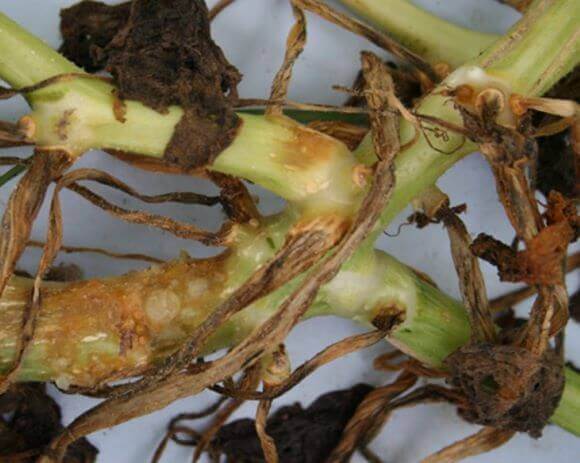
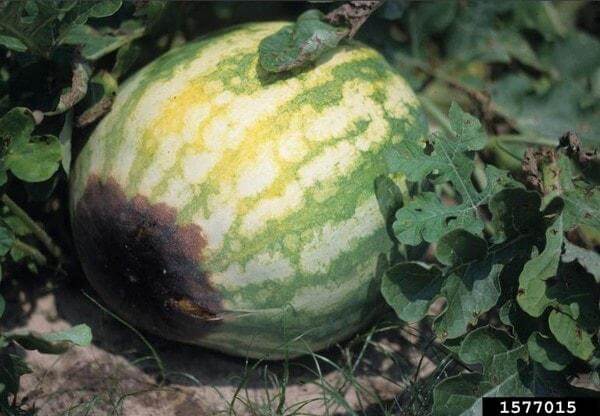
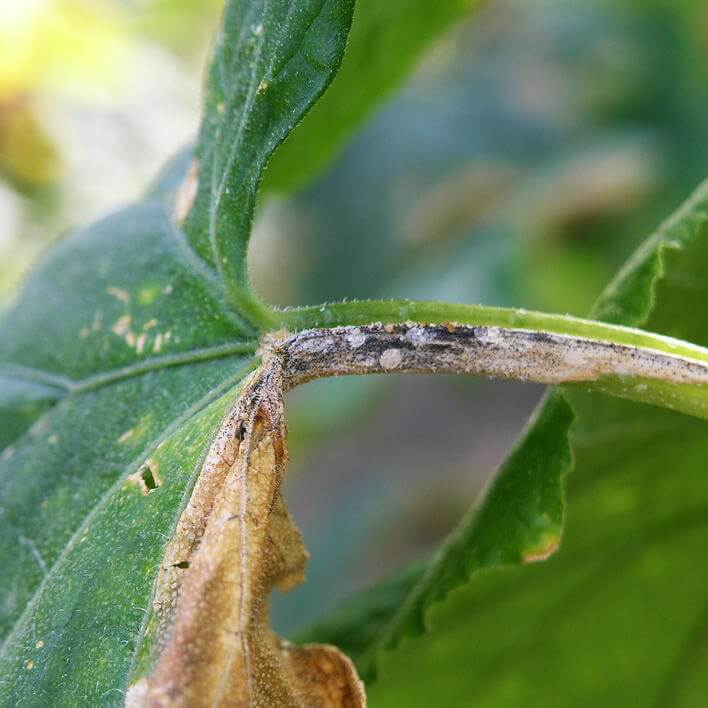
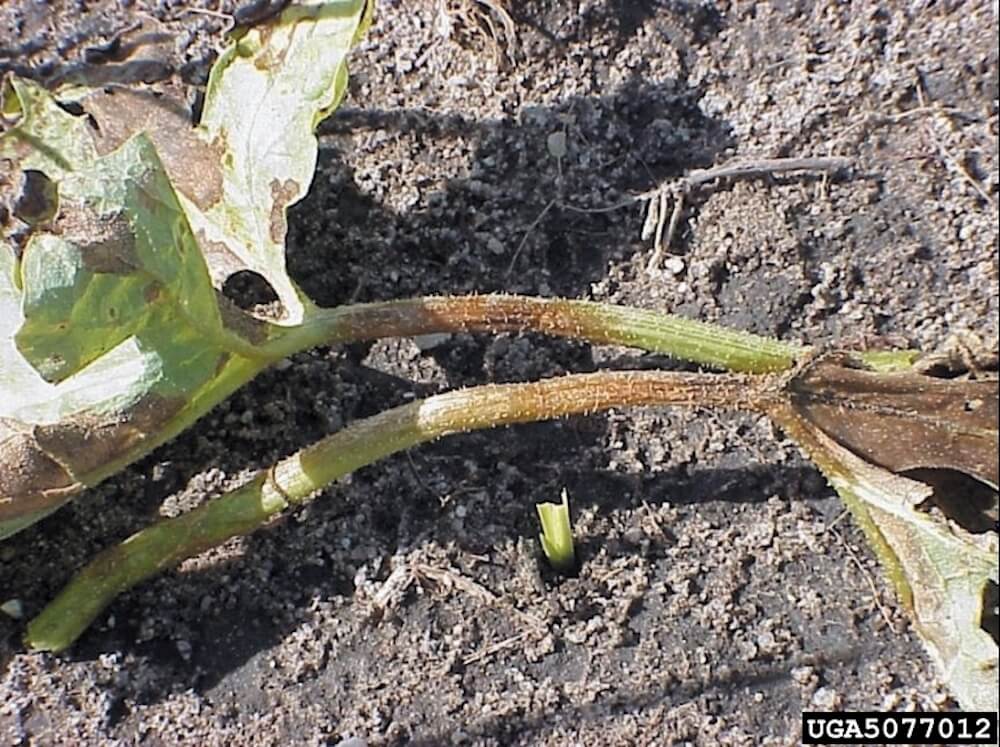
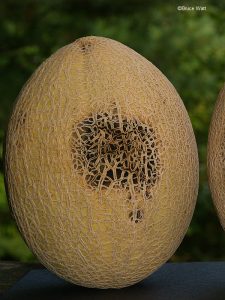
Canker or gummy rot caused by Didymella bryoniae in cucurbits manifests itself with the appearance of brown lesions on stems, leaves and fruits. Lesions may exude a gummy liquid, especially on stems and fruits. These lesions can expand, causing the death of the affected parts.
• Brown lesions on stems, leaves and fruits.
• Gummy exudate in lesions of stems and fruits.
• Expansion of lesions that can cause death of affected parts.
• Reduction in the quality and quantity of the harvest.


TEMPERATURE AND HUMIDITY
15°C - 25°C
70% - 90%

TRANSMISSION ROUTES
Air, water, remains of infected plants, contact with contaminated tools.
Do you want to remove this disease? Choose how you want to treat it.

TREATMENTS
Chemical treatments
• AZOXISTROBIN 25% [SC] P/V
• DIFENOCONAZOLE 12.5% + CYFLUFENAMIDE 1.5% [DC] P/V
• DIFENOCONAZOLE 25% [EC] P/V
• FLUXAPYROXAD 7.5% + DIFENOCONAZOLE 5% [SC] P/V
Authorized treatments in organic farming
-
Biological control
• BACILLUS SUBTILIS (STRAIN QST 713) 1.34% [SC] P/V
• CLONOSTACHYS ROSEA CEPA J1446 (GLIOCLADIUM CATENULATUM (CEPA J1446)) (1 x 10E 9 cfu/g) 900 g/kg [WG] P/P
• GLIOCLADIUM CATENULATUM (STRAIN J1446) 32% (2 X 10E8 CFU/G) [WP] P/P
Recommendations
• Use cucurbit varieties resistant or tolerant to Didymella bryoniae.
• Practice crop rotation to reduce pathogen pressure in the soil.
• Improve air circulation and avoid excess humidity in crops.
• Apply specific fungicides following local recommendations.
• Disinfect cultivation tools and equipment to prevent the spread of the fungus.
• Eliminate and destroy infected plants and plant remains.





*Recommended treatments are still recommendations according to authority databases and in no way replace the guidelines established according to the legislation of each country.
*Products shown are recommendations and not our own products. As Amazon Associates, we earn revenue from purchases of recommended products.

TREATMENTS
Homemade remedies
There are no home treatments
Natural allies
Chemical treatments
There are no treatments for this disease. Treatments are directed at the insect vectors that transmit it. See insect treatments.

RECOMMENDATIONS

REPELLENT PLANTS
EFFECTIVE PRODUCTS TO ELIMINATE THIS DISEASE
*Recommended treatments are still recommendations according to authority databases and in no way replace the guidelines established according to the legislation of each country.
*Products shown are recommendations and not our own products. As Amazon Associates, we earn revenue from purchases of recommended products.



Explore more tools
Services
Contact
Legal
©2023 por ZeriMar Laboratoire. Todos os direitos reservados.