


Symptoms, treatments, and recommendations for treating black rot
Black Rot Or Black Rot
Ghignardia Bidwelli
Pathogen:
Type:
Fungus
Risk:
HIGH
Vid
Micosis/Hongos

WHO CAUSES IT?
*Guignardia bidwellii*, the causal agent of black rot, is an ascomycete fungus that mainly affects the vine. This pathogen develops in warm and humid environments, where spores are released from fruiting structures called pycnidia, which form on remains of infected leaves and fruits fallen on the ground. In spring, asexual spores (conidia) are spread by rain and wind, infecting young shoots, leaves, and fruits. Initial infections are crucial as they allow the fungus to establish itself on the plant and, through the release of new spores, spread the disease. During the growing season, the fungus continues its cycle, causing multiple generations of infection. Infected fruits develop pycnidia, which release new spores, thus completing the infectious process. Sexual spores (ascospores) can also be released during the winter from resistance structures called perithecia, which guarantees the survival of the fungus from one year to the next.

SYMPTOMS
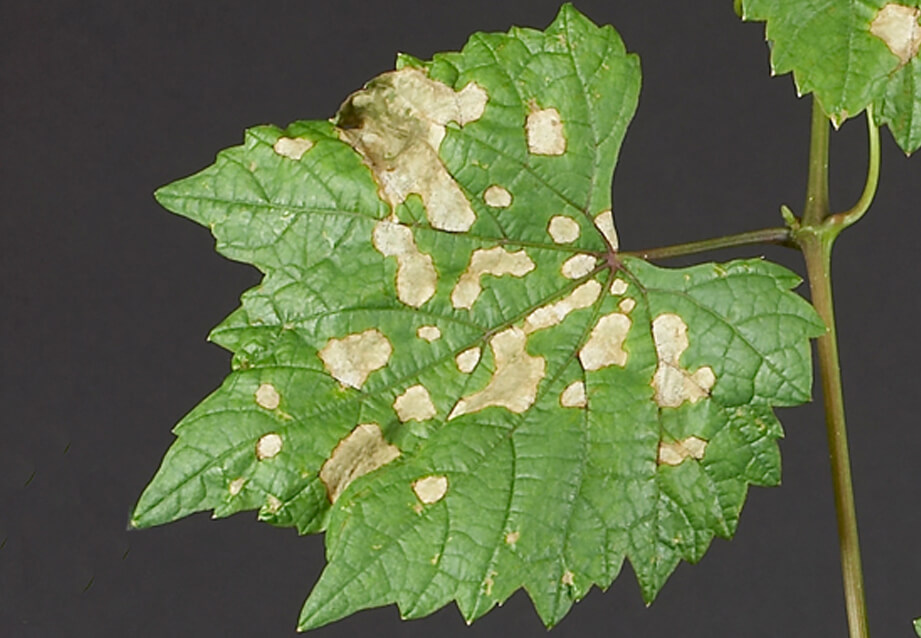
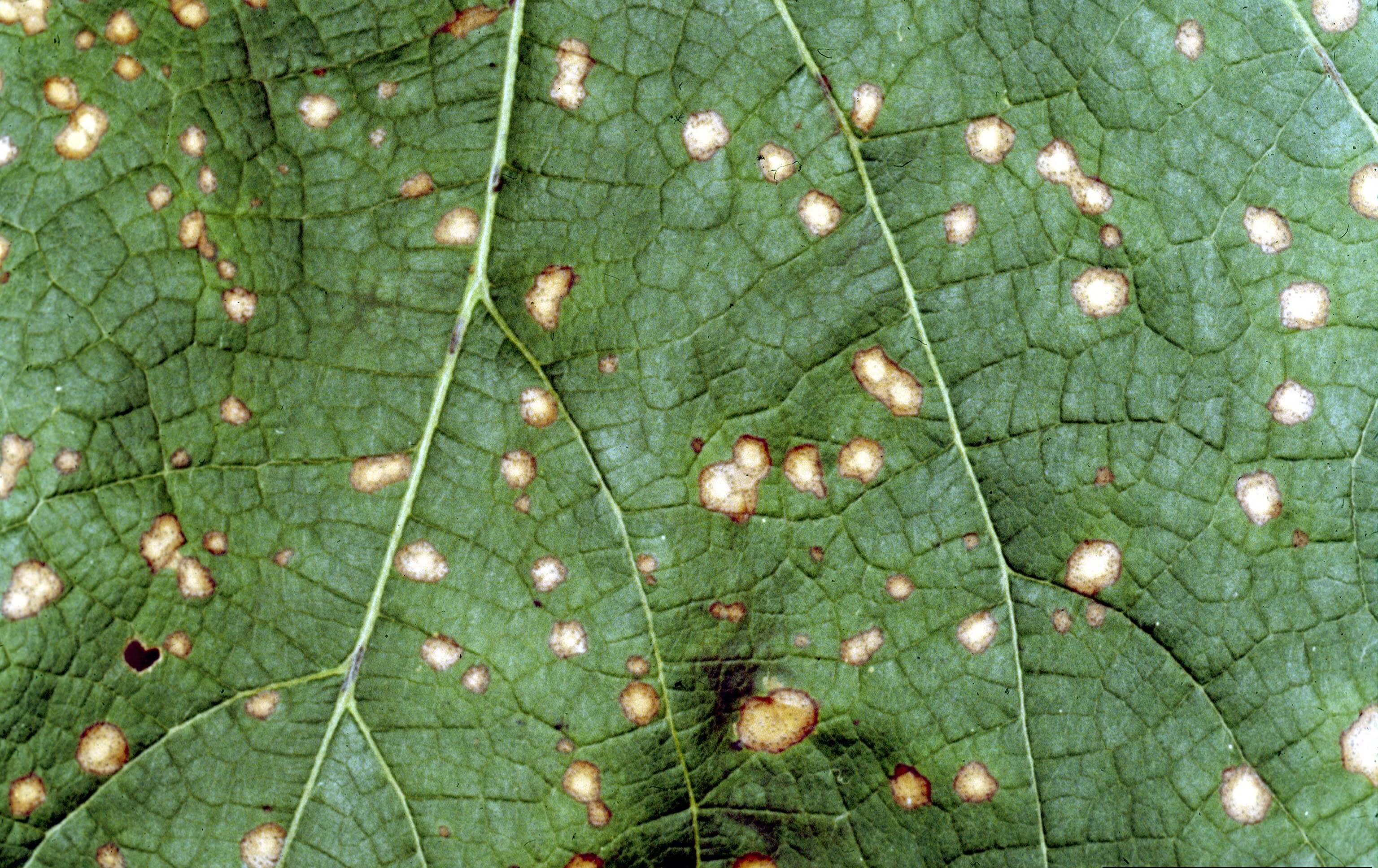
In the vine, *Guignardia bidwellii* causes a devastating disease that mainly affects the leaves and fruits, compromising the production and quality of the harvest. The infection begins as small brown Taches on the leaves, which expand rapidly, causing necrosis and deformation. On fruits, the symptoms are even more evident, with lesions that progress to complete rot, severely affecting crop yield.
- Appearance of brown Taches with a dark halo on young leaves.
- Necrosis of the affected areas that causes premature leaf fall.
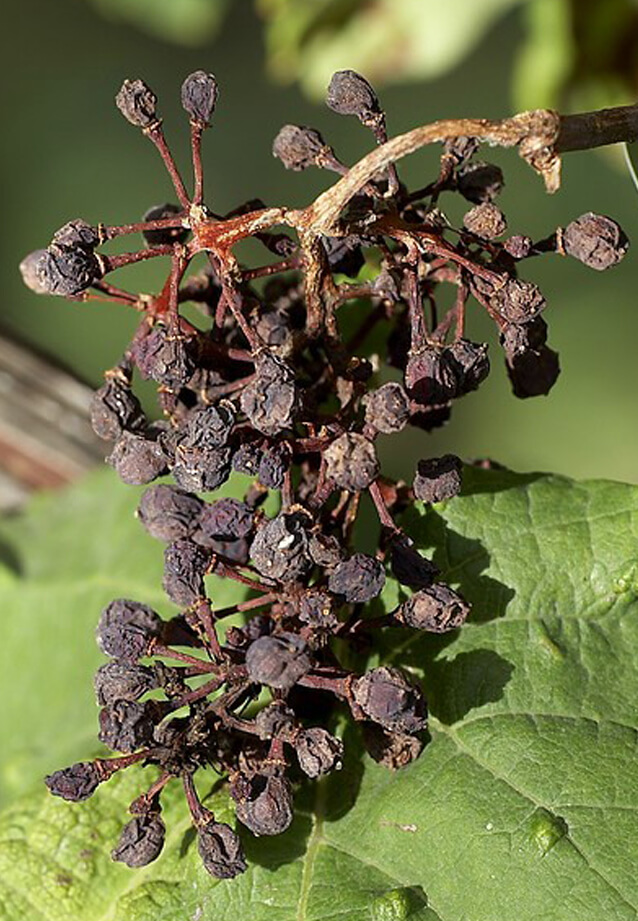
- Black, sunken lesions on the fruits, which harden and mummify.
- Severely deformed and dry fruits that fall prematurely.
- Decrease in the quality and size of the grape bunches.
- Significant reduction in annual production due to the death of plant tissues.


TEMPERATURE AND HUMIDITY
20°C - 30°C
85% - 100%

TRANSMISSION ROUTES
Rain, wind, remains of infected plants, contaminated tools, irrigation water in contact with infected leaves or fruits
Do you want to remove this disease? Choose how you want to treat it.

TREATMENTS
Chemical treatments
• AZOXISTROBIN 25% [SC] P/V
• CIFLUFENAMID 3% + DIFENOCONAZOLE 6% [DC] P/V
• DIFENOCONAZOLE 25% [EC] P/V
• FOLPET 50% [SC] P/V
• FOLPET 80% [WG] P/P
• KRESOXIM-METHYL 50% [WG] P/P
• MEFENTRIFLUCONAZOLE 7.5% [SC] P/V
• COPPER OXYCHLORIDE 14% (exp. in Cu) + CUPRIC HYDROXIDE 14% (exp. in Cu) [WG] P/P
• COPPER OXYCHLORIDE 35% (exp. in Cu) [WG] P/P
• TEBUCONAZOLE 20% [EC] P/V
Authorized treatments in organic farming
• COPPER OXYCHLORIDE 14% (exp. in Cu) + CUPRIC HYDROXIDE 14% (exp. in Cu) [WG] P/P
• COPPER OXYCHLORIDE 35% (exp. in Cu) [WG] P/P
Biological control
-
Recommendations
- Eliminate all remains of fallen leaves and fruits at the end of the season, since these act as spore reservoirs for the following year.
- Apply preventive fungicides during vine sprouting and growth, especially when humid and warm conditions are expected.
- Maintain adequate pruning of the vine to improve ventilation between plants, thus reducing humidity in the foliage.
- Carry out periodic monitoring in search of the first signs of the disease, and if detected, apply specific phytosanitary treatments for *Guignardia bidwellii*.
- Promote a schedule of rotating phytosanitary treatments to avoid the appearance of resistance to fungicides.
- Avoid sprinkler irrigation on the leaves, as it favors the dispersion of spores through the water, preferring drip irrigation systems.





*Recommended treatments are still recommendations according to authority databases and in no way replace the guidelines established according to the legislation of each country.
*Products shown are recommendations and not our own products. As Amazon Associates, we earn revenue from purchases of recommended products.

TREATMENTS
Homemade remedies
There are no home treatments
Natural allies
Chemical treatments
There are no treatments for this disease. Treatments are directed at the insect vectors that transmit it. See insect treatments.

RECOMMENDATIONS

REPELLENT PLANTS
EFFECTIVE PRODUCTS TO ELIMINATE THIS DISEASE
*Recommended treatments are still recommendations according to authority databases and in no way replace the guidelines established according to the legislation of each country.
*Products shown are recommendations and not our own products. As Amazon Associates, we earn revenue from purchases of recommended products.



Explore more tools
Services
Contact
Legal
©2023 por ZeriMar Laboratoire. Todos os direitos reservados.