


Symptoms, treatments and recommendations for treating angular stains
Angular Spot
Pseudomonas Syringae Pv. Lachrymans
Pathogen:
Type:
Bacterium
Risk:
HIGH
Calabaza
Bacteriosis

WHO CAUSES IT?
Pseudomonas syringae pv. lachrymans is a Gram-negative bacteria that belongs to the genus Pseudomonas and is known to cause angular spot disease in cucurbits, including squash. The bacteria infiltrates plants through stomata and wounds, colonizing the intercellular spaces of plant tissue. Under favorable conditions of high humidity and moderate temperatures, the bacteria multiply rapidly. Pseudomonas syringae pv. lachrymans survives on infected plant remains and contaminated seeds, facilitating its dispersal and persistence in the field. Infections are exacerbated by overhead irrigation and rainfall, which helps spread the bacteria through splashing water. During cold seasons, the bacteria can persist in a dormant state in crop residues, reactivating with the onset of spring and favorable conditions.

SYMPTOMS
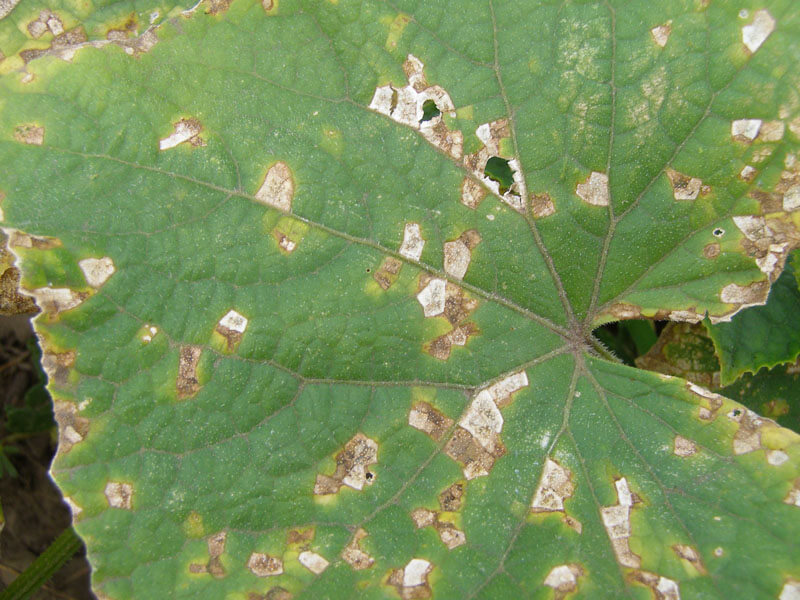
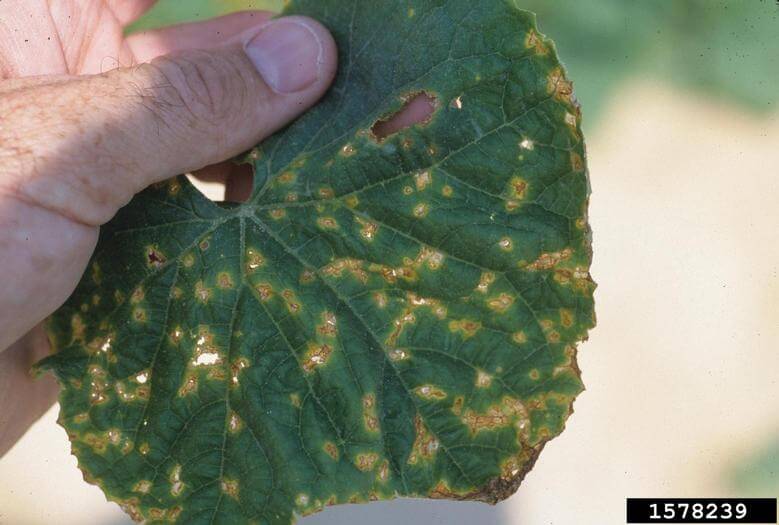
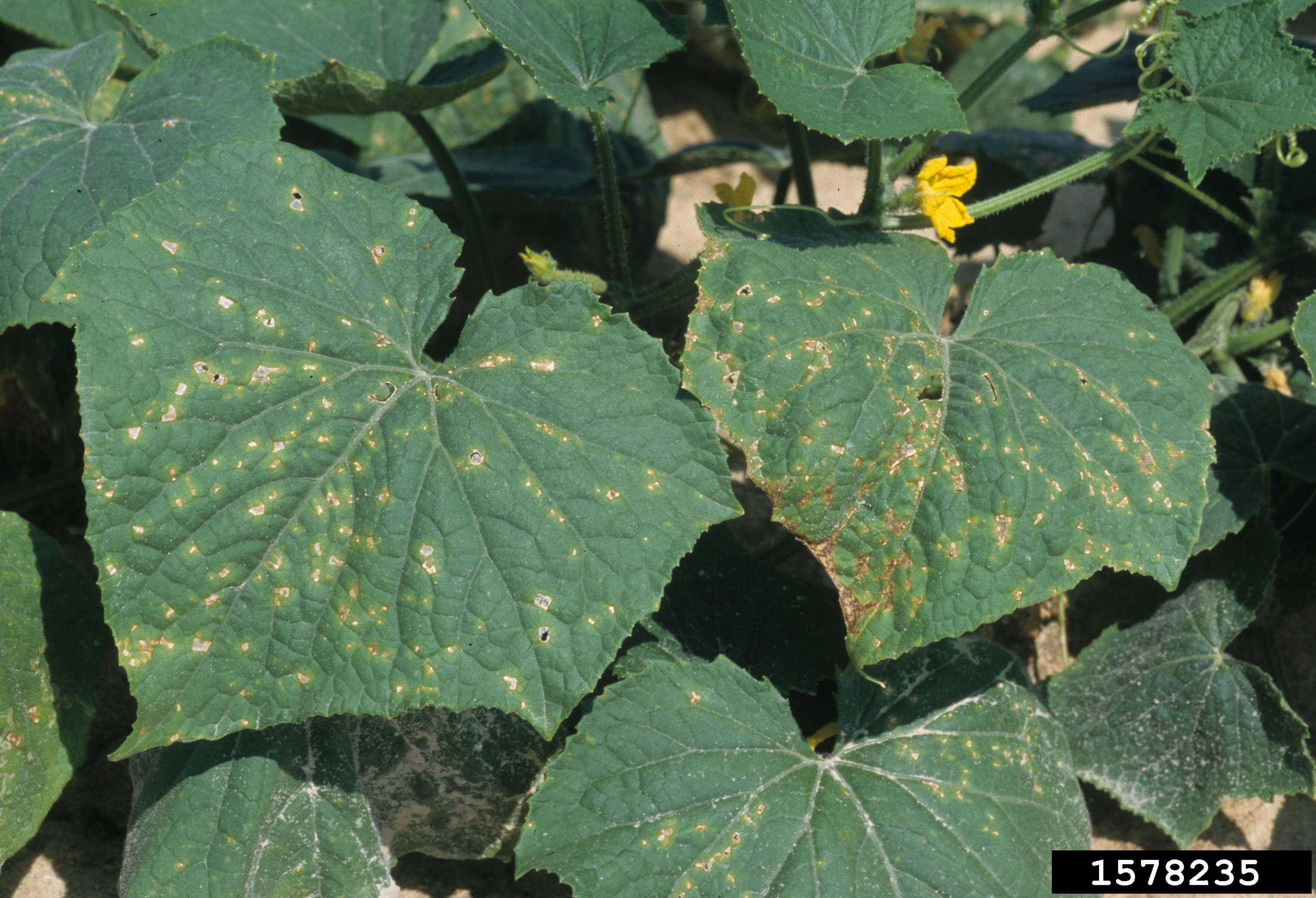
In pumpkins, angular spot caused by Pseudomonas syringae pv. lachrymans produces characteristic symptoms on leaves, stems and fruits, affecting both the health and appearance of the plants. The disease begins with the appearance of small angular Taches, usually limited by the veins of the leaves, which turn dark brown to black and may eventually coalesce, causing extensive necrosis. Under high humidity conditions, these stains may exude a viscous bacterial fluid. Affected fruits present watery lesions that progress to areas of necrotic tissue, decreasing their commercial quality and market value.
- Small angular Taches on the leaves
- Dark brown to black Taches
- Extensive necrosis on the leaves
- Viscous bacterial exudate in high humidity conditions
- Watery lesions on fruits
- Areas of necrotic tissue in the fruits


TEMPERATURE AND HUMIDITY
18-30°C
70-90%

TRANSMISSION ROUTES
Irrigation water, Wind, Agricultural tools, Contaminated seeds, Contact with infected plants, Remains of infected plants
Do you want to remove this disease? Choose how you want to treat it.

TREATMENTS
Chemical treatments
• CUPRIC HYDROXIDE 13.6% (EXPR. IN CU) + COPPER OXYCHLORIDE 13.6% (EXPR. IN CU) [SC] P/V
• CUPRIC HYDROXIDE 20% (EXPR. IN CU) [WG] P/P
• CUPRIC HYDROXIDE 25% (EXPR. IN CU) [WG] P/P
• COPPER OXYCHLORIDE 25% (EXPR. IN CU) [WG] P/P
• COPPER OXYCHLORIDE 30% (EXPR. IN CU) [WP] P/P
• COPPER OXYCHLORIDE 35% (exp. in Cu) [WG] P/P
• COPPER OXYCHLORIDE 35% (EXPR. IN CU) [WG] P/P
• COPPER OXYCHLORIDE 37.5% (EXPR. IN CU) [WG] P/P
• COPPER OXYCHLORIDE 38% (EXPR. IN CU) [SC] P/V
• COPPER OXYCHLORIDE 50% (EXPR. IN CU) [WG] P/P
• COPPER OXYCHLORIDE 50% (EXPR. IN CU) [WP] P/P
• COPPER OXYCHLORIDE 52% (EXPR. IN CU) [SC] P/V
• COPPER OXYCHLORIDE 70% (EXPR. IN CU) [SC] P/V
• CUPROUS OXIDE 75% (EXPR. IN CU) [WG] P/P
• CUPROCALCIC SULFATE 12.4% (EXPR. IN CU) [SC] P/V
• CUPROCALCIC SULFATE 20% (EXPR. IN CU) [WG] P/P
• CUPROCALCIC SULFATE 20% (EXPR. IN CU) [WP] P/P
• CUPROCALCIC SULFATE 20% (EXPR. IN CU) [WG] P/P
• CUPROCALCIC SULFATE 20% [WP] P/P
• TRIBASIC COPPER SULFATE 19% (EXPR. IN CU) [SC] P/V
• TRIBASIC COPPER SULFATE 40% (EXPR. IN CU) [WG] P/P
Authorized treatments in organic farming
• CUPRIC HYDROXIDE 13.6% (EXPR. IN CU) + COPPER OXYCHLORIDE 13.6% (EXPR. IN CU) [SC] P/V
• CUPRIC HYDROXIDE 20% (EXPR. IN CU) [WG] P/P
• CUPRIC HYDROXIDE 25% (EXPR. IN CU) [WG] P/P
• COPPER OXYCHLORIDE 25% (EXPR. IN CU) [WG] P/P
• COPPER OXYCHLORIDE 30% (EXPR. IN CU) [WP] P/P
• COPPER OXYCHLORIDE 35% (exp. in Cu) [WG] P/P
• COPPER OXYCHLORIDE 35% (EXPR. IN CU) [WG] P/P
• COPPER OXYCHLORIDE 37.5% (EXPR. IN CU) [WG] P/P
• COPPER OXYCHLORIDE 38% (EXPR. IN CU) [SC] P/V
• COPPER OXYCHLORIDE 50% (EXPR. IN CU) [WG] P/P
• COPPER OXYCHLORIDE 50% (EXPR. IN CU) [WP] P/P
• COPPER OXYCHLORIDE 52% (EXPR. IN CU) [SC] P/V
• COPPER OXYCHLORIDE 70% (EXPR. IN CU) [SC] P/V
• CUPROUS OXIDE 75% (EXPR. IN CU) [WG] P/P
• CUPROCALCIC SULFATE 12.4% (EXPR. IN CU) [SC] P/V
• CUPROCALCIC SULFATE 20% (EXPR. IN CU) [WG] P/P
• CUPROCALCIC SULFATE 20% (EXPR. IN CU) [WP] P/P
• CUPROCALCIC SULFATE 20% (EXPR. IN CU) [WG] P/P
• CUPROCALCIC SULFATE 20% [WP] P/P
• TRIBASIC COPPER SULFATE 19% (EXPR. IN CU) [SC] P/V
• TRIBASIC COPPER SULFATE 40% (EXPR. IN CU) [WG] P/P
Biological control
• BACILLUS AMYLOLIQUEFACIENS (subsp. plantarum, strain D747) 25% [WG] P/P
• BACILLUS SUBTILIS (STRAIN QST 713) 1.34% [SC] P/V
Recommendations
- Use certified pathogen-free seeds.
- Implement crop rotations to prevent the accumulation of bacteria in the soil.
- Maintain good hygiene in the field, eliminating remains of infected plants.
- Disinfect agricultural tools and equipment before using them in new areas.
- Improve air circulation in crops to reduce relative humidity.
- Avoid sprinkler irrigation and prefer drip irrigation systems.
- Apply authorized bactericides preventively, following the manufacturer's instructions.
- Carry out constant monitoring of the crop to detect and control the disease early.





*Recommended treatments are still recommendations according to authority databases and in no way replace the guidelines established according to the legislation of each country.
*Products shown are recommendations and not our own products. As Amazon Associates, we earn revenue from purchases of recommended products.

TREATMENTS
Homemade remedies
There are no home treatments
Natural allies
Chemical treatments
There are no treatments for this disease. Treatments are directed at the insect vectors that transmit it. See insect treatments.

RECOMMENDATIONS

REPELLENT PLANTS
EFFECTIVE PRODUCTS TO ELIMINATE THIS DISEASE
*Recommended treatments are still recommendations according to authority databases and in no way replace the guidelines established according to the legislation of each country.
*Products shown are recommendations and not our own products. As Amazon Associates, we earn revenue from purchases of recommended products.



Explore more tools
Services
Contact
Legal
©2023 por ZeriMar Laboratoire. Todos os direitos reservados.