


Symptoms, treatments, and recommendations for treating phaeosphaeria stains
Spot By Phaeosphaeria
Phaeosphaeria Maydis / Phoma Maydis
Pathogen:
Type:
Fungus
Risk:
INTERMEDIATE
Maíz
Micosis/Hongos

WHO CAUSES IT?
Phaeosphaeria maydis is an ascomycete fungus that affects corn, causing the disease known as Phaeosphaeria spot. This pathogen spreads mainly through ascospores released from perithecia, fruiting structures formed in infected plant residues. Ascospores are transported by wind and rain to healthy plants, where they germinate and penetrate plant tissues through stomata or wounds. Under favorable conditions of humidity and temperature, the fungus develops a mycelium that spreads through the intercellular spaces, causing the decomposition of the leaf tissue. Phaeosphaeria maydis can survive on crop debris in the soil, allowing its persistence over successive growing seasons.

SYMPTOMS
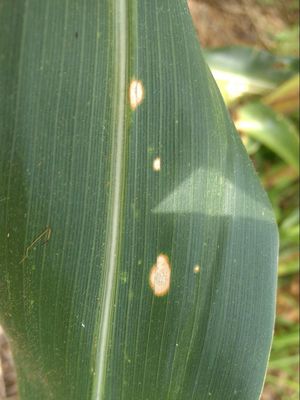
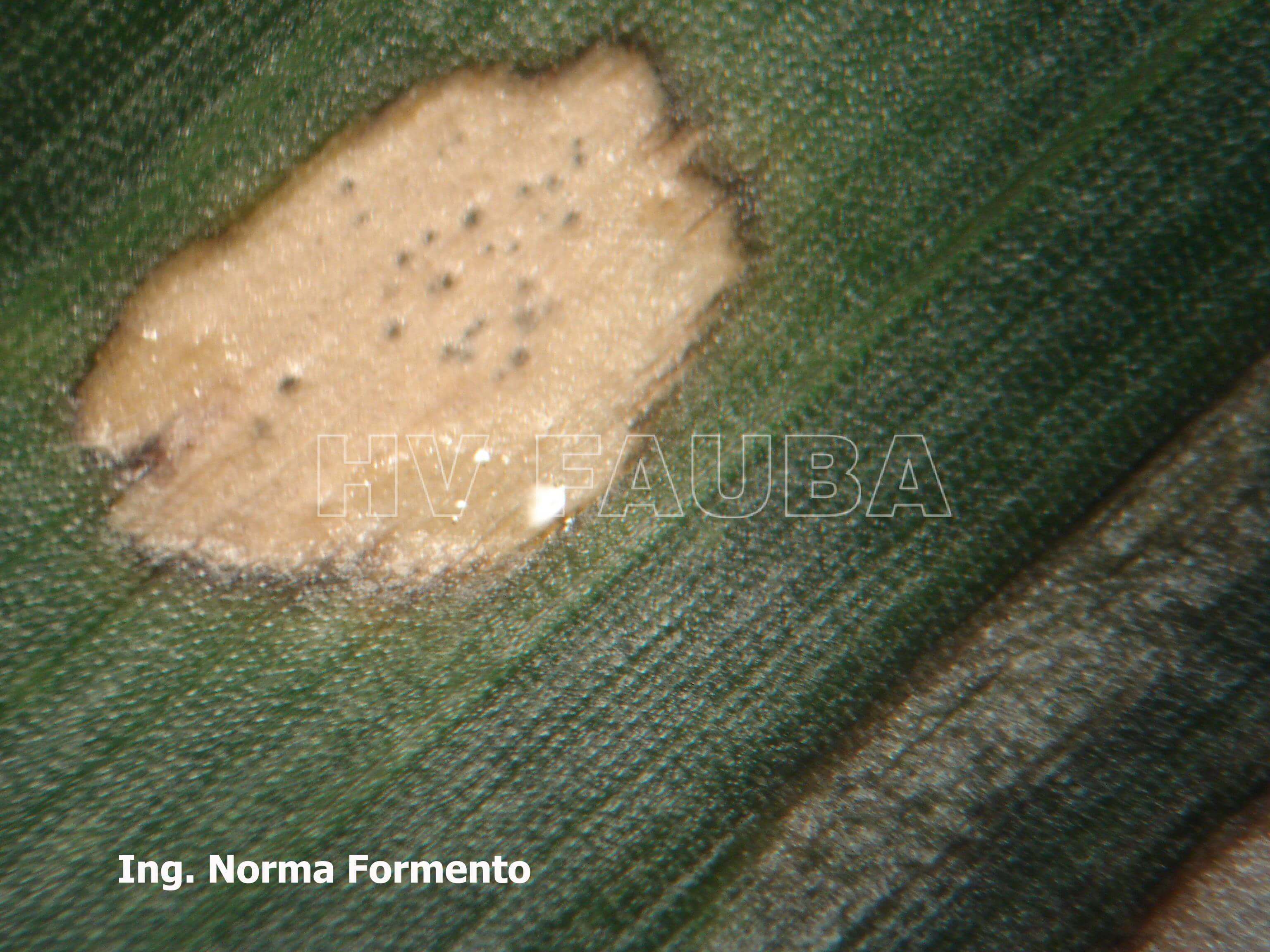
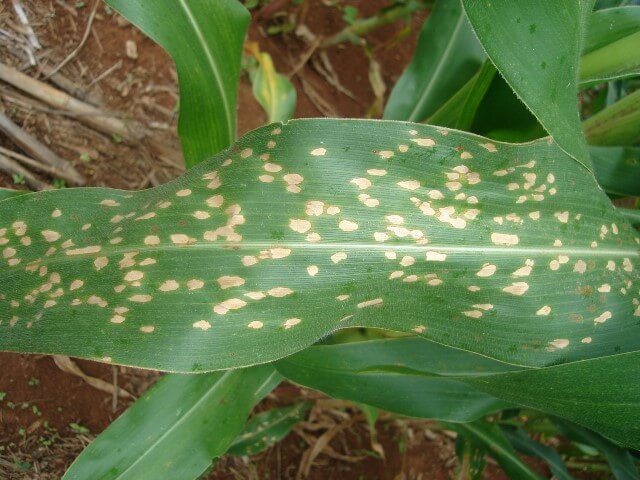
The disease known as Phaeosphaeria spot mainly affects the leaves of corn, reducing their photosynthetic capacity and weakening the plant. Initially, small chlorotic Taches are observed that evolve into necrotic lesions with a dark center and yellow edges. As the infection progresses, the Taches can coalesce, forming large areas of dead tissue, causing premature defoliation.
- Small chlorotic Taches on the leaves.
- Necrotic lesions with dark centers and yellow edges.
- Coalescence of Taches, forming large necrotic areas.
- Premature defoliation of severely affected leaves.
- Reduction of photosynthesis and plant vigor.
- Presence of sporulation in the lesions under conditions of high humidity.


TEMPERATURE AND HUMIDITY
20-30°C
80-90%

TRANSMISSION ROUTES
Wind, rainwater, infected crop remains, agricultural tools, infected seeds
Do you want to remove this disease? Choose how you want to treat it.

TREATMENTS
Chemical treatments
• AZOXISTROBIN 25% [SC] P/V
• SULFUR 80% [SC] P/V
• SULFUR 80% [WG] P/P
• SULFUR 80% [WP] P/P
• SULFUR 82.5% [SC] P/V
Authorized treatments in organic farming
• SULFUR 80% [SC] P/V
• SULFUR 80% [WG] P/P
• SULFUR 80% [WP] P/P
• SULFUR 82.5% [SC] P/V
Biological control
-
Recommendations
- Use corn varieties resistant or tolerant to Phaeosphaeria maydis.
- Implement crop rotation with non-susceptible species to reduce the inoculum in the soil.
- Eliminate and destroy infected crop residues to reduce the source of inoculum.
- Apply preventive and curative fungicides following the appropriate technical recommendations.
- Avoid sprinkler irrigation at times of high humidity to reduce the spread of spores.
- Regularly monitor crops to detect symptoms early and apply timely control measures.
- Maintain an adequate planting density to improve ventilation between plants and reduce foliar humidity.
- Carry out deep tillage practices to bury crop residues and reduce the source of inoculum.
- Train farmers in the identification of symptoms and the implementation of integrated pest and disease management practices.





*Recommended treatments are still recommendations according to authority databases and in no way replace the guidelines established according to the legislation of each country.
*Products shown are recommendations and not our own products. As Amazon Associates, we earn revenue from purchases of recommended products.

TREATMENTS
Homemade remedies
There are no home treatments
Natural allies
Chemical treatments
There are no treatments for this disease. Treatments are directed at the insect vectors that transmit it. See insect treatments.

RECOMMENDATIONS

REPELLENT PLANTS
EFFECTIVE PRODUCTS TO ELIMINATE THIS DISEASE
*Recommended treatments are still recommendations according to authority databases and in no way replace the guidelines established according to the legislation of each country.
*Products shown are recommendations and not our own products. As Amazon Associates, we earn revenue from purchases of recommended products.



Explore more tools
Services
Contact
Legal
©2023 por ZeriMar Laboratoire. Todos os direitos reservados.