


Symptoms, treatments and recommendations for treating rust
Rust
Tranzschelia Pruni-Spinosae
Pathogen:
Type:
Fungus
Risk:
INTERMEDIATE
Albaricoque
Royas

WHO CAUSES IT?
Tranzschelia pruni-spinosae is a pathogenic fungus that causes the disease known as rust in various plants, including apricots. This fungus is characterized by its ability to produce spores at different stages of its life cycle, which allows it to spread easily through air and water. The fungus can survive the winter on plant debris or alternative host plants, facilitating its reappearance in the following season. Tranzschelia pruni-spinosae thrives in conditions of high humidity and moderate to high temperatures.

SYMPTOMS
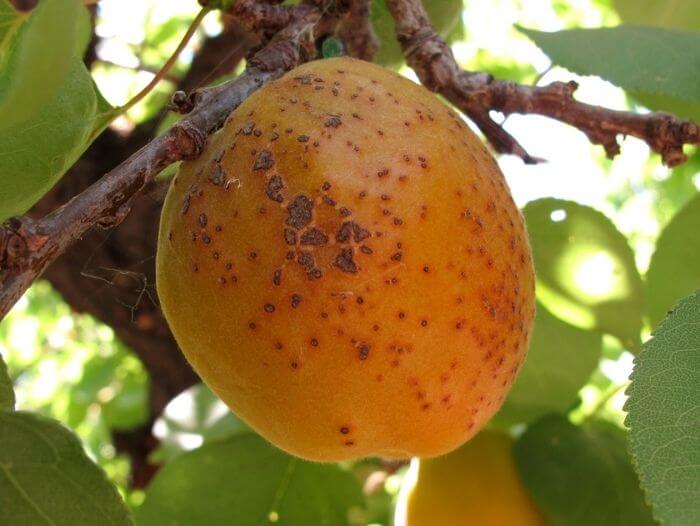
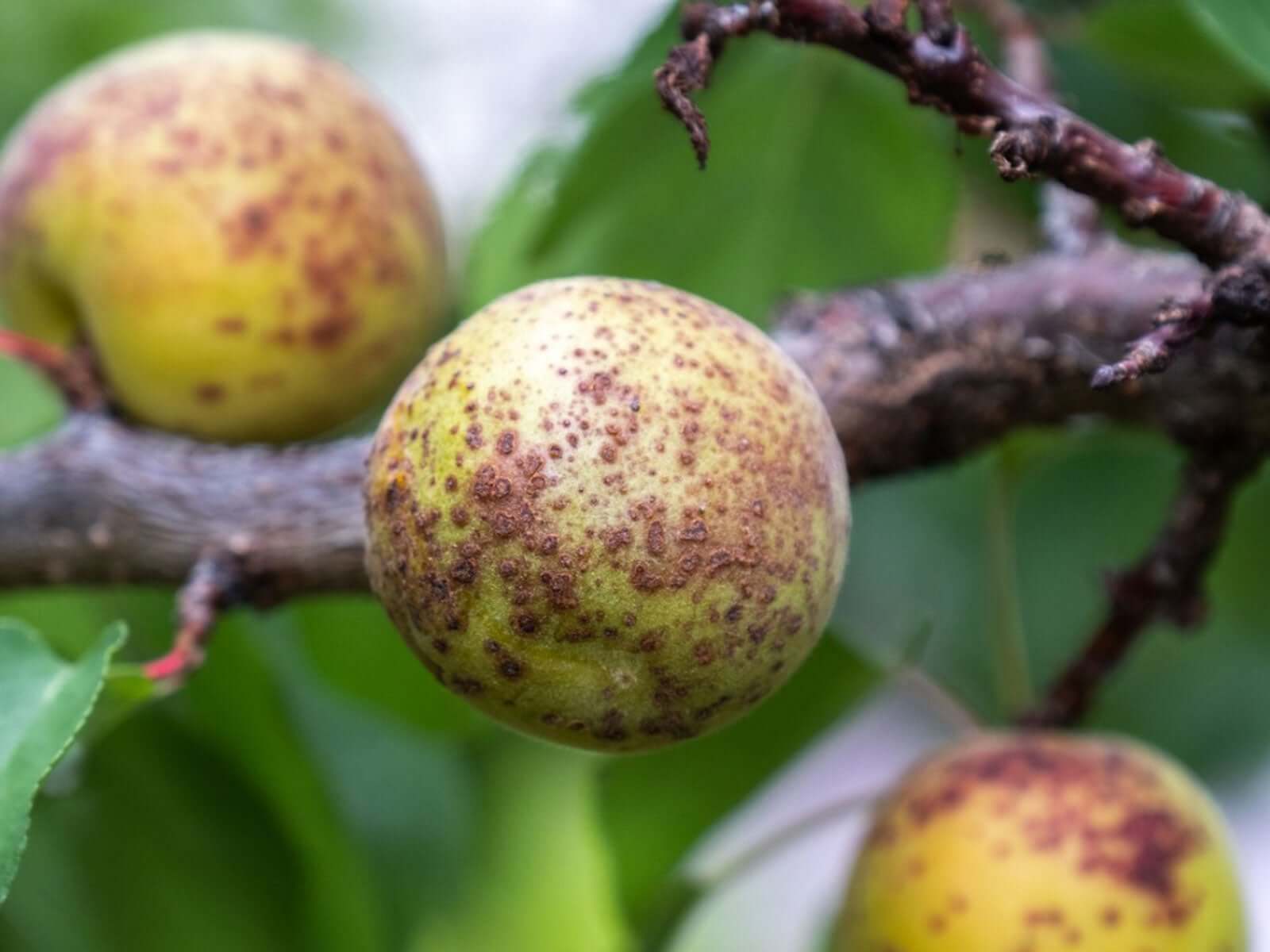
The rust caused by this fungus on apricot manifests itself as yellow-orange Taches on the leaves, which then turn brown and dry. Brown or dark scabs with a rough appearance appear on the fruit. This disease can weaken the plant and significantly reduce the quality and quantity of the harvest. As the disease progresses, leaves may drop prematurely.
• Appearance of yellow or orange Taches on the leaves.
• Appearance of brown scabs on the fruits.
• The Taches turn brown as the disease progresses.
• Premature fall of leaves.
• Loss of plant vigor.
• Reduction in the quality and quantity of the harvest.


TEMPERATURE AND HUMIDITY
15ºC - 25ºC
80% - 90%

TRANSMISSION ROUTES
Wind, water, contact with infected plant remains.
Do you want to remove this disease? Choose how you want to treat it.

TREATMENTS
Chemical treatments
• DIFENOCONAZOLE 25% [EC] P/V
• PIRACLOSTROBIN 6.7% + BOSCALIDE 26.7% [WG] P/P
Authorized treatments in organic farming
-
Biological control
-
Recommendations
To prevent and control rust in apricots, it is essential to take comprehensive management measures. The application of specific fungicides is recommended, along with appropriate cultural practices to minimize the spread of the disease.
• Apply specific fungicides at critical stages to prevent infection.
• Prune and remove infected leaves to reduce the spread of the fungus.
• Make sure to maintain good air circulation around the plants.
• Avoid overhead irrigation to minimize the spread of spores.
• Maintain a regular monitoring program to detect and treat the disease early.
• Use rust-resistant or tolerant apricot varieties to minimize the impact of the disease.





*Recommended treatments are still recommendations according to authority databases and in no way replace the guidelines established according to the legislation of each country.
*Products shown are recommendations and not our own products. As Amazon Associates, we earn revenue from purchases of recommended products.

TREATMENTS
Homemade remedies
There are no home treatments
Natural allies
Chemical treatments
There are no treatments for this disease. Treatments are directed at the insect vectors that transmit it. See insect treatments.

RECOMMENDATIONS

REPELLENT PLANTS
EFFECTIVE PRODUCTS TO ELIMINATE THIS DISEASE
*Recommended treatments are still recommendations according to authority databases and in no way replace the guidelines established according to the legislation of each country.
*Products shown are recommendations and not our own products. As Amazon Associates, we earn revenue from purchases of recommended products.



Explore more tools
Services
Contact
Legal
©2023 por ZeriMar Laboratoire. Todos os direitos reservados.