


Symptoms, treatments and recommendations for treating rust
Rust
Gymnosporangium Clavariiforme
Pathogen:
Type:
Fungus
Risk:
HIGH
Frutales de pepita
Royas

WHO CAUSES IT?
Gymnosporangium clavariiforme is a heteroecious fungus, meaning that it requires two different hosts to complete its development: generally junipers (Juniperus spp.) and pome fruit trees. In spring, spores are produced in the galls of juniper trees and are released when conditions are moist and warm, dispersing to pome fruit trees. The spores germinate on the leaves and fruits of these trees, where the fungus forms infection structures. During the summer, asexual spores are generated in the infected tissues of pome fruit trees, which in turn infect other tissues on the same tree. In autumn, the fungus produces spores that infect the junipers again, thus completing their development.

SYMPTOMS
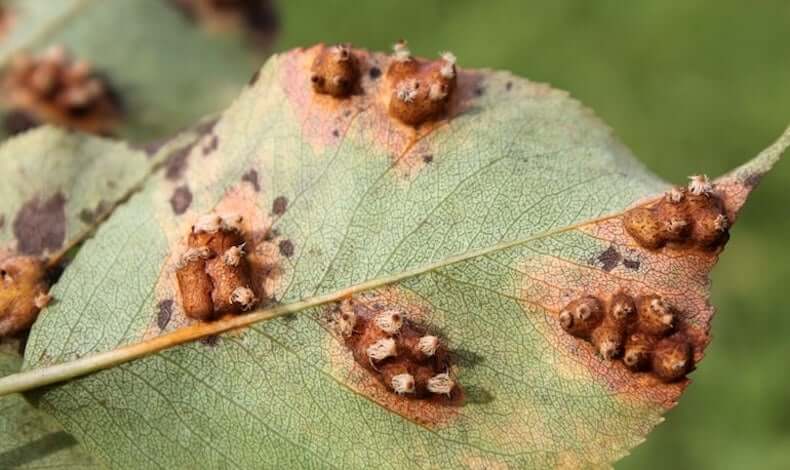
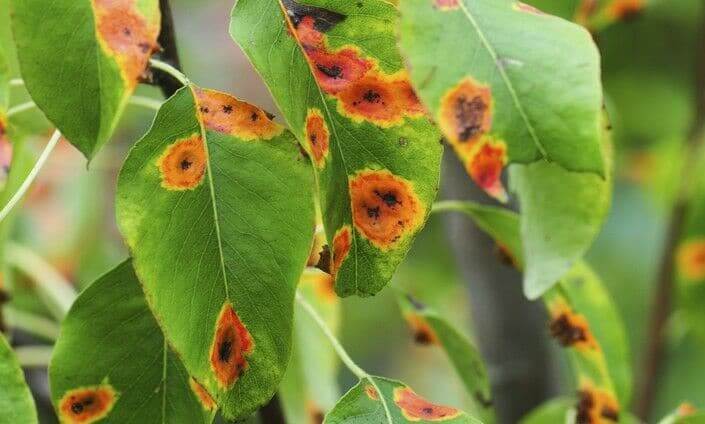
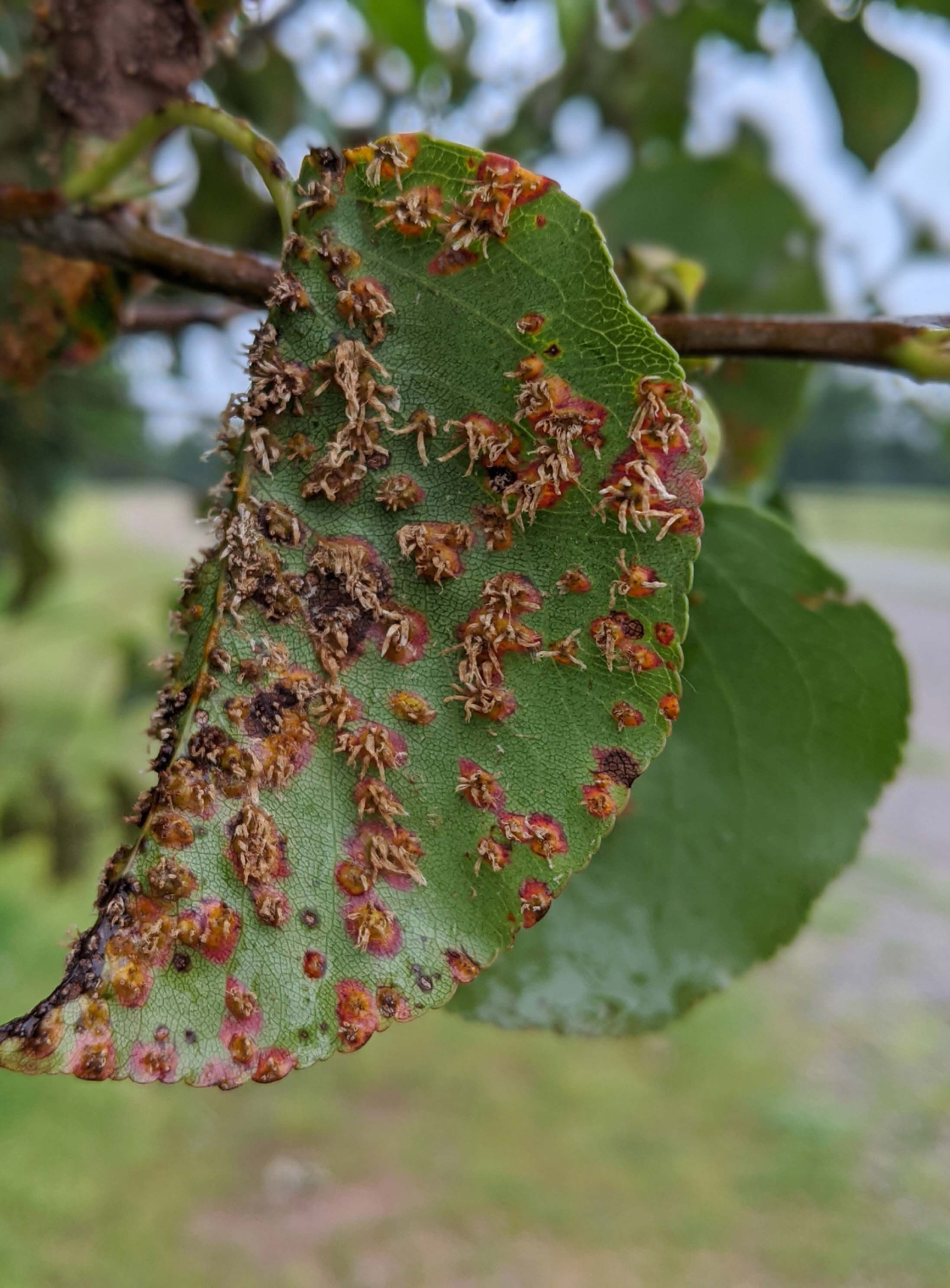
The rust produced by Gymnosporangium clavariiforme mainly affects pome fruit trees, causing a variety of symptoms that impact both the aesthetics and productivity of the tree. Initial symptoms include yellow Taches on the leaves, which eventually develop pustules on the underside. These pustules release spores that can cause new infections in the same or nearby trees.
- Yellow Taches on the leaves.
- Pustules on the underside of the leaves.
- Deformations in the leaves.
- Taches on the fruits.
- Premature fall of leaves.
- Reduction in the quality of the fruits.
- Loss of vigor in the tree.


TEMPERATURE AND HUMIDITY
15°C - 25°C
80% - 95%

TRANSMISSION ROUTES
Wind, Rain, Direct contact with infected trees
Do you want to remove this disease? Choose how you want to treat it.

TREATMENTS
Chemical treatments
• ORANGE OIL 60g/L [ME] P/S
• CAPTAN 47.5% [SC] P/V
• CUPRIC HYDROXIDE 25% (EXPR. IN CU) [WG] P/P
• CUPRIC HYDROXIDE 40% (EXPR. IN CU) [WG] P/P
• CUPRIC HYDROXIDE 50% (EXPR. IN CU) [WP] P/P
• METIRAM 70% [WG] P/P
• COPPER OXYCHLORIDE 30% (EXPR. IN CU) [WP] P/P
• COPPER OXYCHLORIDE 38% (EXPR. IN CU) [SC] P/V
• COPPER OXYCHLORIDE 50% (EXPR. IN CU) [WG] P/P
• COPPER OXYCHLORIDE 50% (EXPR. IN CU) [WP] P/P
• COPPER OXYCHLORIDE 52% (EXPR. IN CU) [SC] P/V
• COPPER OXYCHLORIDE 70% (EXPR. IN CU) [SC] P/V
• CUPROUS OXIDE 75% (EXPR. IN CU) [WG] P/P
• CUPROCALCIC SULFATE 20% (EXPR. IN CU) [WG] P/P
• CUPROCALCIC SULFATE 20% (EXPR. IN CU) [WP] P/P
• CUPROCALCIC SULFATE 20% (EXPR. IN CU) [WG] P/P
• CUPROCALCIC SULFATE 20% [WP] P/P
• TEBUCONAZOLE 25% [WG] P/P
Authorized treatments in organic farming
• ORANGE OIL 60g/L [ME] P/S
• CUPRIC HYDROXIDE 25% (EXPR. IN CU) [WG] P/P
• CUPRIC HYDROXIDE 40% (EXPR. IN CU) [WG] P/P
• CUPRIC HYDROXIDE 50% (EXPR. IN CU) [WP] P/P
• COPPER OXYCHLORIDE 30% (EXPR. IN CU) [WP] P/P
• COPPER OXYCHLORIDE 38% (EXPR. IN CU) [SC] P/V
• COPPER OXYCHLORIDE 50% (EXPR. IN CU) [WG] P/P
• COPPER OXYCHLORIDE 50% (EXPR. IN CU) [WP] P/P
• COPPER OXYCHLORIDE 52% (EXPR. IN CU) [SC] P/V
• COPPER OXYCHLORIDE 70% (EXPR. IN CU) [SC] P/V
• CUPROUS OXIDE 75% (EXPR. IN CU) [WG] P/P
• CUPROCALCIC SULFATE 20% (EXPR. IN CU) [WG] P/P
• CUPROCALCIC SULFATE 20% (EXPR. IN CU) [WP] P/P
• CUPROCALCIC SULFATE 20% (EXPR. IN CU) [WG] P/P
• CUPROCALCIC SULFATE 20% [WP] P/P
Biological control
-
Recommendations
- Maintain an adequate distance between pome fruit trees and junipers to reduce the probability of cross infection.
- Carry out sanitary pruning by eliminating and destroying affected branches and leaves to reduce the source of inoculum.
- Apply preventative fungicides in spring when juniper spores begin to be released.
- Regularly monitor trees to detect the first signs of infection and act quickly.
- Select varieties of pome fruit trees that are resistant or less susceptible to rust.
- Implement an integrated pest and disease management program, combining the use of fungicides with appropriate cultural practices.
- Avoid sprinkler irrigation, as it increases humidity and favors the spread of the fungus.
- Promote good air circulation within the orchard through proper pruning and spacing of trees.





*Recommended treatments are still recommendations according to authority databases and in no way replace the guidelines established according to the legislation of each country.
*Products shown are recommendations and not our own products. As Amazon Associates, we earn revenue from purchases of recommended products.

TREATMENTS
Homemade remedies
There are no home treatments
Natural allies
Chemical treatments
There are no treatments for this disease. Treatments are directed at the insect vectors that transmit it. See insect treatments.

RECOMMENDATIONS

REPELLENT PLANTS
EFFECTIVE PRODUCTS TO ELIMINATE THIS DISEASE
*Recommended treatments are still recommendations according to authority databases and in no way replace the guidelines established according to the legislation of each country.
*Products shown are recommendations and not our own products. As Amazon Associates, we earn revenue from purchases of recommended products.



Explore more tools
Services
Contact
Legal
©2023 por ZeriMar Laboratoire. Todos os direitos reservados.