


Symptoms, treatments, and recommendations for treating cavities or wheat blight
Wheat Cavities Or Blight
Tilletia Sp.
Pathogen:
Type:
Fungus
Risk:
CRITICAL
Cereales de invierno
Royas

WHO CAUSES IT?
Tilletia sp. It is a basidiomycete fungus that mainly affects cereals, especially wheat. Its spores, called teliospores, remain in the soil or infected seeds, and can survive for several years under adverse conditions. During wheat germination, the spores germinate together with the seedlings and penetrate through the roots or coleoptile, invading the plant tissue. As the plant develops, the fungus grows internally without showing visible signs of infection. Upon reaching the reproductive phase, the fungus moves to the spikes, where it replaces the normal grains with dark, smelly spores. These spores are released into the environment when the spikes break, easily spreading to new plants through wind, farm machinery or irrigation water.

SYMPTOMS
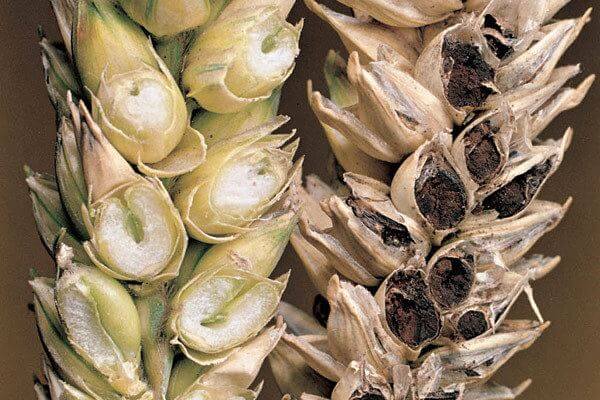
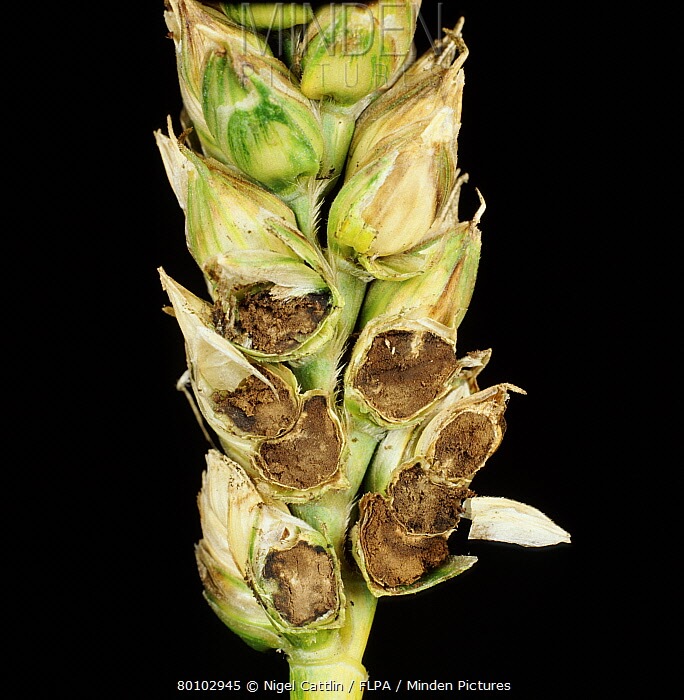
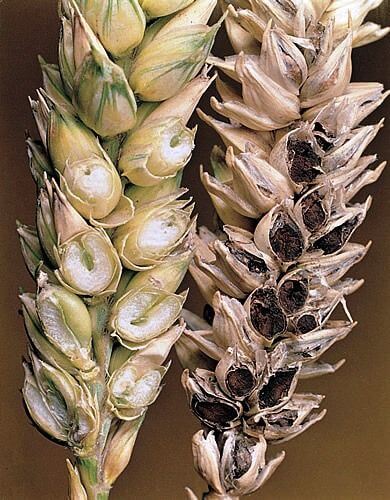
The disease known as caries or wheat blight is caused by Tilletia sp. in winter cereals. The fungus infects plants without presenting visible symptoms during the vegetative phase, but characteristic signs appear on the spikes during the reproductive phase. Infected ears have an unpleasant rotten fish odor due to the release of trimethylamine. The damage affects both crop quality and yield, causing significant crop losses.
- Spikes with a deformed appearance and dark grains
- Unpleasant smell of rotten fish
- Black powder that is released from the ears when touched
- Grains that do not develop correctly or are replaced by spores
- Decrease in the weight of grains


TEMPERATURE AND HUMIDITY
10°C - 20°C
65% - 90%

TRANSMISSION ROUTES
Infected seeds, contaminated soil, wind, irrigation water, agricultural machinery
Do you want to remove this disease? Choose how you want to treat it.

TREATMENTS
Chemical treatments
• DIFENOCONAZOLE 3% [FS] P/V
• FLUDIOXONIL 2.5% [FS] P/V
• FLUXAPYROXAD 3.33% + TRITICONAZOLE 3.33% + FLUDIOXONIL 3.33% [FS] P/V
• SEDAXANE 2.5% + FLUDIOXONIL 2.5% [FS] P/V
• SEDAXANE 2.5% + FLUDIOXONIL 2.5% + TRITICONAZOLE 2% [FS] P/V
Authorized treatments in organic farming
-
Biological control
-
Recommendations
- Use certified seeds free of Tilletia sp., which have been treated with fungicides before sowing.
- Rotate crops with species not susceptible to the disease, to reduce the spore load in the soil.
- Avoid planting in contaminated soils or in fields where a history of wheat decay infection has been recorded.
- Carry out proper cleaning of agricultural machinery to avoid the spread of spores between fields.
- Implement tillage practices that favor the decomposition of crop residues and minimize the survival of the fungus in the soil.
- Monitor crops periodically to detect the early appearance of symptoms and apply phytosanitary treatments in a timely manner.
- Control seed storage conditions to avoid the proliferation of spores in humid and poorly ventilated environments.





*Recommended treatments are still recommendations according to authority databases and in no way replace the guidelines established according to the legislation of each country.
*Products shown are recommendations and not our own products. As Amazon Associates, we earn revenue from purchases of recommended products.

TREATMENTS
Homemade remedies
There are no home treatments
Natural allies
Chemical treatments
There are no treatments for this disease. Treatments are directed at the insect vectors that transmit it. See insect treatments.

RECOMMENDATIONS

REPELLENT PLANTS
EFFECTIVE PRODUCTS TO ELIMINATE THIS DISEASE
*Recommended treatments are still recommendations according to authority databases and in no way replace the guidelines established according to the legislation of each country.
*Products shown are recommendations and not our own products. As Amazon Associates, we earn revenue from purchases of recommended products.



Explore more tools
Services
Contact
Legal
©2023 por ZeriMar Laboratoire. Todos os direitos reservados.