


Symptoms, treatments and recommendations for treating verticillium wilt
Verticillosis
Verticillium Spp.
Pathogen:
Type:
Fungus
Risk:
HIGH
Mora
Verticilosis

WHO CAUSES IT?
Verticillium spp. is a genus of pathogenic fungi that includes several species responsible for the disease known as verticillosis. These fungi live in the soil and penetrate plants through the roots, especially in infected soil or root wounds. Once inside, they colonize the vascular system, specifically the xylem, where they proliferate and block the flow of water and nutrients. The fungus produces mycelium and spores that spread through the vascular system of the plant, causing visible symptoms in the aerial part. Mycelium can survive in the soil for several years in the form of resistant structures called chlamydospores, allowing it to persist in the absence of host plants. This capacity for prolonged survival in the soil and the ease of penetration into the roots make the control of Verticillium spp. be particularly challenging.

SYMPTOMS
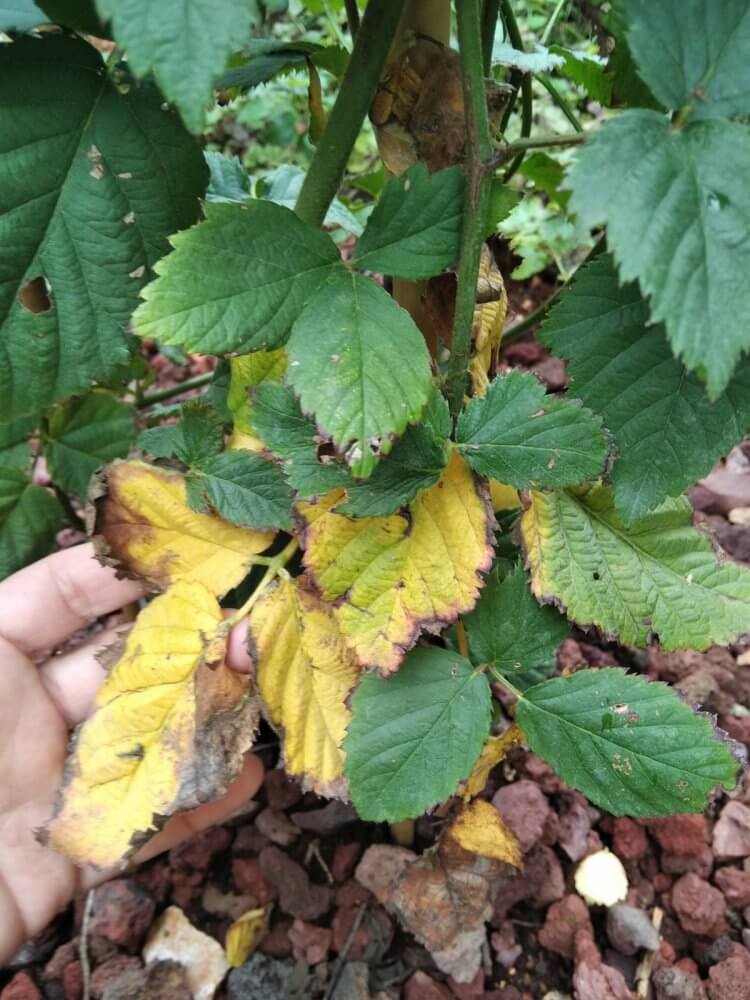
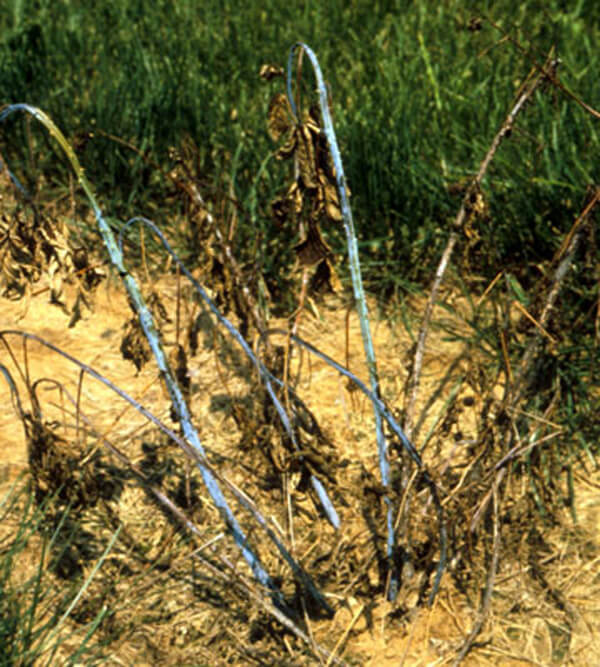
Verticillosis caused by Verticillium spp. in blackberry seriously affects the health and productivity of the plants. The infection interferes with the transport of water and nutrients, leading to a series of symptoms that weaken and, in severe cases, kill the plant. The disease initially manifests itself on older leaves, progressing to younger ones as the fungus advances within the vascular system.
- Withering of leaves, especially during hot periods.
- Yellowish discoloration or chlorosis on leaves.
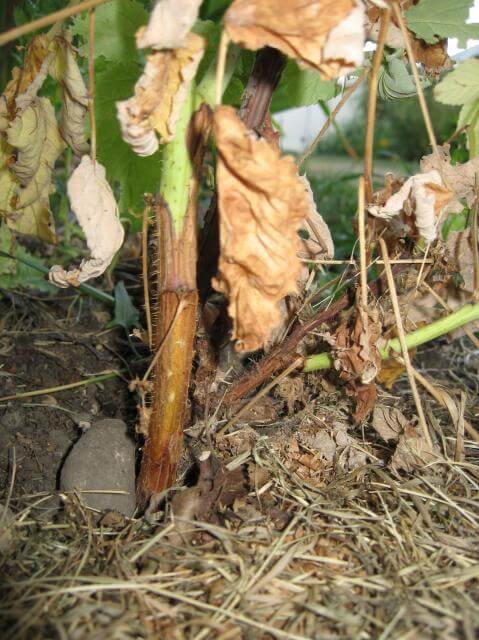
- Premature defoliation.
- Development of necrosis and dead zones in the foliage.
- Poor and stunted growth of new branches.
- General decay of the plant, with branches that can die regressively.
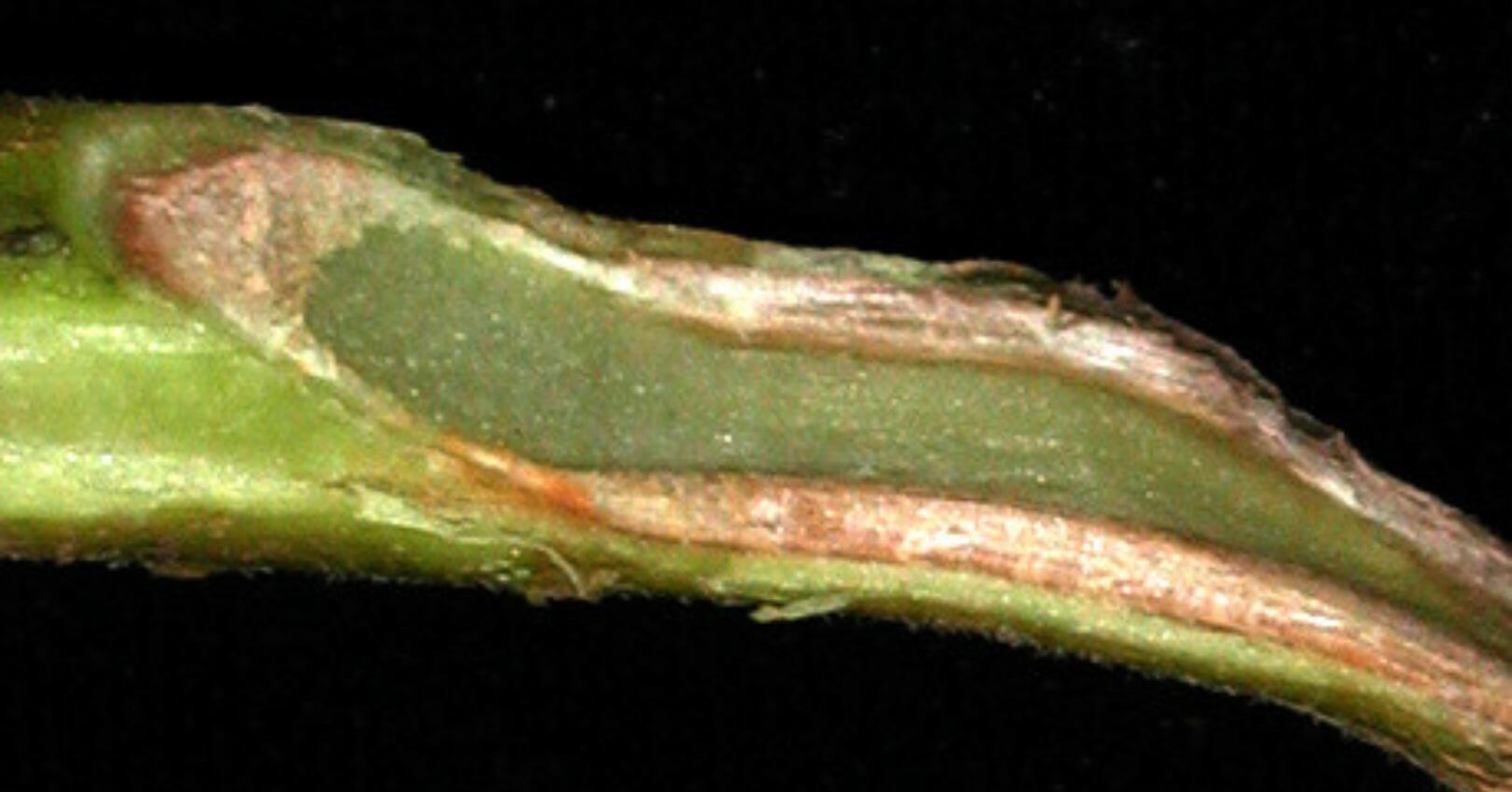
- Presence of dark veins in the vascular tissue when cutting infected stems or branches.



TEMPERATURE AND HUMIDITY
18°C a 25°C
60% a 80%

TRANSMISSION ROUTES
Contaminated soil, Irrigation water, Pruning tools, Infected plants, Earthworks, Infected plant remains
Do you want to remove this disease? Choose how you want to treat it.

TREATMENTS
Chemical treatments
-
Authorized treatments in organic farming
-
Biological control
• TRICHODERMA ASPERELLUM (STRAIN ICC012) 2% + TRICHODERMA GAMSII (STRAIN ICC080) 2% (3 X 10E7 CFU/G (SUM OF BOTH MICROORGANISMS)) [WP] P/P
Recommendations
- Implement crop rotation with species not susceptible to Verticillium spp. to reduce the inoculum load in the soil.
- Use blackberry varieties resistant or tolerant to verticillosis, if available.
- Avoid planting in soils known to be infested with Verticillium spp.
- Improve soil drainage to prevent water stress, which can promote infection.
- Sterilize pruning tools and machinery to prevent the spread of the fungus.
- Remove and destroy infected plants to reduce spread.
- Apply specific fungicides to the soil and root system as a preventive measure, following technical instructions.
- Practice proper fertilization management to ensure vigorous plants and less susceptible to disease.





*Recommended treatments are still recommendations according to authority databases and in no way replace the guidelines established according to the legislation of each country.
*Products shown are recommendations and not our own products. As Amazon Associates, we earn revenue from purchases of recommended products.

TREATMENTS
Homemade remedies
There are no home treatments
Natural allies
Chemical treatments
There are no treatments for this disease. Treatments are directed at the insect vectors that transmit it. See insect treatments.

RECOMMENDATIONS

REPELLENT PLANTS
EFFECTIVE PRODUCTS TO ELIMINATE THIS DISEASE
*Recommended treatments are still recommendations according to authority databases and in no way replace the guidelines established according to the legislation of each country.
*Products shown are recommendations and not our own products. As Amazon Associates, we earn revenue from purchases of recommended products.



Explore more tools
Services
Contact
Legal
©2023 por ZeriMar Laboratoire. Todos os direitos reservados.