


Frutales de pepita
How to recognize and combat bacterial canker in pome fruit trees
Canker Or Bacterial Cancer
Bacterium
Type:
Risk to the plant:
HIGH
Pseudomonas Syringae
Pathogen:
Cancros


WHO CAUSES IT?
Pseudomonas syringae is a phytopathogenic bacteria that affects a wide variety of plants, including pome fruit trees. This bacteria survives in the soil, in plant debris and on the surface of plants as an epiphyte. When environmental conditions are favorable, especially in humid and cold climates, the bacteria enters plants through wounds, stomata and lenticels. Once inside the host, Pseudomonas syringae multiplies in the intercellular spaces and produces enzymes and toxins that degrade cell walls and cause tissue necrosis. The bacteria can form biofilms that allow it to resist adverse conditions and protect itself from chemical treatments. During cold seasons, the bacteria enter a state of dormancy, reactivating with the arrival of more favorable temperatures.

SYMPTOMS
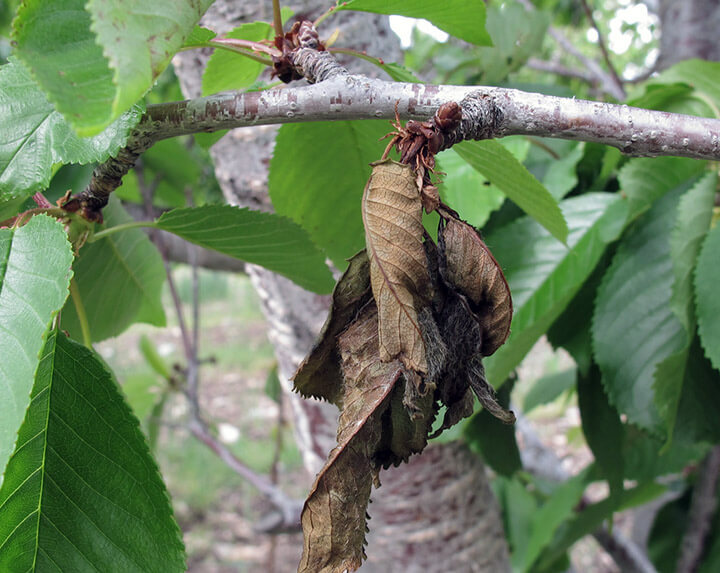
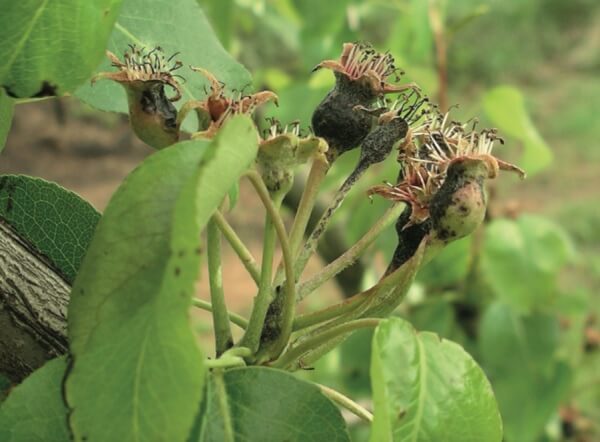
Bacterial cancer caused by Pseudomonas syringae in pome fruit trees is a devastating disease that mainly affects the branches, trunks and, in severe cases, the fruits. Infection usually begins in fall or spring, when temperatures are cool and humidity is high. The symptoms of this disease initially appear as small, moist, dark Taches on the bark, which expand and crack, forming cankers. Affected parts of the tree may exude a viscous bacterial fluid, especially in high humidity conditions.
- Appearance of necrotic Taches on the bark
- Formation of cankers on branches and trunk
- Exudation of viscous bacterial sap
- Branch dieback
- Premature defoliation
- Decrease in flowering and fruiting
- Withering of leaves
- Necrosis of buds and new shoots
- Loss of general vigor of the plant
- Eventual death of the tree in severe infections



DEVELOPMENT CONDITIONS
Temperature:
10-25°C
Humidity:
80-100%

HOW IS IT SPREAD?
Rain, wind, contaminated tools, vector insects, irrigation water, infected plant remains

HOW TO ELIMINATE IT?
Home treatments
There are no home treatments
Natural allies
Chemical treatments
There are no treatments for this disease. Treatments are directed at the insect vectors that transmit it. See insect treatments.
RECOMMENDED PRODUCTS TO ELIMINATE THE PEST





REPELLENT PLANTS

RECOMMENDATIONS
OTHER PESTS THAT MAY INTEREST YOU


DID YOU LIKE IT?
All this and much more, just a click away. TRY idMicrobe NOW!



Explore more tools
Services
Contact
Legal
©2023 by ZeriMar Laboratoire. All rights reserved.