


Frambuesa
How to recognize and combat Japanese beetles on raspberries
Japanese Beetle
Insect
Type:
Risk to the plant:
HIGH
Popillia Japonica
Pathogen:
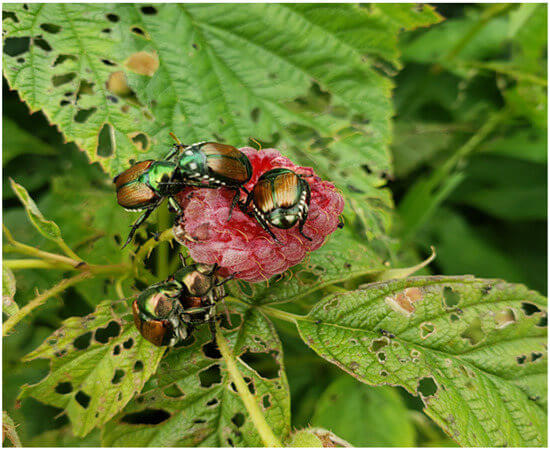
Escarabajos


WHO CAUSES IT?
Popillia japonica, known as the Japanese beetle, is an invasive insect native to Japan that has established itself in several regions of the world due to its ability to adapt. This beetle has a complex development phase that begins with eggs laid in the ground. The larvae, known as white grubs, emerge from the eggs and feed on plant roots during the fall. These larvae overwinter underground and resume feeding in spring before pupating and becoming adults. Adults emerge from the ground in summer, characterized by their green metallic body and copper-colored wings. Adult beetles feed on the leaves, flowers and fruits of a wide variety of plants, including raspberries. After a period of feeding and mating, the females lay their eggs on the ground, thus completing their life cycle. The Japanese beetle's ability to fly long distances and its wide range of host plants contribute to its rapid spread and the considerable agricultural damage it causes.

SYMPTOMS
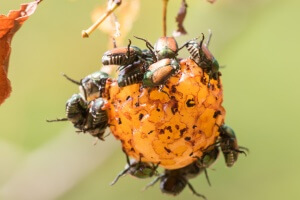
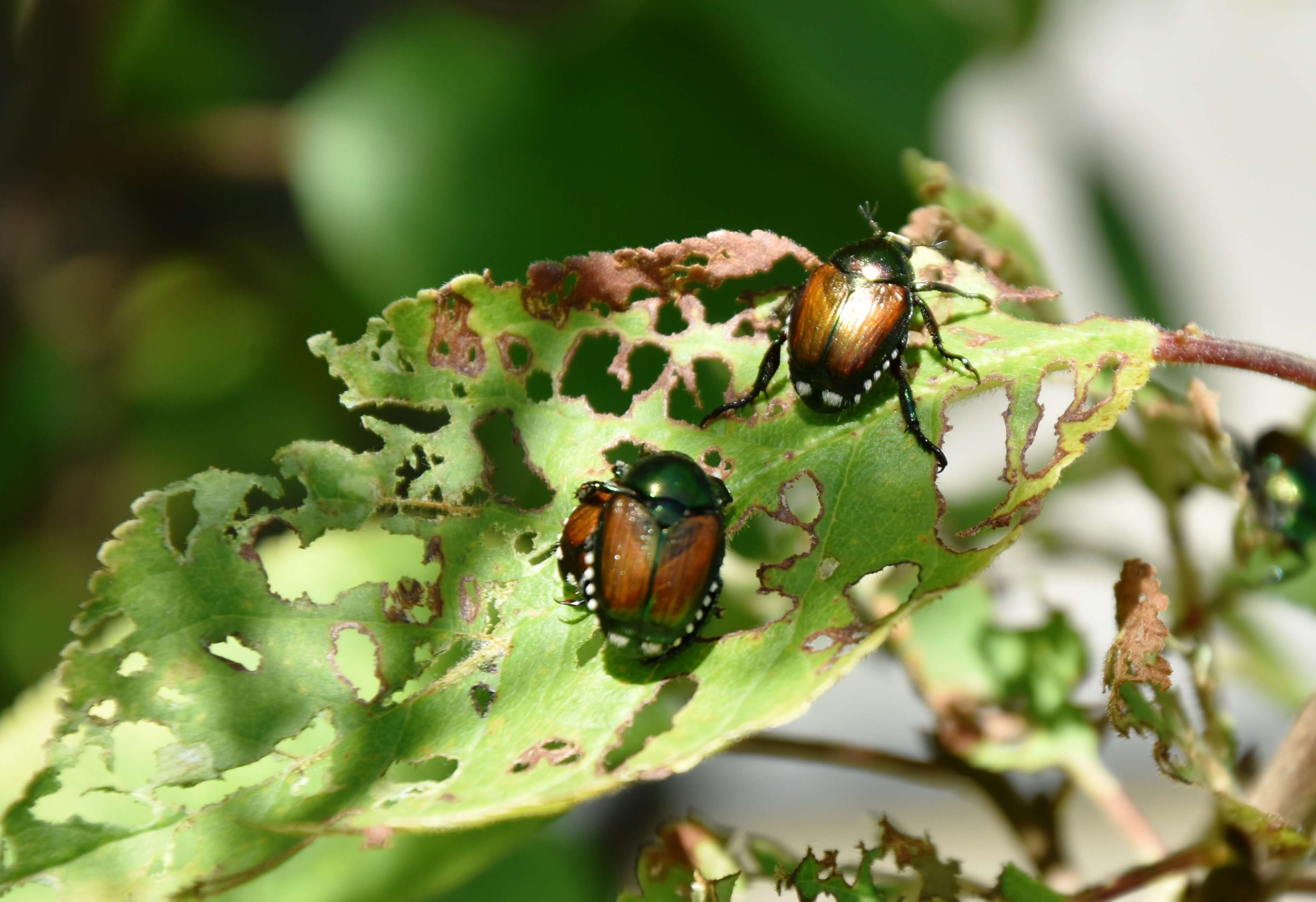
In raspberries, Japanese beetle infestation causes significant damage to both the quality and quantity of production. Adults feed voraciously on leaves, flowers and fruits, resulting in a decrease in the photosynthetic capacity of the plant and deformation of the fruits. These damages affect the vitality of the plant and reduce the commercial quality of raspberries. The main symptoms are:
- Skeletalized leaves due to feeding by adults.
- Presence of irregular holes in the leaves.
- Deformation and premature fall of flowers and fruits.
- Visible damage on the surface of the fruits.
- Decrease in the general vigor of the plant.
- Presence of adult beetles on the plant.


DEVELOPMENT CONDITIONS
Temperature:
20°C - 30°C
Humidity:
60% - 80%

HOW IS IT SPREAD?
Wind, Soil movements, Infested plants, Agricultural vehicles, Clothing and footwear

HOW TO ELIMINATE IT?
Home treatments
There are no home treatments
Natural allies
Chemical treatments
There are no treatments for this disease. Treatments are directed at the insect vectors that transmit it. See insect treatments.
RECOMMENDED PRODUCTS TO ELIMINATE THE PEST





Sponsored link


Sponsored link
Sponsored link


Sponsored link




Sponsored link
Sponsored link


Sponsored link
Sponsored link
Effective against all types of fungi





Sponsored link


Sponsored link
Sponsored link




Sponsored link
Sponsored link


Sponsored link

REPELLENT PLANTS

RECOMMENDATIONS
OTHER PESTS THAT MAY INTEREST YOU


DID YOU LIKE IT?
All this and much more, just a click away. TRY idMicrobe NOW!



Explore more tools
Services
Contact
Legal
©2023 by ZeriMar Laboratoire. All rights reserved.