top of page
IdMicrobe: Plant Pest Guide, Professional and Homemade Tips and Treatments

The Guide to Caring for Your Plants

Learn to recognize pests and how to combat them

idMicrobe: Consult treatments and eliminate plant pests

The Guide to Caring for Your Plants

Learn to recognize pests and how to combat them

Mycosis

Frutos

How to recognize and combat fungi on fruit

Mycosis

Fungus

Type:

Risk to the plant:

HIGH

Different species

Pathogen:
How to recognize and combat fungi on fruit

Hongos

CTA superior EN.webp
1709890758744.png

WHO CAUSES IT?

Fruit fungal diseases are caused by various species of phytopathogenic fungi capable of colonizing plant tissues, especially when wounds, weakened tissues, or favorable environmental conditions are present. These microorganisms can survive among crops in infected plant debris, mummified fruit, soil, bark, plant structures, and other sources of organic matter. Depending on the species, they can produce sexual or asexual spores that are easily dispersed by wind, water, insects, tools, and contact between fruits. Infection usually begins when spores reach the surface of a fruit and find sufficient moisture and a suitable temperature to germinate. The germ tube can penetrate directly into the tissues or take advantage of small lesions caused by bruising, insects, hail, pruning, or abrasions. Once established, the fungus develops a mycelium that grows between cells or on the affected tissues and uses their nutrients to multiply. Some fungi rapidly produce new reproductive structures on the infected areas, generating large quantities of spores that can initiate new infections. Others remain dormant during part of fruit development and become active later, especially during ripening or after harvest. Infections can recur several times during the same growing season, so an initial source of inoculum can lead to rapid spread when high humidity, favorable temperatures, and the presence of susceptible tissues coincide. Survival and dispersal capacity varies considerably among species, but overall, fruit fungi have a high capacity to establish themselves and spread when environmental conditions and the crop's health are favorable.

1713099015053 (2).png

SYMPTOMS

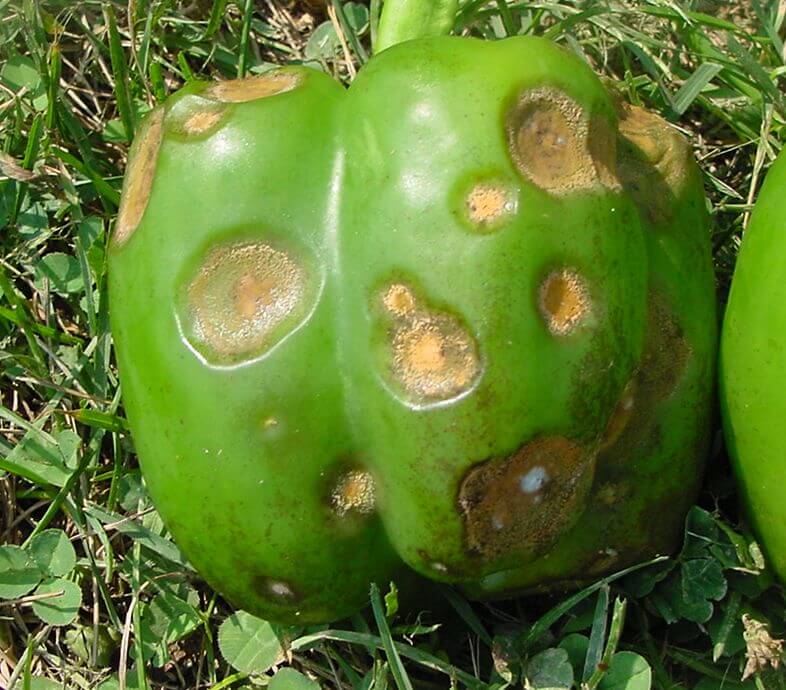
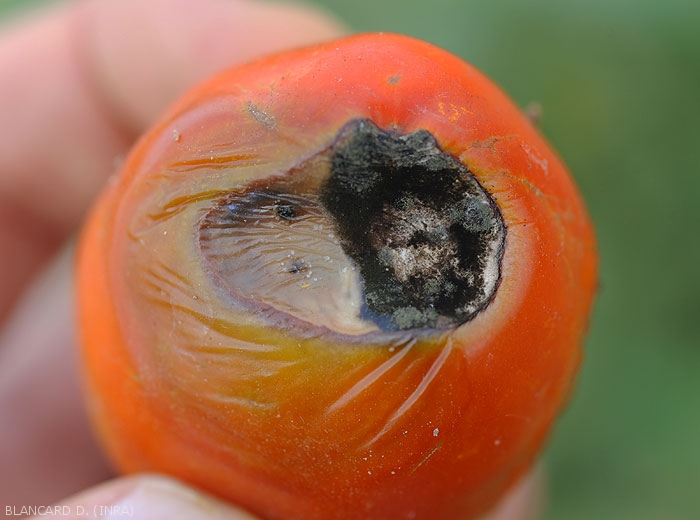
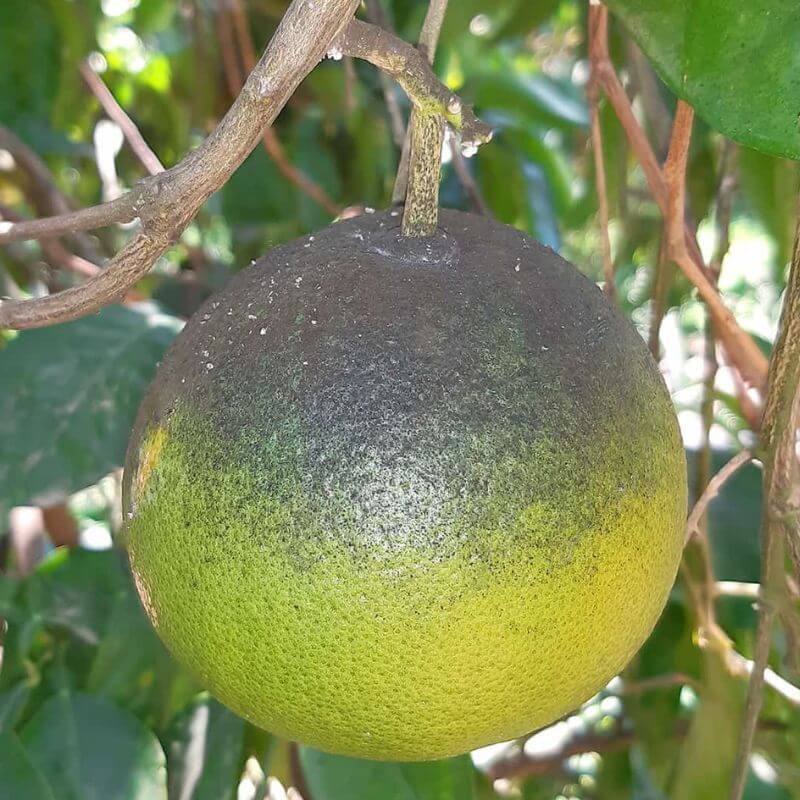
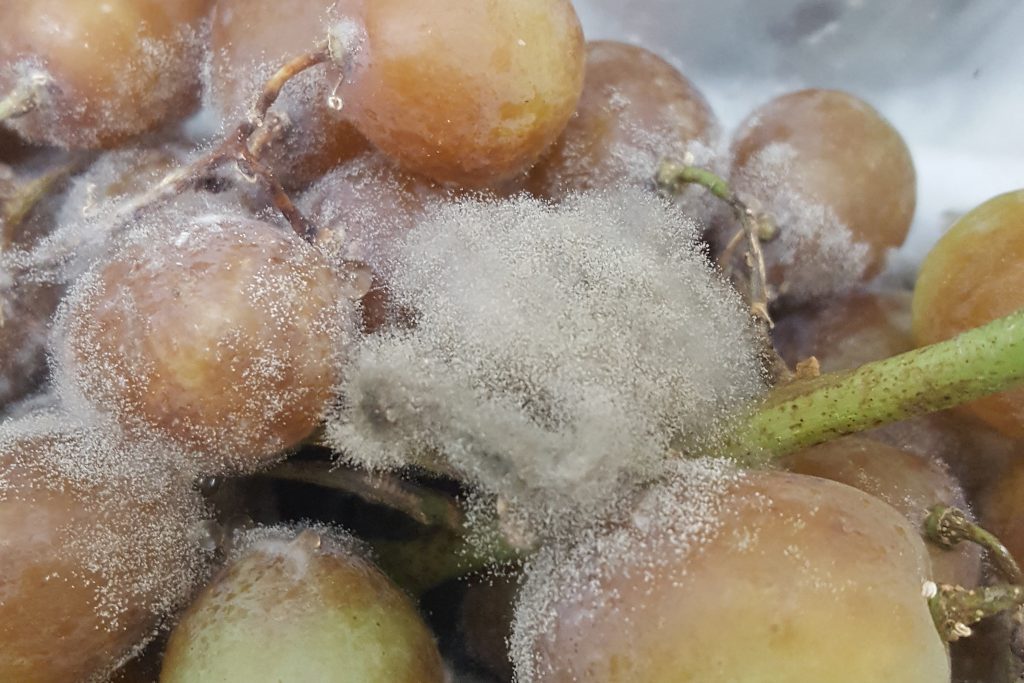
Fungal infections can cause various processes of rot and deterioration in fruit, both during its development on the plant and during harvesting, transport, and storage. The first symptoms usually appear as small lesions, spots, or slightly depressed areas that subsequently increase in size and acquire brown, black, yellowish, or reddish tones depending on the fungus involved. As the infection progresses, the tissues lose firmness, degrade, and may become covered by masses of mycelium or reproductive structures of the fungus. Under favorable conditions, a single lesion can quickly become extensive rot and facilitate the contamination of nearby fruit.

• Appearance of small spots or lesions on the surface of the fruit.

• Sunken, soft, or loss of firmness in the fruit.

• Browning, blackening, or abnormal color changes.

• Progressive rotting of the pulp and internal tissues.

• Development of mycelium or spore masses on the affected areas. • Appearance of mummified or completely dehydrated fruit.

• Foul odors associated with advanced tissue degradation.

• Spread of rot from an affected fruit to other nearby fruit.

• Loss of commercial quality and reduction of fruit shelf life.
Fungal infections in fruit: How to recognize and effectively treat them
Fruit affected by fungi with spots, rot and mold
Fungi: Symptoms, damage and solutions in fruit
CTA medio EN.webp
pronostica_edited.png

DEVELOPMENT CONDITIONS

Temperature:

18-28 °C

Humidity:

75-95 %

1709890758697.png

HOW IS IT SPREAD?

Wind, Rain, Irrigation water, Contact between fruits, Insects, Contaminated tools, Infected plant debris, Handling

1709890758673.png

HOW TO ELIMINATE IT?

Home treatments

BONE MEAL OR GROUND FISH SHELLS

RUSTY NAILS OR IRON SHAVINGS

BANANA PEELS

EPSOM SALTS (MAGNESIUM SULFATE)

SOLUTION WITH HOUSEHOLD BORAX

GROUND OR BOILED EGGSHELLS

COMPOST WITH ONION OR GARLIC SCRAPS

VEGETABLE COOKING WATER

WOOD ASH

WATER WITH VINEGAR OR LEMON (VERY DILUTED)

GARLIC INFUSION

USED COFFEE OR TEA

BANANA AND EGGSHELL INFUSION

POTATO OR LEGUME COOKING WATER

COMPOST FROM FRESH GREEN LEAVES

COMPOST OR WELL-AGED MANURE

DILUTED MILK (1:10)

BANANA TEA

LEAF COMPOST

NETTLE SLURRY

POTASSIUM SOAP AND NEEM OIL SOLUTION

POTASSIUM SOAP SOLUTION + NEEM OIL + DIATOMACEOUS EARTH

BAKING SODA AND NEUTRAL SOAP SOLUTION

GARLIC INFUSION WITH NEUTRAL SOAP

CHROMATIC OR ADHESIVE TRAPS

DILUTED MILK

HORSETAIL INFUSION

TRUNK WHITEWASHING

DIATOMACEOUS EARTH

WOOD ASH

NETTLE SLURRY

CUT THE AFFECTED BRANCHES AND APPLY CINNAMON

GARLIC AND CINNAMON INFUSION

INFUSION OF WORMWOOD, CHILI OR CHILLI

CLEAN THE AFFECTED AREA AND APPLY ASH PASTE WITH GARLIC OR CINNAMON

GARLIC AND MINT INFUSION

LIGHT TRAPS

APPLY CINNAMON POWDER

PITFALL TRAPS

CRUSHED EGG SHELLS

CLEAN AND SEAL THE WOUND WITH CLAY, CINNAMON AND GARLIC PASTE

GARLIC INFUSION

MATURE COMPOST

TRAPS WITH VINEGAR AND SOAP

SEAL HOLES WITH ASH PASTE AND CRUSHED GARLIC

VINEGAR AND BAKING SODA SOLUTION

ANT TRAP

TAPE TRAP

PHEROMONE TRAP

ALCOHOL TRAPS

FUNNEL TRAP

There are no home treatments

Natural allies

PREDATORY MITES

LADYBUGS

LACEWINGS

PARASITIC WASPS

HOVERFLIES OR PARASITIC FLIES

PREDATORY BUGS

There are no natural allies

Mycodiplosis oidii (predatory mosquito)

Chemical treatments

AGRICULTURAL SULFUR (POWDER OR SOLUBLE)

POTASSIUM FERTILIZERS

MAGNESIUM FERTILIZERS

BORON FERTILIZERS

CALCIUM FERTILIZERS

NITROGEN FERTILIZERS

PHOSPHORUS FERTILIZERS

IRON FERTILIZERS

SULFUR FERTILIZERS

NPK FERTILIZERS

There are no treatments for this disease. Treatments are directed at the insect vectors that transmit it. See insect treatments.

ABAMECTIN 0.0015% + PYRETHRINS 0.02%

RAPESEAL OIL

RAPESEAL OIL + PYRETHRINS

ORANGE OIL 6%

PARAFFIN OIL

ACETAMIPRID

ACETAMIPRID 0.005%

ACETAMIPRID 20%

SULFUR

COPPER 20%

COPPER 25%

COPPER 35%

COPPER 38%

COPPER 50%

COPPER 52%

DELTAMETHRIN 1.57%

DELTAMETHRIN 10%

DELTAMETHRIN 2.5%

DIFENOCONAZOLE 1.67%

ESFENVALERATE 2.5%

ESFENVALERATE 5%

100% GARLIC EXTRACT

PHENHEXAMIDE 50%

FLUPYRADIFURONE

FLUPIRADIFURONE 20%

FOSETIL-AL 80%

FERRIC PHOSPHATE

ALUMINUM PHOSPHIDE 56%

PHOSTIAZATE 10%

PHOSTIAZATE 15%

HEXITIAZOX 10%

POTASSIUM HYDROGEN CARBONATE

LAMBDA CYHALOTHRIN

LAMINARIN 4.5%

METALDEHYDE

PIRACLOSTROBIN 6.7% + BOSCALIDE 26.7%

PYRETHRINS

PYRIPROXIFEN 10%

POTASSIUM SALTS OF UNSATURATED FATTY ACIDS

SPINOSAD 0.024%

SPINOSAD 12%

SPINOSAD 48%

TAU-FLUVALINATE 24%

TETRACONAZOLE 10%

TETRACONAZOLE 12.5%

TETRACONAZOLE 4%

TRICHODERMA ASPERELLUM (STRAIN T34)

RECOMMENDED PRODUCTS TO ELIMINATE THE PEST

Sponsored link

Sponsored link

Sponsored link

Sponsored link

Natural Pesticide, Fungicide, Miticide, Insecticide, Spider Mites, Powdery Mildew, Botrytis and Mold

Natural Pesticide, Fungicide, Miticide, Insecticide, Spider Mites, Powdery Mildew, Botrytis and Mold

100% ecological fungicide

Sponsored link

Nematodes - Biological Pest Control for Fungus Gnats, Thrips, & Whiteflies

Nematodes - Biological Pest Control for Fungus Gnats, Thrips, & Whiteflies

Biological Pest Control for Fungus Gnats, Thrips, & Whiteflies

Sponsored link

Light traps for insects

Light traps for insects

Solar trap for outside

Sponsored link

Sponsored link

Effective against all types of fungi

Sponsored link

Anti-ant adhesive tape

Anti-ant adhesive tape

Tree protection. Easy to use.

Sponsored link

Your product

Your product

Your products closer to your customers

Sponsored link

Sponsored link

Adhesive traps for insects

Adhesive traps for insects

For orchards, terraces and flower pots.

Sponsored link

Insecticide, fungicide, acaricide and nematicide spraying

Insecticide, fungicide, acaricide and nematicide spraying

100% organic. For indoor and outdoor use

Sponsored link

Lime for whitewashing

Lime for whitewashing

Insect Barrier/Repellent

Sponsored link

Fungus Gnat Killer & Bug Spray

Fungus Gnat Killer & Bug Spray

For outdoor and indoor use. Pet friendly

Sponsored link

Sponsored link

Sponsored link

Mature compost. Worm castings

Mature compost. Worm castings

100% Natural. Soil Restorative

Sponsored link

Your product

Your product

Your products closer to your customers

Sponsored link

Sponsored link

100% organic diatomaceous earth

100% organic diatomaceous earth

Natural insecticide against insects

Sponsored link

Beetle traps

Beetle traps

Ideal for ornamentals, flowers and shrubs.

Sponsored link

Trap for Tuta absoluta

Trap for Tuta absoluta

Attracts and traps tomato moths

Sponsored link

Snail and slug traps

Snail and slug traps

Ideal for orchards, gardens and pots.

Sponsored link

Copper-based fungicide - Curative and preventive

Copper-based fungicide - Curative and preventive

Effective against all types of fungi

Sponsored link

Sponsored link

Sponsored link

Sponsored link

Insecticidal soap

Insecticidal soap

Home treatment. Eco-friendly

Sponsored link

Bacillus Thuringiensis BT Organic Worm & Caterpillar Control

Bacillus Thuringiensis BT Organic Worm & Caterpillar Control

Eco-friendly. Respectful of animals, the environment, and people.

Sponsored link

Fruit fly traps

Fruit fly traps

Non-Toxic. Reusable. For indoor and outside

Sponsored link

Treatment against snails and slugs

Treatment against snails and slugs

Granulated bait, attractive, safe and fast.

Sponsored link

Sponsored link

1714749024044.png

REPELLENT PLANTS

1709890758720.png

RECOMMENDATIONS

OTHER PESTS THAT MAY INTEREST YOU

THE MOST POPULAR

Home remedies to eliminate mites on plants

5 home treatments to combat mites

Home remedies to eliminate borers or plant borers

Home remedies to combat borers

Home remedies to eliminate red spider mites on plants

5 home treatments to combat red spider mites

Home remedies to remove scale and scale on plants

5 home treatments to combat scales and scabs

DID YOU LIKE IT?

All this and much more, just a click away. TRY idMicrobe NOW!

button_google_play_EN.png
boton_mobile_Version_EN.jpg
bottom of page