


Mora
How to recognize and combat blackberry scales
Cocoids Or Scale Insects (Coccoidea)
Insect
Type:
Risk to the plant:
HIGH
Cocoids Or Scale Insects (Coccoidea)
Pathogen:
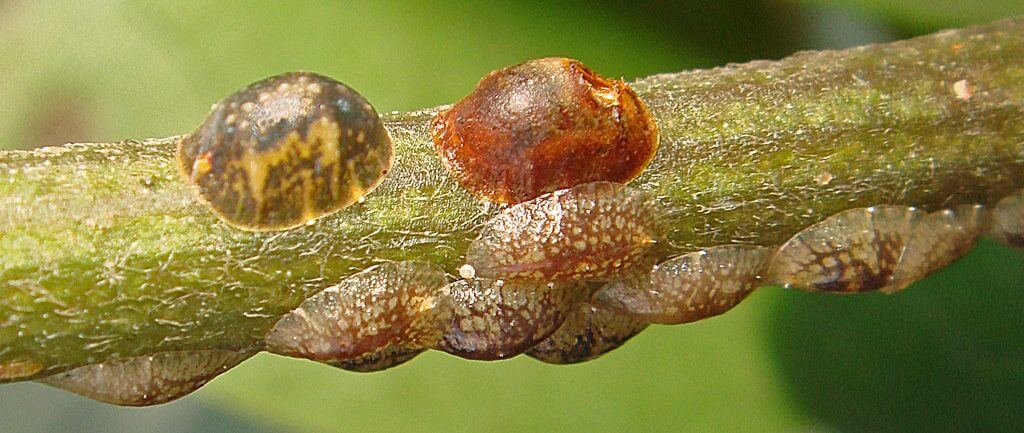
Escamas


WHO CAUSES IT?
Coccoids, or scale insects (Coccoidea), are a group of insects belonging to the superfamily Coccoidea. These insects have a complex life cycle that includes several stages. The eggs are deposited by adult females under their body or in a protective structure called an ovisac. After hatching, the nymphs, also known as "crawlers", are mobile and look for a suitable place on the plant to feed. Once they find a suitable site, the nymphs attach themselves to the plant and begin to feed on the sap, developing a protective waxy covering. This immobile phase can last several weeks, depending on environmental conditions. Coccoids go through several molts before reaching maturity. Adult females generally remain motionless and continue feeding, while males, if present, are usually winged and do not feed at this stage. Reproduction can be sexual or parthenogenetic, depending on the species.

SYMPTOMS
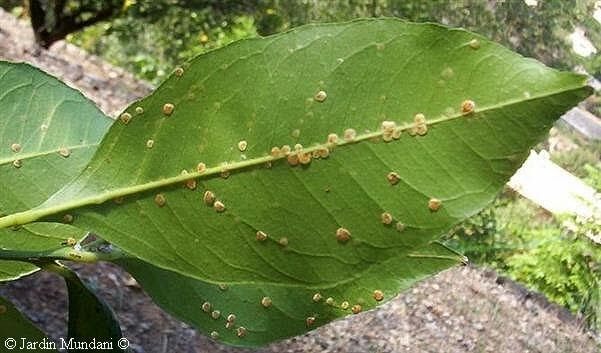
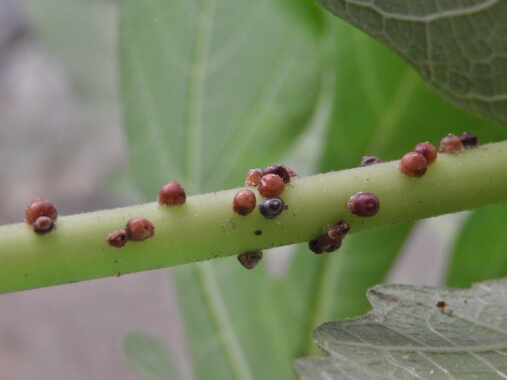
In blackberry, coccoids cause a disease that significantly affects the health and productivity of the plant. These insects suck the sap, weakening the growth and vigor of the blackberry. In addition, they excrete honeydew, a sticky substance that can encourage the development of fungi such as sooty mold, further affecting photosynthesis and the aesthetics of the plant.
- Yellowing and premature leaf fall.
- Loss of vigor and reduced plant growth.
- Appearance of black Taches (sooty mold) on leaves and stems.
- Deformation of fruits and decrease in quality.
- Presence of small scales visible on stems and leaves.
- Accumulation of honeydew on the surface of the plant.
- General weakening of the plant, making it more susceptible to other pests and diseases.


DEVELOPMENT CONDITIONS
Temperature:
20°C - 30°C
Humidity:
70% - 90%

HOW IS IT SPREAD?
Wind, Direct contact between plants, Movement of infested plants, Contaminated tools

HOW TO ELIMINATE IT?
Home treatments
There are no home treatments
Natural allies
Chemical treatments
There are no treatments for this disease. Treatments are directed at the insect vectors that transmit it. See insect treatments.
RECOMMENDED PRODUCTS TO ELIMINATE THE PEST





REPELLENT PLANTS

RECOMMENDATIONS
OTHER PESTS THAT MAY INTEREST YOU


DID YOU LIKE IT?
Now you can always have it on your mobile, without ads and totally FREE. TRY idMicrobe NOW!



Explore more tools
Services
Contact
Legal
©2023 por ZeriMar Laboratoire. Todos os direitos reservados.