


Albaricoque
How to recognize and combat mealybugs on apricots
Mealy Aphid
Insect
Type:
Risk to the plant:
HIGH
Hyalopterus Amygdali
Pathogen:

Pulgones


WHO CAUSES IT?
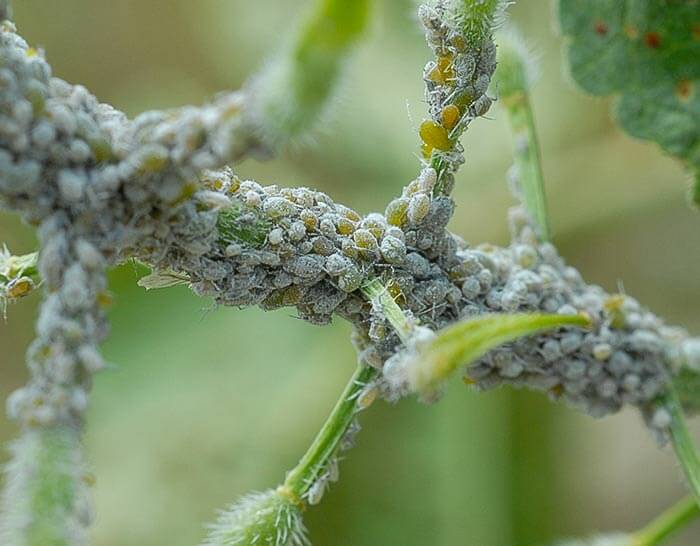
Hyalopterus amygdali, known as the apricot mealy aphid, is a small insect that belongs to the Aphididae family. These aphids have a complex life cycle that includes sexual and asexual phases. In the spring, wingless parthenogenetic females emerge and begin to reproduce rapidly, giving birth to live young without the need for mating. These young, called nymphs, mature in a few days and continue the process of parthenogenetic reproduction, allowing a rapid increase in the population. During the summer, winged forms may appear that migrate to other plants to colonize new hosts. In the fall, when temperatures begin to drop, sexual males and females form and mate to produce winter eggs, which are deposited in the bark of the tree. These eggs will hatch in spring, restarting the cycle.

SYMPTOMS
In apricot, Hyalopterus amygdali causes the disease known as mealybug. This disease mainly affects the leaves and young shoots of the tree, reducing its vigor and photosynthetic capacity, which can seriously weaken the tree if not properly controlled.
- Presence of aphid colonies on leaves and shoots.
- Rolled and deformed leaves.
- Yellowing and premature leaf fall.
- Production of honeydew that attracts other insects and encourages the growth of black fungi (smooth mold).
- Deformed shoots and fruits.
- Reduction in the growth of new shoots.
- Loss of general vigor of the tree.
- Decrease in the quality and quantity of the fruit.



DEVELOPMENT CONDITIONS
Temperature:
15°C - 25°C
Humidity:
60% - 80%

HOW IS IT SPREAD?
Wind, Movement of infected plant material, Contaminated pruning tools, Direct contact between trees

HOW TO ELIMINATE IT?
Home treatments
There are no home treatments
Natural allies
Chemical treatments
There are no treatments for this disease. Treatments are directed at the insect vectors that transmit it. See insect treatments.
RECOMMENDED PRODUCTS TO ELIMINATE THE PEST





REPELLENT PLANTS

RECOMMENDATIONS
OTHER PESTS THAT MAY INTEREST YOU


DID YOU LIKE IT?
Now you can always have it on your mobile, without ads and totally FREE. TRY idMicrobe NOW!



Explore more tools
Services
Contact
Legal
©2023 por ZeriMar Laboratoire. Todos os direitos reservados.